
image:
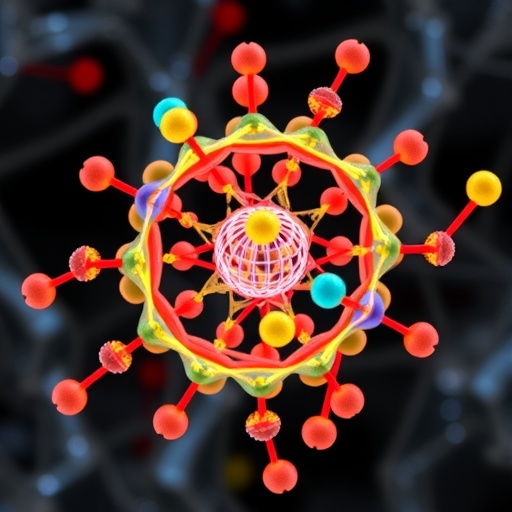
HULU is a flexible Python framework that enables Monte Carlo adsorption simulations using advanced machine learning potentials. The figure illustrates full adsorption isotherms and henry constants predicted by representative foundation models, including MACE-MATPES-PBE-0 and NEP89.
view more
Credit: Nano Research, Tsinghua University Press
Adsorption—the process by which gases or liquids adhere to the surface of porous solids—is a cornerstone of modern green technology. It is the driving force behind atmospheric water harvesting in arid regions and the safe storage of hydrogen fuel. To design better materials for these tasks, scientists rely on Monte Carlo (MC) simulations to predict how molecules will behave at the microscopic level.
However, a significant gap has existed in the field. Most standard MC simulation programs are “locked” into using older, empirical force fields. While emerging machine learning potentials (MLPs) provide the accuracy of quantum mechanics at a fraction of the computational cost, they have been difficult to integrate into existing adsorption software.
To solve this, research teams from the South China University of Technology and Xi’an Jiaotong University have developed HULU (High-throughput Universal Learning-enabled Utility for Adsorption). The name “HULU” is inspired by the Chinese word for bottle gourd (葫芦), a traditional symbol of a vessel capable of “absorbing” or containing a vast variety of things, reflecting the framework’s ability to handle diverse adsorption systems.
HULU is a flexible Python package designed to make high-accuracy AI models natively compatible with adsorption simulations. The study was published on March 30, 2026, in Nano Research.
“Our goal was to remove the strong coupling between MC codes and specific force fields,” said Prof. Libo Li, senior author of the study and professor at South China University of Technology. “HULU provides critical technical support for extending machine learning potentials into thermodynamic property prediction, making it easier for researchers to harness these advanced tools for real-world applications.”
The innovation behind HULU lies in its modular architecture. By decoupling the simulation’s “sampling” (how molecules move) from its “energy evaluation” (how molecules interact), HULU acts as a universal adapter. It utilizes the Atomic Simulation Environment (ASE) calculator interface, meaning it is “naturally compatible” with a wide array of leading MLP frameworks, including ACE, DP, MACE, and NequIP.
To prove the framework’s reliability, the researchers benchmarked HULU against industry-standard platforms like RASPA2 and LAMMPS. In a real-world test case simulating methane adsorption in a material called ZIF-8, the team evaluated universal machine-learning potentials (uMLPs)—often referred to as ‘atomistic foundation models’ for their ability to be applied across different chemical systems without retraining. The team found that while some of these foundation models performed exceptionally well, others required specific corrections to avoid overpredicting how much gas the material could hold.
These findings are crucial because they provide a roadmap for which atomistic foundation models are most reliable for specific chemical applications. By establishing this methodological foundation, the researchers believe HULU will significantly speed up the screening of new materials, helping scientists identify the most promising candidates for carbon capture and renewable energy storage much faster than previously possible.
The research team expects that HULU will continue to evolve, eventually integrating even more complex AI models to simulate how materials perform under extreme industrial conditions.
Other contributors include Prof. Yanying Wei, Mr. Xitai Cai, Mr. Yuxun Wu, and Mr. Lijun Liao from the School of Chemistry and Chemical Engineering at South China University of Technology and Prof. Penghua Ying from the School of Aerospace Engineering at Xi’an Jiaotong University.
This work was supported by by the Natural Science Foundation of China (U23A20115), Science and Technology Key Project of Guangdong Province (2025B0101060003), the Natural Science Foundation of Guangdong Province (2024A1515012725, 2024A1515012724), Guangzhou Municipal Science and Technology Project (2024A04J6251), State Key Laboratory of Pulp and Paper Engineering (2024ZD03, 2025PT02), Fundamental Research Funds for the Central Universities (2025ZYGXZR023) and Natural Science Foundation of China (22078104).
DOI Link:
About Nano Research
Nano Research is a peer-reviewed, open access, international and interdisciplinary research journal, sponsored by Tsinghua University and the Chinese Chemical Society, published by Tsinghua University Press on the platform SciOpen. It publishes original high-quality research and significant review articles on all aspects of nanoscience and nanotechnology, ranging from basic aspects of the science of nanoscale materials to practical applications of such materials. After 18 years of development, it has become one of the most influential academic journals in the nano field. Nano Research has published more than 1,000 papers every year from 2022, with its cumulative count surpassing 8,000 articles. In 2025 InCites Journal Citation Reports, its 2025 IF is 9.4 (8.3, 5 years), and it continues to be the Q1 area among the four subject classifications. Nano Research Award, established by Nano Research together with TUP and Springer Nature in 2013, and Nano Research Young Innovators (NR45) Awards, established by Nano Research in 2018, have become international academic awards with global influence.
Journal
Nano Research
DOI
10.26599/NR.2026.94908548
Article Title
New “HULU” framework bridges atomistic foundation models and molecular simulations to accelerate clean energy materials discovery
Article Publication Date
30-Mar-2026
Media Contact
Mengdi Li
Tsinghua University Press
Office: 86-108-347-0580
Journal
Nano Research
DOI
10.26599/NR.2026.94908548
Article Title
New “HULU” framework bridges atomistic foundation models and molecular simulations to accelerate clean energy materials discovery
Article Publication Date
30-Mar-2026