• HOME
  • NEWS
  • EXPLORE
    • CAREER
      • Companies
      • Jobs
    • EVENTS
    • iGEM
      • News
      • Team
    • PHOTOS
    • VIDEO
    • WIKI
  • BLOG
  • COMMUNITY
    • FACEBOOK
    • INSTAGRAM
    • TWITTER
Saturday, August 1, 2026
BIOENGINEER.ORG
No Result
View All Result
  • Login
  • HOME
  • NEWS
  • EXPLORE
    • CAREER
      • Companies
      • Jobs
        • Lecturer
        • PhD Studentship
        • Postdoc
        • Research Assistant
    • EVENTS
    • iGEM
      • News
      • Team
    • PHOTOS
    • VIDEO
    • WIKI
  • BLOG
  • COMMUNITY
    • FACEBOOK
    • INSTAGRAM
    • TWITTER
  • HOME
  • NEWS
  • EXPLORE
    • CAREER
      • Companies
      • Jobs
        • Lecturer
        • PhD Studentship
        • Postdoc
        • Research Assistant
    • EVENTS
    • iGEM
      • News
      • Team
    • PHOTOS
    • VIDEO
    • WIKI
  • BLOG
  • COMMUNITY
    • FACEBOOK
    • INSTAGRAM
    • TWITTER
No Result
View All Result
Bioengineer.org
No Result
View All Result
Home NEWS Science News Biology

New gadgets help reveal the collective behavior of wild animals

Bioengineer by Bioengineer
April 11, 2018
in Biology
Reading Time: 2 mins read
1
Share on FacebookShare on TwitterShare on LinkedinShare on RedditShare on Telegram
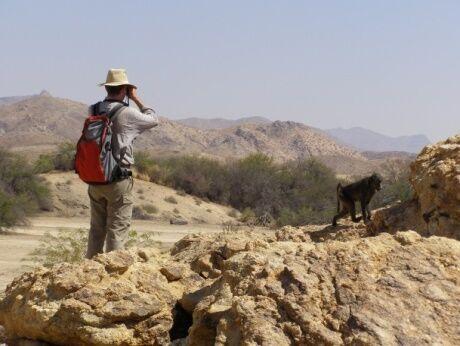
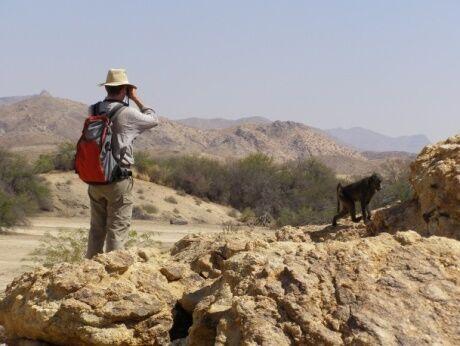
IMAGE

Credit: Dr Andrew King/Swansea University

An international team of scientists led by Swansea University biologists describe how novel technologies are transforming our understanding of why wild animals form different groups.

Combining animal tracking data with environmental data from satellites or drones means that scientists can begin to study whole groups and their interactions in the real, changing environments in which they live and have evolved.

Researchers now have access to gadgets such as bio-loggers, which are electronic tracking devices that attach to animals, recording GPS position and animal motion.

For example, swarms, shoals, flocks, herds and troops are just some of the types of groups wild animals form, but biologists in the latest edition of the journal Trends in Ecology & Evolution now believe this aforementioned new technology has resulted in a study of 'unprecedented detail'.

Getting data on the behaviour of all individuals within a group, at the same time for example, means the scientists have a complete overview of interactions.

Until now, this sort of data has only really been possible in the laboratory, where scientists tend to get data on the motion of individuals in fish shoals or insect colonies from video recordings.

Dr Andrew King, lead author and Associate Professor at Swansea University, commented: "Over the past decade we have learnt an extraordinary amount about collective behaviour of animals from work undertaken in the lab.

"But the environment in the lab is a lot simpler than the wild, and the compositions of the groups studied tend to be determined by the scientists."

Dr Ines Fürtbauer, co-author and senior lecturer at Swansea University, said: "Studying social behaviour in the wild is hard. When observing monkeys I have to focus my attention on one or two individuals at a time.

"Bio-loggers – which are electronic devices that can be attached to an animal, for example on a collar, are changing things – they can provide data on the behaviour of many individuals simultaneously."

Dr Gaëlle Fehlmann, co-author based at the Max Planck Institute of Ornithology in Germany, said: "These new data are allowing us to study social behaviours in unprecedented detail.

"Where wild animal groups are in conflict with people, for example, it means we can better predict how they may cope with any management imposed by people."

###

Media Contact

Ben Donovan
[email protected]
01-792-602-382
@swanseauni

http://www.swansea.ac.uk/

Related Journal Article

http://dx.doi.org/10.1016/j.tree.2018.03.004

Share12Tweet8Share2ShareShareShare2

Related Posts

Cooperation May Hold the Key to Reproductive Success

August 1, 2026
New informatics tools transform biodiversity data into actionable policy insights

New informatics tools transform biodiversity data into actionable policy insights

August 1, 2026

New discovery may help microbes withstand harsh industrial processes

August 1, 2026

New genetic tool reveals how genes are regulated

August 1, 2026
Please login to join discussion

POPULAR NEWS

  • Blocking Xenophagocytosis May Enable Interspecies Organ Generation

    29 shares
    Share 12 Tweet 7
  • Lipid nanoparticles deliver a powerful one-two punch against oral cancer

    29 shares
    Share 12 Tweet 7
  • Mapping Quark–Gluon Plasma’s Extreme Acceleration in Heavy-Ion Collisions

    29 shares
    Share 12 Tweet 7
  • Experts urge discussing nicotine e-cigarettes as smoking cessation tools

    29 shares
    Share 12 Tweet 7

About

We bring you the latest biotechnology news from best research centers and universities around the world. Check our website.

Follow us

Recent News

Blocking Xenophagocytosis May Enable Interspecies Organ Generation

Lipid nanoparticles deliver a powerful one-two punch against oral cancer

Mapping Quark–Gluon Plasma’s Extreme Acceleration in Heavy-Ion Collisions

Subscribe to Blog via Email

Enter your email address to subscribe to this blog and receive notifications of new posts by email.

Join 85 other subscribers
  • Contact Us

Bioengineer.org © Copyright 2023 All Rights Reserved.

Welcome Back!

Login to your account below

Forgotten Password?

Retrieve your password

Please enter your username or email address to reset your password.

Log In
No Result
View All Result
  • Homepages
    • Home Page 1
    • Home Page 2
  • News
  • National
  • Business
  • Health
  • Lifestyle
  • Science

Bioengineer.org © Copyright 2023 All Rights Reserved.