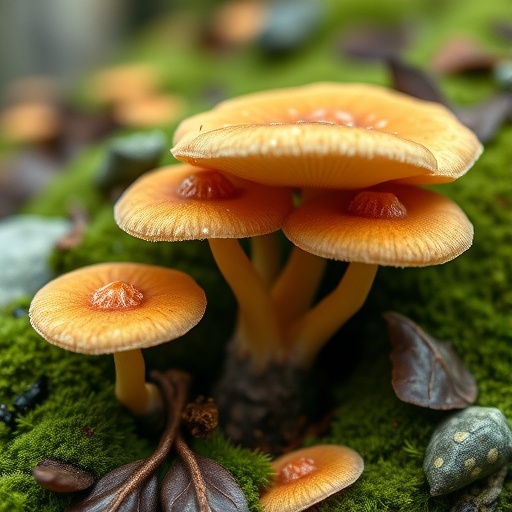
Uppsala University researchers have identified a completely new fungal species, naming it Semicentenialea rex in honor of Sweden’s King Carl XVI Gustaf’s 50 years on the throne. The name is not just ceremonial: assigning a formal Latin title to an organism makes it easier for scientists worldwide to study, compare, and discuss biodiversity that was previously hidden from view.
The fungus was isolated from roots and soil in Jädraås, in Sweden’s Gästrikland province. From the outset, the team suspected they were dealing with something evolutionarily unusual, because the organism sits within a largely unexplored branch of fungi primarily associated with rusts.
Rust fungi are famous plant parasites, typically harming leaves in above-ground infections. Semicentenialea rex, however, appears to live deep in the ground, forming a root-associated relationship. DNA sequencing of environmental samples suggests that this new fungal lineage occurs across many ecosystems worldwide, but usually at low abundance—consistent with why it had not been formally described.
To characterize the species, the researchers cultivated it and examined its morphology after eight weeks of growth. Microscopy revealed a network of hyphae—the filamentous structures fungi use to grow and spread. A defining microscopic feature was the presence of clamp connections, specialized structures that connect adjacent cells within hyphae, supporting consistent nuclear behavior during growth.
Using staining techniques, the team highlighted nuclei (pink) and cell walls and septa (blue), allowing them to track developmental changes. Within the hyphae, they observed multiple categories of swollen cells, including basidium-like cells, probasidium/teliospore-like cells, and intercalary swellings. These structures represent different developmental stages, giving researchers a window into how the fungus organizes growth and reproduction.
Phylogenetic analyses placed the fungus among Pucciniomycotina, again aligning it with the rust-fungi relatives, yet emphasizing a distinct lifestyle. Instead of producing disease symptoms on leaves, this lineage seems adapted to life underground, potentially shaping root-associated ecological interactions.
According to the study’s lead researchers, Semicentenialea rex may represent one of several related species within a new class. The work suggests additional members exist, but they are less common and therefore harder to detect and culture.
The findings have been published in IMA Fungus. Beyond taxonomy, giving this organism a name will help researchers investigate its soil-and-root strategy, its effects on plants, and how it propagates through subterranean environments.
Subject of Research: Cells
Article Title: Another dark taxon comes to light: Semicentenialomycetes, a new class within the Pucciniomycotina (Basidiomycota), and its first described representative, Semicentenialea rex
News Publication Date: 1-Jul-2026
Web References: http://dx.doi.org/10.3897/imafungus.17.189848
References: 10.3897/imafungus.17.189848
Image Credits: Anna Rosling/Uppsala University
Keywords: fungal diversity, taxonomy, Pucciniomycotina, rust fungi relatives, clamp connections, hyphae, soil ecology, root-associated fungi
Tags: biodiversity research in Swedenclamp connections in fungiDNA sequencing of soil fungifungal biodiversity discoveryfungal morphology and hyphal structuresfungi associated with plant rootsimpact of Latin naming conventionsnew fungal species descriptionrole of fungi in ecosystemsSemicentenialea rex namingunderground rust fungiunexplored fungal lineages