• HOME
  • NEWS
  • EXPLORE
    • CAREER
      • Companies
      • Jobs
    • EVENTS
    • iGEM
      • News
      • Team
    • PHOTOS
    • VIDEO
    • WIKI
  • BLOG
  • COMMUNITY
    • FACEBOOK
    • INSTAGRAM
    • TWITTER
Tuesday, June 2, 2026
BIOENGINEER.ORG
No Result
View All Result
  • Login
  • HOME
  • NEWS
  • EXPLORE
    • CAREER
      • Companies
      • Jobs
        • Lecturer
        • PhD Studentship
        • Postdoc
        • Research Assistant
    • EVENTS
    • iGEM
      • News
      • Team
    • PHOTOS
    • VIDEO
    • WIKI
  • BLOG
  • COMMUNITY
    • FACEBOOK
    • INSTAGRAM
    • TWITTER
  • HOME
  • NEWS
  • EXPLORE
    • CAREER
      • Companies
      • Jobs
        • Lecturer
        • PhD Studentship
        • Postdoc
        • Research Assistant
    • EVENTS
    • iGEM
      • News
      • Team
    • PHOTOS
    • VIDEO
    • WIKI
  • BLOG
  • COMMUNITY
    • FACEBOOK
    • INSTAGRAM
    • TWITTER
No Result
View All Result
Bioengineer.org
No Result
View All Result
Home NEWS Science News Biology

New fly species found in Indiana may indicate changing climate, says IUPUI researcher

Bioengineer by Bioengineer
October 18, 2018
in Biology
Reading Time: 2 mins read
0
Share on FacebookShare on TwitterShare on LinkedinShare on RedditShare on Telegram
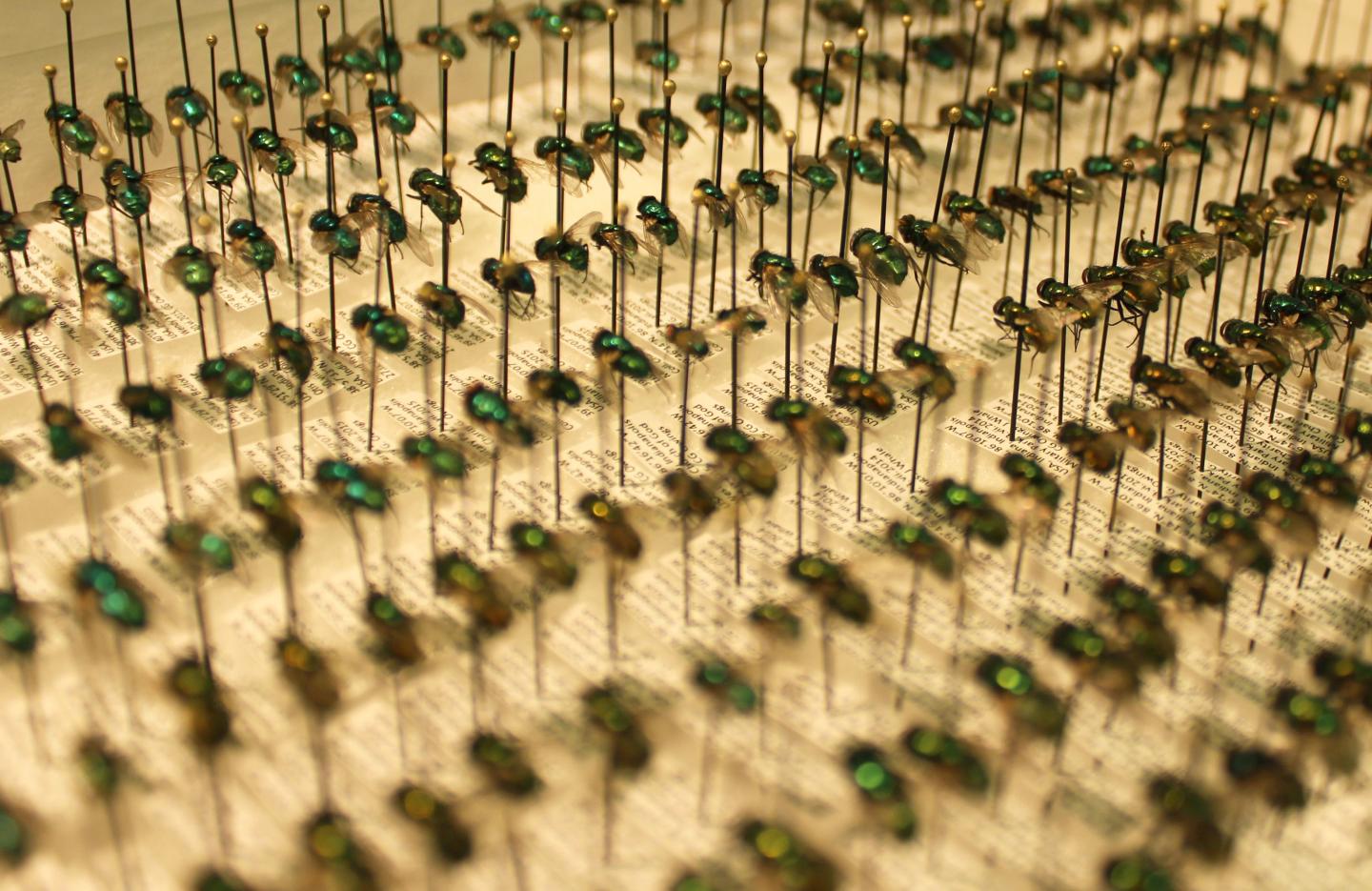
IMAGE

Credit: School of Science at IUPUI

INDIANAPOLIS — A new type of blow fly spotted in Indiana points to shifting species populations due to climate change. Researchers at IUPUI have observed the first evidence of Lucilia cuprina in Indiana, an insect previously known to populate southern states from Virginia to California.

Researchers recorded the L. cuprina species more than two dozen times from 2015 to 2017 in parks and other public places throughout Central Indiana. The fly was observed as far north as Michigan in the 1950s during a short period of warmer temperatures but had not been found in this region since then.

"As temperatures change and increase, the distributions of these insects will continue to change as well," said Christine J. Picard, an associate professor of biology. "There is definitely a northward movement of species — not just insects, but all species — as they try to find temperatures where they are more comfortable."

The movement of this species of fly into the Midwest could also have implications for forensic investigations involving decomposing remains. The growth and development of flies play an important role for scientists looking to learn how long a human or animal has been dead.

"With forensic science and forensic entomology, you should have an idea of which flies are present in your location in part because different species will have different development times," Picard said.

The L. cuprina blow fly's sister species Lucilla sericata is widely present in Indiana and is often used in forensic cases. Since the two species are so closely related, it's difficult to tell them apart. If investigators don't know they are dealing with an L. cuprina instead of the more typically seen L. sericata, their data could be inaccurate.

###

"New Distribution Record for Lucilia cuprina (Diptera: Calliphoridae) in Indiana, United States" is authored by Charity G. Owings and Picard and published in the July issue of Journal of Insect Science.

About the School of Science at IUPUI

The School of Science at IUPUI is committed to excellence in teaching, research and service in the biological, physical, computational, behavioral and mathematical sciences. The school is dedicated to being a leading resource for interdisciplinary research and science education in support of Indiana's effort to expand and diversify its economy.

Media Contact

Candace Gwaltney
[email protected]
317-274-0685

http://science.iupui.edu/

Original Source

https://science.iupui.edu/2018/10/new-fly-species-found-indiana-may-indicate-changing-climate-says-iupui-researcher http://dx.doi.org/10.1093/jisesa/iey071


Share12Tweet8Share2ShareShareShare2

Related Posts

Phage Sponge Proteins Diversify to Block Host Immunity — Biology

Phage Sponge Proteins Diversify to Block Host Immunity

June 2, 2026
Sharks Flourish in Prey-Rich Hotspots — Biology

Sharks Flourish in Prey-Rich Hotspots

June 2, 2026

WVU Study Finds Increased Movement and Reduced Sitting Linked to Healthier Pregnancies

June 2, 2026

PetD Amino Terminus Crucial for Cytochrome b6f

June 2, 2026
Please login to join discussion

POPULAR NEWS

  • ESMO 2025: mRNA COVID Vaccines Enhance Efficacy of Cancer Immunotherapy

    321 shares
    Share 128 Tweet 80
  • Multi-Hospital Study Reveals Long Covid Burden Is Twice as High as Current Estimates

    86 shares
    Share 34 Tweet 21
  • Saying Goodbye to PGY-6: Pediatric Fellowship Realities

    66 shares
    Share 26 Tweet 17
  • Common Food Preservatives Associated with Elevated Blood Pressure and Increased Heart Disease Risk

    57 shares
    Share 23 Tweet 14

About

We bring you the latest biotechnology news from best research centers and universities around the world. Check our website.

Follow us

Recent News

FAPESP and UK Initiate New Phase of Scientific Collaboration in London

Pennington Biomedical Pioneers Pediatric Obesity Prevalence Estimates Using New Lancet Commission Definition

Meta-operators Enable Optical, Wireless Image Processing

Subscribe to Blog via Email

Enter your email address to subscribe to this blog and receive notifications of new posts by email.

Join 82 other subscribers
  • Contact Us

Bioengineer.org © Copyright 2023 All Rights Reserved.

Welcome Back!

Login to your account below

Forgotten Password?

Retrieve your password

Please enter your username or email address to reset your password.

Log In
No Result
View All Result
  • Homepages
    • Home Page 1
    • Home Page 2
  • News
  • National
  • Business
  • Health
  • Lifestyle
  • Science

Bioengineer.org © Copyright 2023 All Rights Reserved.