• HOME
  • NEWS
  • EXPLORE
    • CAREER
      • Companies
      • Jobs
    • EVENTS
    • iGEM
      • News
      • Team
    • PHOTOS
    • VIDEO
    • WIKI
  • BLOG
  • COMMUNITY
    • FACEBOOK
    • INSTAGRAM
    • TWITTER
Thursday, June 25, 2026
BIOENGINEER.ORG
No Result
View All Result
  • Login
  • HOME
  • NEWS
  • EXPLORE
    • CAREER
      • Companies
      • Jobs
        • Lecturer
        • PhD Studentship
        • Postdoc
        • Research Assistant
    • EVENTS
    • iGEM
      • News
      • Team
    • PHOTOS
    • VIDEO
    • WIKI
  • BLOG
  • COMMUNITY
    • FACEBOOK
    • INSTAGRAM
    • TWITTER
  • HOME
  • NEWS
  • EXPLORE
    • CAREER
      • Companies
      • Jobs
        • Lecturer
        • PhD Studentship
        • Postdoc
        • Research Assistant
    • EVENTS
    • iGEM
      • News
      • Team
    • PHOTOS
    • VIDEO
    • WIKI
  • BLOG
  • COMMUNITY
    • FACEBOOK
    • INSTAGRAM
    • TWITTER
No Result
View All Result
Bioengineer.org
No Result
View All Result
Home NEWS Science News

New drug lead identified in fight against TB

Bioengineer by Bioengineer
March 1, 2017
in Science News
Reading Time: 2 mins read
0
Share on FacebookShare on TwitterShare on LinkedinShare on RedditShare on Telegram
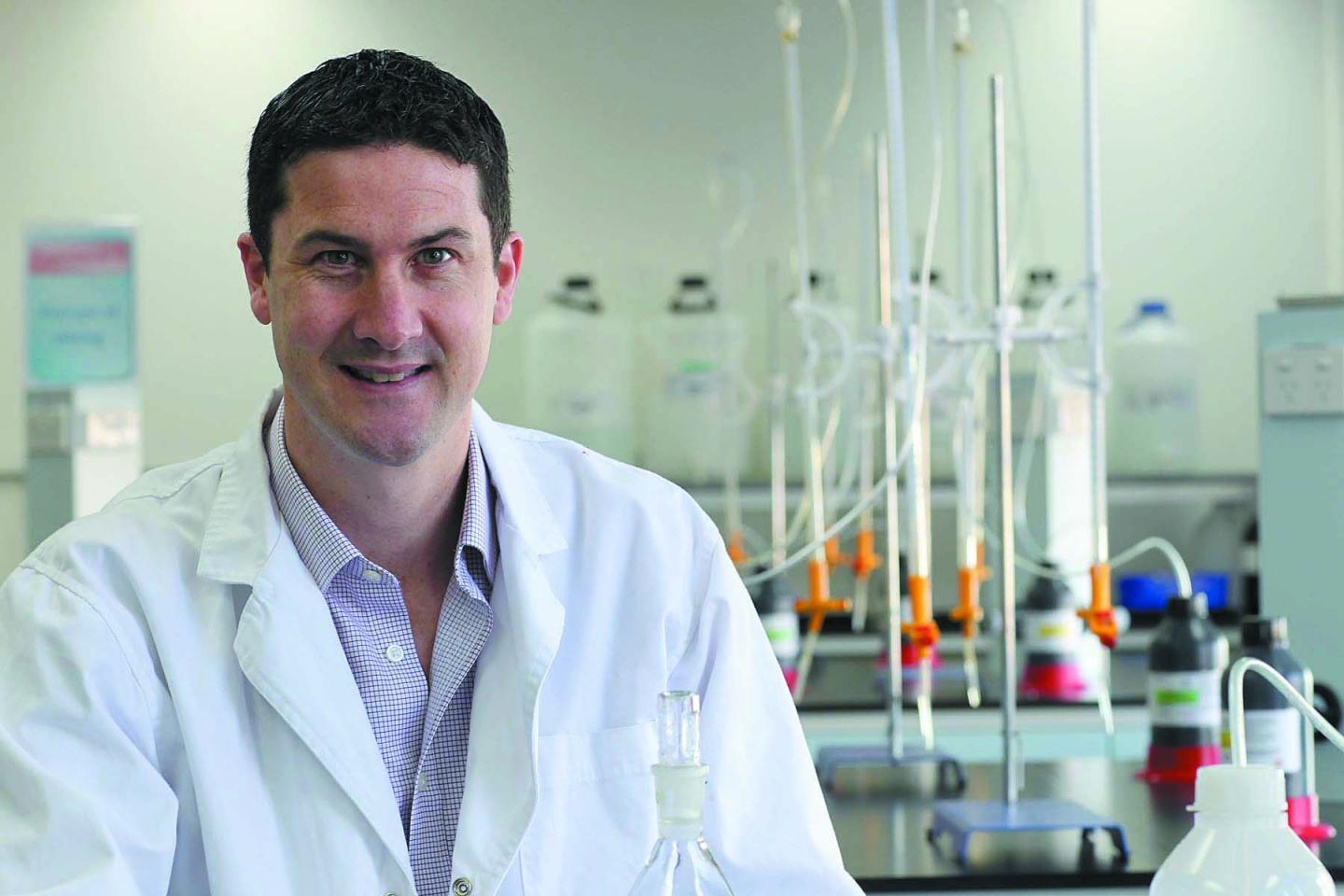
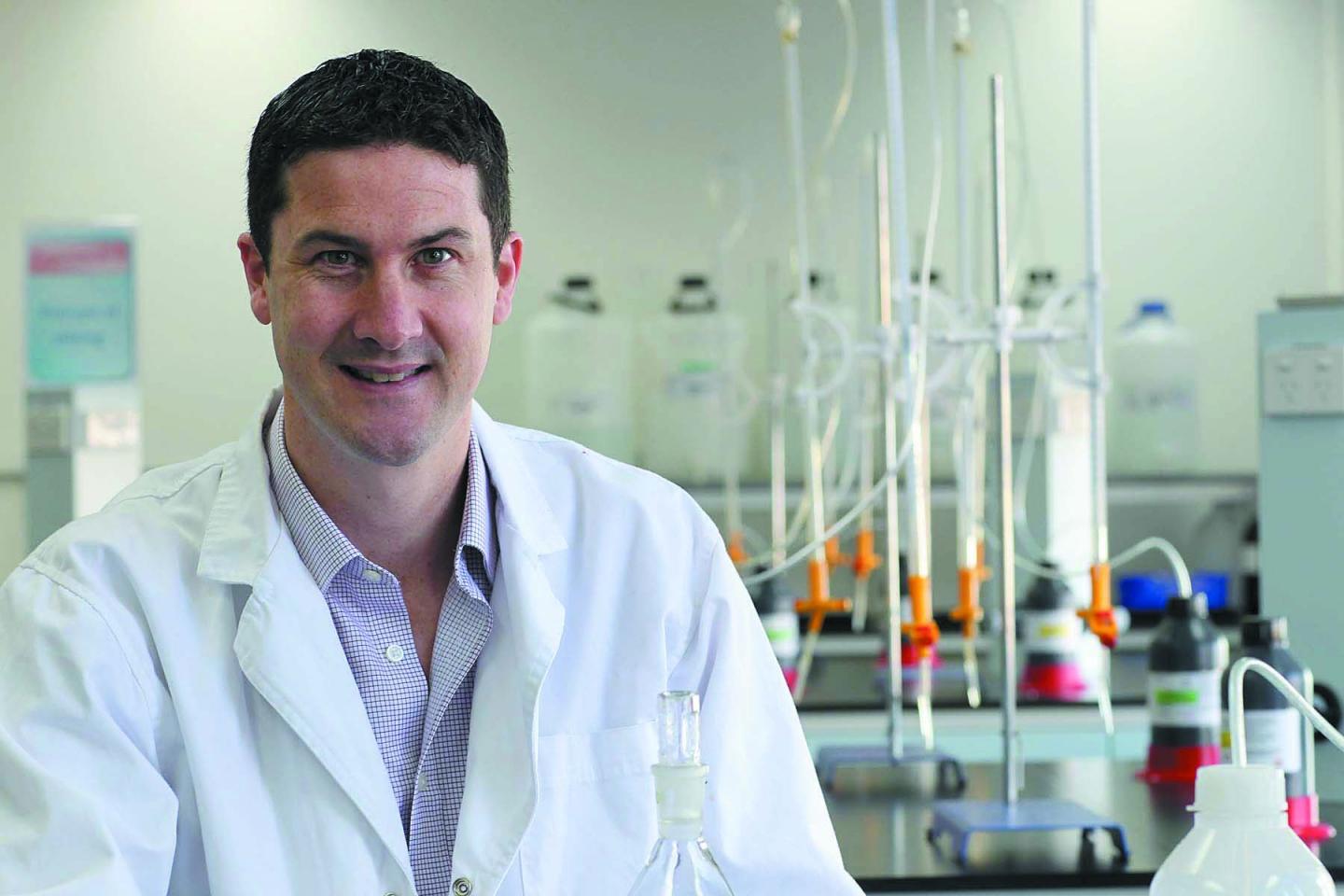
IMAGE

Credit: University of Sydney

Antibacterial compounds found in soil could spell the beginnings of a new treatment for tuberculosis, new research led by the University of Sydney has found.

Believed by many to be a relic of past centuries, tuberculosis (TB) causes more deaths than any other infectious disease including HIV/AIDs. In 2015 there were an estimated 10.4 million new cases of TB and 1.4 million deaths from the disease.

The bacterium causing TB (Mycobacterium tuberculosis) is becoming increasingly resistant to current therapies, meaning there is an urgent need to develop new TB drugs. In 2015 an estimated 480,000 cases were unresponsive to the two major drugs used to treat TB. It is estimated more than 250,000 TB deaths were from drug-resistant infections.

An international collaboration led by University Professors Richard Payne, from the School of Chemistry, and Warwick Britton, from the Sydney Medical School and the Centenary Institute, has discovered a new compound which could translate into a new drug lead for TB. Its findings were published in Nature Communications today.

The group was drawn to soil bacteria compounds known to effectively prevent other bacteria growing around them. Using synthetic chemistry the researchers were able to recreate these compounds with structural variations, turning them into more potent compounds called analogues. When tested in a containment laboratory these analogues proved to be effective killers of Mycobacterium tuberculosis.

"These analogues inhibit the action of a key protein needed to build a protective cell wall around the bacterium," said Professor Payne. "Without a cell wall, the bacterium dies. This wall-building protein is not targeted by currently available drugs.

"The analogues also effectively killed TB-causing bacteria inside macrophages, the cells in which the bacteria live in human lungs."

Professor Payne said the findings are the starting point for a new TB drug. Planning for further testing and safety studies is underway.

###

The research was done in collaboration with Colorado State University in the USA, Simon Fraser University in Canada, Warwick University in the UK, Monash University and the University of Queensland. It was funded by Australia's National Health and Medical Research Centre (NHMRC).

Professors Payne and Britton also belong to the University's Marie Bashir Institute for Infectious Diseases and Biosecurity. Professor Payne won the Malcolm McIntosh Prize for Physical Scientist of the Year at the 2016 Prime Minister's Science Prizes.

Media Contact

Vivienne Reiner
[email protected]
61-438-021-390
@SydneyUni_Media

http://www.usyd.edu.au/

############

Story Source: Materials provided by Scienmag

Share12Tweet8Share2ShareShareShare2

Related Posts

Tracking Lanthanide-Labeled Microplastics in Plants

June 25, 2026

POSTECH Researchers Slash Cost of Reconstituted Cell-Free Systems by 95%

June 25, 2026

AI and Physics Collaborate to Design Advanced Hydrogen Storage Materials

June 25, 2026

Natural Hallucinogens: Evolution’s Ecological Tools, Not Mere Chemical Byproducts

June 25, 2026
Please login to join discussion

POPULAR NEWS

  • Saying Goodbye to PGY-6: Pediatric Fellowship Realities

    103 shares
    Share 41 Tweet 26
  • Multi-Hospital Study Reveals Long Covid Burden Is Twice as High as Current Estimates

    92 shares
    Share 36 Tweet 23
  • Detection of EDCs in Breast Milk and Infant Urine Up to Six Months Highlights Early Exposure Risks

    77 shares
    Share 31 Tweet 19
  • New Drug Candidate Developed at McMaster Shows Potential for Treating Brain Cancer

    58 shares
    Share 23 Tweet 15

About

We bring you the latest biotechnology news from best research centers and universities around the world. Check our website.

Follow us

Recent News

Tracking Lanthanide-Labeled Microplastics in Plants

POSTECH Researchers Slash Cost of Reconstituted Cell-Free Systems by 95%

AI and Physics Collaborate to Design Advanced Hydrogen Storage Materials

Subscribe to Blog via Email

Enter your email address to subscribe to this blog and receive notifications of new posts by email.

Join 82 other subscribers
  • Contact Us

Bioengineer.org © Copyright 2023 All Rights Reserved.

Welcome Back!

Login to your account below

Forgotten Password?

Retrieve your password

Please enter your username or email address to reset your password.

Log In
No Result
View All Result
  • Homepages
    • Home Page 1
    • Home Page 2
  • News
  • National
  • Business
  • Health
  • Lifestyle
  • Science

Bioengineer.org © Copyright 2023 All Rights Reserved.