• HOME
  • NEWS
  • EXPLORE
    • CAREER
      • Companies
      • Jobs
    • EVENTS
    • iGEM
      • News
      • Team
    • PHOTOS
    • VIDEO
    • WIKI
  • BLOG
  • COMMUNITY
    • FACEBOOK
    • INSTAGRAM
    • TWITTER
Thursday, June 25, 2026
BIOENGINEER.ORG
No Result
View All Result
  • Login
  • HOME
  • NEWS
  • EXPLORE
    • CAREER
      • Companies
      • Jobs
        • Lecturer
        • PhD Studentship
        • Postdoc
        • Research Assistant
    • EVENTS
    • iGEM
      • News
      • Team
    • PHOTOS
    • VIDEO
    • WIKI
  • BLOG
  • COMMUNITY
    • FACEBOOK
    • INSTAGRAM
    • TWITTER
  • HOME
  • NEWS
  • EXPLORE
    • CAREER
      • Companies
      • Jobs
        • Lecturer
        • PhD Studentship
        • Postdoc
        • Research Assistant
    • EVENTS
    • iGEM
      • News
      • Team
    • PHOTOS
    • VIDEO
    • WIKI
  • BLOG
  • COMMUNITY
    • FACEBOOK
    • INSTAGRAM
    • TWITTER
No Result
View All Result
Bioengineer.org
No Result
View All Result
Home NEWS Science News Biology

New diagnostic tool developed for global menace Xylella fastidiosa increases specificity

Bioengineer by Bioengineer
April 23, 2019
in Biology
Reading Time: 2 mins read
0
IMAGE
Share on FacebookShare on TwitterShare on LinkedinShare on RedditShare on Telegram

IMAGE

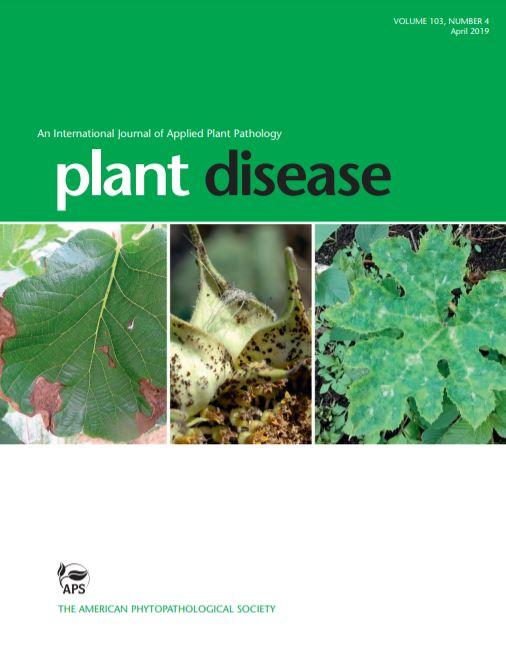
Credit: American Phytopathological Society

St. Paul, MN (April 2019)– The bacterium Xylella fastidiosa is notable for having a wide host range, with the ability to infect more than 300 plants. X. fastidiosa has a long history of causing serious harm to crops and trees in the Americas, with especially damaging repercussions on grapevine and citrus.

In 2013, X. fastidiosa was discovered for the first time outside of the Americas, attacking olive trees in southern Italy causing olive quick decline syndrome. Since then, it has been increasingly found in various environments throughout France and Spain on a variety of plant species and the demand for fast and reliable diagnostic tools is crucial to effective disease management strategies.

In a research article in Plant Disease, Bonants et al. record their efforts to improve the reliability of existing X. fastidiosa diagnostic tools. The team combined two existing tools with an internal control to develop a triplex TaqMan assay, which they then used to analyze DNA extracts in naturally infected plant material, artificially infected plant material, and uninfected plant material.

The triplex TaqMan assay has increased specificity as it targets two loci rather than just on locus on an X. fastidiosa genome. This is the first time a diagnostic tool of this type has been successfully developed for this pathogen.

Additionally, the researchers developed procedures for analyzing DNA extracts from both infected and healthy plants using next-generation sequencing (NGS) technology, marking the first time extracts from X. fastidiosa-infected plants were analyzed in this way. In all samples, DNA reads were detected specific for X. fastidiosa and in most cases the pathogen could be identified to the subspecies level. This new procedure leads the way for future track-and-trace studies.

###

More details about this study can be found in Development and Evaluation of a Triplex TaqMan Assay and Next-Generation Sequence Analysis for Improved Detection of Xylella in Plant Material in Plant Disease, Volume 103, Number 4, published April 2019.

About Plant Disease

Plant Disease is the leading international journal for rapid reporting of research on new, emerging, and established plant diseases. The journal publishes papers that describe translational and applied research focusing on practical aspects of disease diagnosis, development, and management in agricultural and horticultural crops. Follow us on Twitter @Plantdiseasej and visit https://apsjournals.apsnet.org/journal/pdis to learn more.

Media Contact
Ashley Bergman Carlin
[email protected]

Related Journal Article

http://dx.doi.org/10.1094/PDIS-08-18-1433-RE

Tags: Agricultural Production/EconomicsAgricultureBacteriologyEcology/EnvironmentFertilizers/Pest ManagementFood/Food SciencePlant Sciences
Share12Tweet8Share2ShareShareShare2

Related Posts

Natural Hallucinogens: Evolution’s Ecological Tools, Not Mere Chemical Byproducts

June 25, 2026

This Famous Butterfly Revealed: Three Distinct Species Hidden in One

June 25, 2026

Scientists Attack Soybean Cyst Nematode by Starving Its Food Source

June 25, 2026

Decoding the Secret Code of a Crucial Immune Sensor

June 24, 2026
Please login to join discussion

POPULAR NEWS

  • Saying Goodbye to PGY-6: Pediatric Fellowship Realities

    103 shares
    Share 41 Tweet 26
  • Multi-Hospital Study Reveals Long Covid Burden Is Twice as High as Current Estimates

    92 shares
    Share 36 Tweet 23
  • Detection of EDCs in Breast Milk and Infant Urine Up to Six Months Highlights Early Exposure Risks

    77 shares
    Share 31 Tweet 19
  • New Drug Candidate Developed at McMaster Shows Potential for Treating Brain Cancer

    58 shares
    Share 23 Tweet 15

About

We bring you the latest biotechnology news from best research centers and universities around the world. Check our website.

Follow us

Recent News

Tracking Lanthanide-Labeled Microplastics in Plants

POSTECH Researchers Slash Cost of Reconstituted Cell-Free Systems by 95%

AI and Physics Collaborate to Design Advanced Hydrogen Storage Materials

Subscribe to Blog via Email

Enter your email address to subscribe to this blog and receive notifications of new posts by email.

Join 82 other subscribers
  • Contact Us

Bioengineer.org © Copyright 2023 All Rights Reserved.

Welcome Back!

Login to your account below

Forgotten Password?

Retrieve your password

Please enter your username or email address to reset your password.

Log In
No Result
View All Result
  • Homepages
    • Home Page 1
    • Home Page 2
  • News
  • National
  • Business
  • Health
  • Lifestyle
  • Science

Bioengineer.org © Copyright 2023 All Rights Reserved.