• HOME
  • NEWS
  • EXPLORE
    • CAREER
      • Companies
      • Jobs
    • EVENTS
    • iGEM
      • News
      • Team
    • PHOTOS
    • VIDEO
    • WIKI
  • BLOG
  • COMMUNITY
    • FACEBOOK
    • INSTAGRAM
    • TWITTER
Friday, June 26, 2026
BIOENGINEER.ORG
No Result
View All Result
  • Login
  • HOME
  • NEWS
  • EXPLORE
    • CAREER
      • Companies
      • Jobs
        • Lecturer
        • PhD Studentship
        • Postdoc
        • Research Assistant
    • EVENTS
    • iGEM
      • News
      • Team
    • PHOTOS
    • VIDEO
    • WIKI
  • BLOG
  • COMMUNITY
    • FACEBOOK
    • INSTAGRAM
    • TWITTER
  • HOME
  • NEWS
  • EXPLORE
    • CAREER
      • Companies
      • Jobs
        • Lecturer
        • PhD Studentship
        • Postdoc
        • Research Assistant
    • EVENTS
    • iGEM
      • News
      • Team
    • PHOTOS
    • VIDEO
    • WIKI
  • BLOG
  • COMMUNITY
    • FACEBOOK
    • INSTAGRAM
    • TWITTER
No Result
View All Result
Bioengineer.org
No Result
View All Result
Home Headlines

New dental implant with built-in reservoir reduces risk of infections

Bioengineer.org by Bioengineer.org
January 29, 2018
in Headlines, Health, Science News
Reading Time: 2 mins read
0
Share on FacebookShare on TwitterShare on LinkedinShare on RedditShare on Telegram
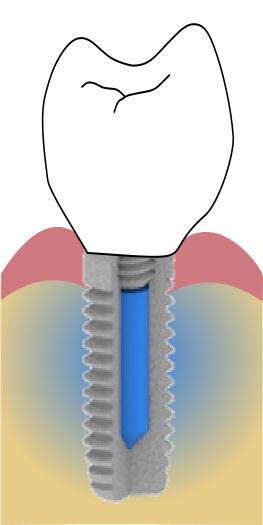
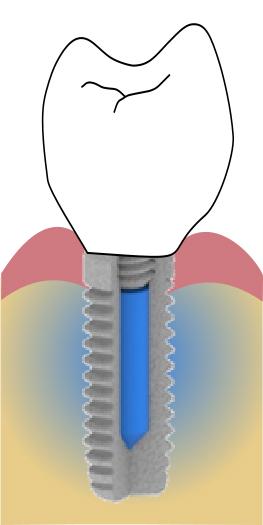
IMAGE

Credit: © KU Leuven – Kaat De Cremer

A multidisciplinary team of researchers at KU Leuven (University of Leuven, Belgium) has developed a dental implant that gradually releases drugs from a built-in reservoir. This helps prevent and fight infections.

Our mouth contains many micro-organisms, including bacterial and fungal pathogens. On traditional dental implants, these pathogens can quickly form a so-called biofilm, which is resistant to antimicrobial drugs like antibiotics. As a result, these implants come with a significant risk of infections that may be difficult to treat.

KU Leuven researchers have now developed a new dental implant that reduces the risk of infections. "Our implant has a built-in reservoir underneath the crown of the tooth," explains lead author Kaat De Cremer. "A cover screw makes it easy to fill this reservoir with antimicrobial drugs (see image 1). The implant is made of a porous composite material, so that the drugs gradually diffuse from the reservoir to the outside of the implant, which is in direct contact with the bone cells (see image 2). As a result, the bacteria can no longer form a biofilm."

In the lab, the implant was subjected to various tests for use with chlorhexidine, a universal mouthwash with a powerful antimicrobial effect. The study shows that the Streptococcus mutans, a type of mouth bacteria that affect the teeth, can no longer form biofilms on the outside of the implant when the reservoir is filled with the mouthwash. Biofilms that were grown beforehand on the implant could be eliminated in the same way. This means that the implant is effective in terms of both preventing and curing infections.

###

This study was led by Dr Karin Thevissen, Dr Kaat De Cremer, and Dr Annabel Braem. It is a collaboration between the KU Leuven Centre for Microbial and Plant Genetics, the KU Leuven Department of Materials Engineering, the KU Leuven Biomaterials Research Unit, and the KU Leuven Centre for Surface Chemistry and Catalysis. The study was funded by the KU Leuven Industrial Research Fund.

Media Contact

Karin Thevissen
[email protected]
32-163-29688

Annabel Braem
[email protected]
32-163-21534
Share12Tweet8Share2ShareShareShare2

Related Posts

Tracking Lanthanide-Labeled Microplastics in Plants

June 25, 2026

POSTECH Researchers Slash Cost of Reconstituted Cell-Free Systems by 95%

June 25, 2026

AI and Physics Collaborate to Design Advanced Hydrogen Storage Materials

June 25, 2026

Natural Hallucinogens: Evolution’s Ecological Tools, Not Mere Chemical Byproducts

June 25, 2026
Please login to join discussion

POPULAR NEWS

  • Saying Goodbye to PGY-6: Pediatric Fellowship Realities

    103 shares
    Share 41 Tweet 26
  • Multi-Hospital Study Reveals Long Covid Burden Is Twice as High as Current Estimates

    92 shares
    Share 36 Tweet 23
  • Detection of EDCs in Breast Milk and Infant Urine Up to Six Months Highlights Early Exposure Risks

    77 shares
    Share 31 Tweet 19
  • New Drug Candidate Developed at McMaster Shows Potential for Treating Brain Cancer

    58 shares
    Share 23 Tweet 15

About

We bring you the latest biotechnology news from best research centers and universities around the world. Check our website.

Follow us

Recent News

Tracking Lanthanide-Labeled Microplastics in Plants

POSTECH Researchers Slash Cost of Reconstituted Cell-Free Systems by 95%

AI and Physics Collaborate to Design Advanced Hydrogen Storage Materials

Subscribe to Blog via Email

Success! An email was just sent to confirm your subscription. Please find the email now and click 'Confirm' to start subscribing.

Join 82 other subscribers
  • Contact Us

Bioengineer.org © Copyright 2023 All Rights Reserved.

Welcome Back!

Login to your account below

Forgotten Password?

Retrieve your password

Please enter your username or email address to reset your password.

Log In
No Result
View All Result
  • Homepages
    • Home Page 1
    • Home Page 2
  • News
  • National
  • Business
  • Health
  • Lifestyle
  • Science

Bioengineer.org © Copyright 2023 All Rights Reserved.