Credit: Juha Rutanen
A new deep learning model developed by researchers at the University of Eastern Finland can identify sleep stages as accurately as an experienced physician. This opens up new avenues for the diagnostics and treatment of sleep disorders, including obstructive sleep apnoea.
Obstructive sleep apnoea (OSA) is a nocturnal breathing disorder that causes a major burden on public health care systems and national economies. It is estimated that up to one billion people worldwide suffer from obstructive sleep apnoea, and the number is expected to grow due to population ageing and increased prevalence of obesity. When untreated, OSA increases the risk of cardiovascular diseases and diabetes, among other severe health consequences.
The identification of sleep stages is essential in the diagnostics of sleep disorders, including obstructive sleep apnoea. Traditionally, sleep is manually classified into five stages, which are wake, rapid eye movement (REM) sleep and three stages of non-REM sleep. However, manual scoring of sleep stages is time-consuming, subjective and costly.
To overcome these challenges, researchers at the University of Eastern Finland used polysomnographic recording data from healthy individuals and individuals with suspected OSA to develop an accurate deep learning model for automatic classification of sleep stages. In addition, they wanted to find out how the severity of OSA affects classification accuracy.
In healthy individuals, the model was able to identify sleep stages with an 83.7% accuracy when using a single frontal electroencephalography channel (EEG), and with an 83.9% accuracy when supplemented with electrooculogram (EOG). In patients with suspected OSA, the model achieved accuracies of 82.9% (single EEG channel) and 83.8% (EEG and EOG channels). The single-channel accuracies ranged from 84.5% for individuals without OSA to 76.5% for severe OSA patients. The accuracies achieved by the model are equivalent to the correspondence between experienced physicians performing manual sleep scoring. However, the model has the benefit of being systematic and always following the same protocol, and conducting the scoring in a matter of seconds.
According to the researchers, deep learning enables automatic sleep staging for suspected OSA patients with a high accuracy. The study was published in IEEE Journal of Biomedical and Health Informatics.
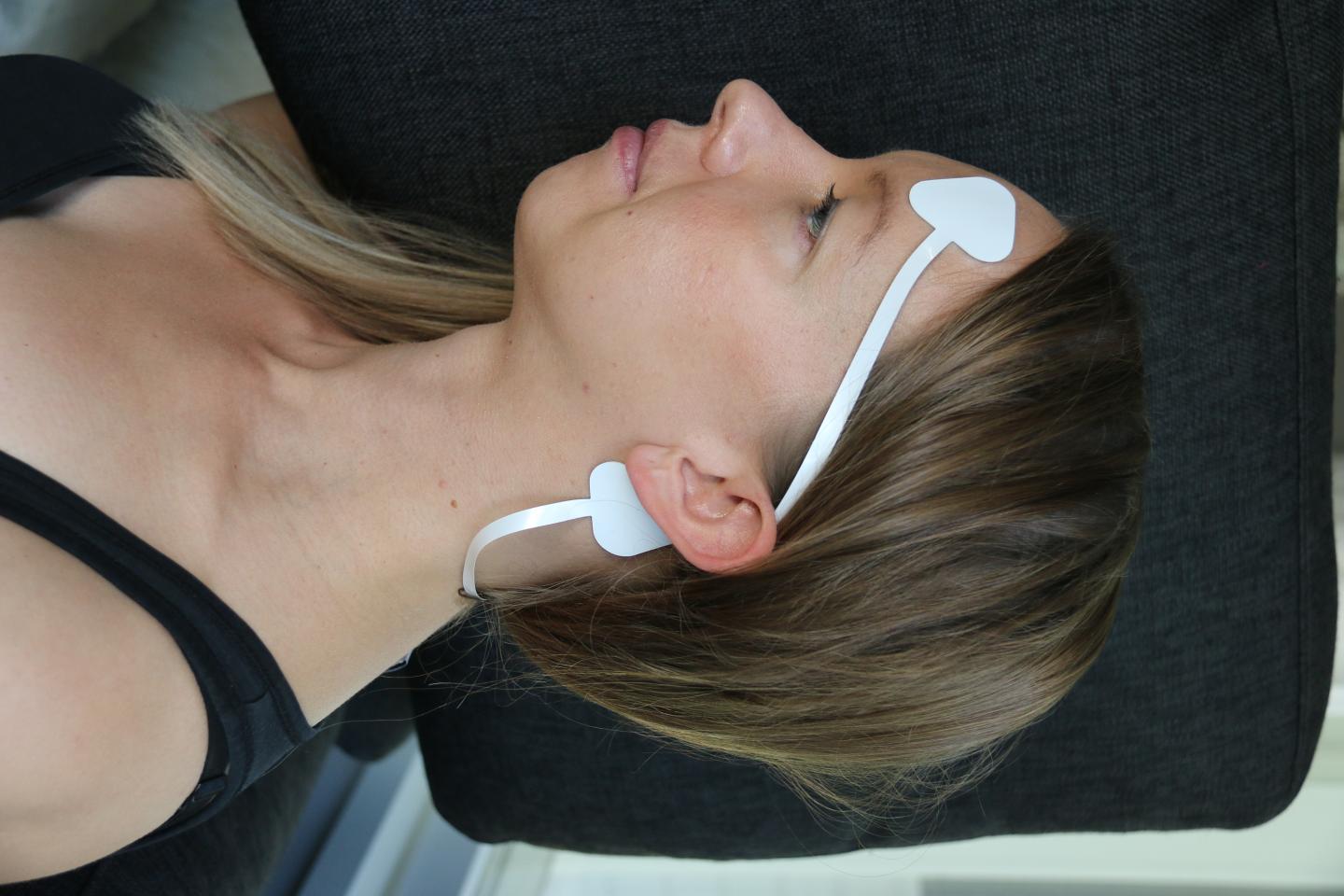
The Sleep Technology and Analytics Group, STAG, at the University of Eastern Finland solves sleep diagnostics challenges by using a variety of different approaches. The methods developed by the group are based on wearable, non-intrusive sensors, better diagnostic parameters and modern computational solutions that are based on artificial intelligence. The new methods developed by the group are expected to significantly improve OSA severity assessment, promote individualised treatment planning and more reliable prediction of OSA-related daytime symptoms and comorbidities.
###
For further information, please contact:
Senior Researcher Sami Myllymaa, PhD, tel. +358 40 557 2499, sami.myllymaa (at) uef.fi
Researcher Henri Korkalainen, tel. +358405344710, henri.korkalainen (at) uef.fi
Sleep Technology and Analytics Group, https:/
Research article:
Korkalainen H, Aakko J, Nikkonen S, Kainulainen S, Leino A, Duce B, Afara IO, Myllymaa S, Töyräs J, Leppänen T. Accurate Deep Learning-Based Sleep Staging in a Clinical Population with Suspected Obstructive Sleep Apnea. IEEE J Biomed Health Inform. 2019 Dec 19. DOI: 0.1109/JBHI.2019.2951346
https:/
Media Contact
Sami Myllymaa
[email protected]
358-405-572-499
Related Journal Article
http://dx.