• HOME
  • NEWS
  • EXPLORE
    • CAREER
      • Companies
      • Jobs
    • EVENTS
    • iGEM
      • News
      • Team
    • PHOTOS
    • VIDEO
    • WIKI
  • BLOG
  • COMMUNITY
    • FACEBOOK
    • INSTAGRAM
    • TWITTER
Friday, June 26, 2026
BIOENGINEER.ORG
No Result
View All Result
  • Login
  • HOME
  • NEWS
  • EXPLORE
    • CAREER
      • Companies
      • Jobs
        • Lecturer
        • PhD Studentship
        • Postdoc
        • Research Assistant
    • EVENTS
    • iGEM
      • News
      • Team
    • PHOTOS
    • VIDEO
    • WIKI
  • BLOG
  • COMMUNITY
    • FACEBOOK
    • INSTAGRAM
    • TWITTER
  • HOME
  • NEWS
  • EXPLORE
    • CAREER
      • Companies
      • Jobs
        • Lecturer
        • PhD Studentship
        • Postdoc
        • Research Assistant
    • EVENTS
    • iGEM
      • News
      • Team
    • PHOTOS
    • VIDEO
    • WIKI
  • BLOG
  • COMMUNITY
    • FACEBOOK
    • INSTAGRAM
    • TWITTER
No Result
View All Result
Bioengineer.org
No Result
View All Result
Home NEWS Science News

New data unearths pesticide peril in beehives

Bioengineer by Bioengineer
April 20, 2017
in Science News
Reading Time: 2 mins read
0
Share on FacebookShare on TwitterShare on LinkedinShare on RedditShare on Telegram
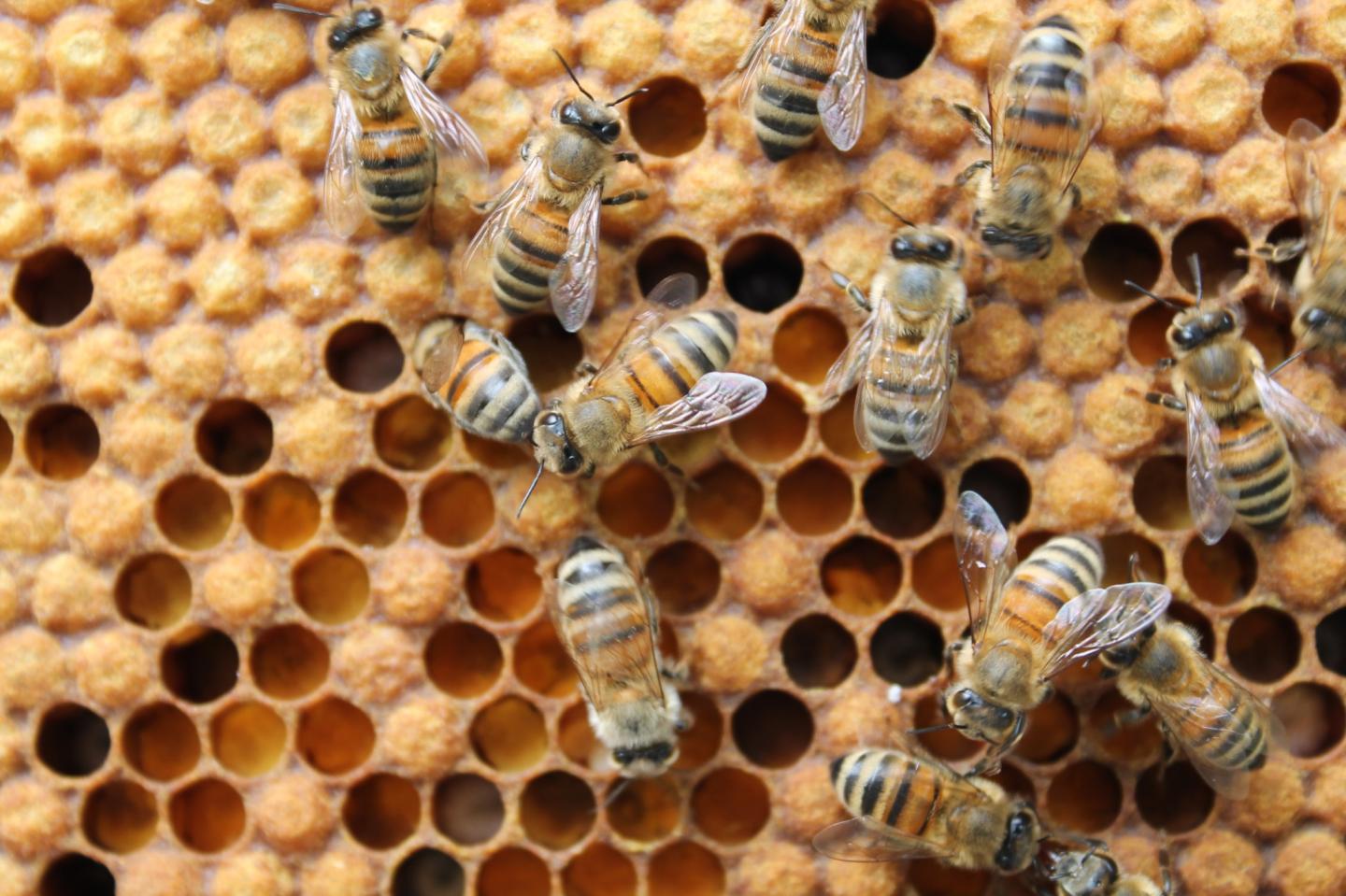
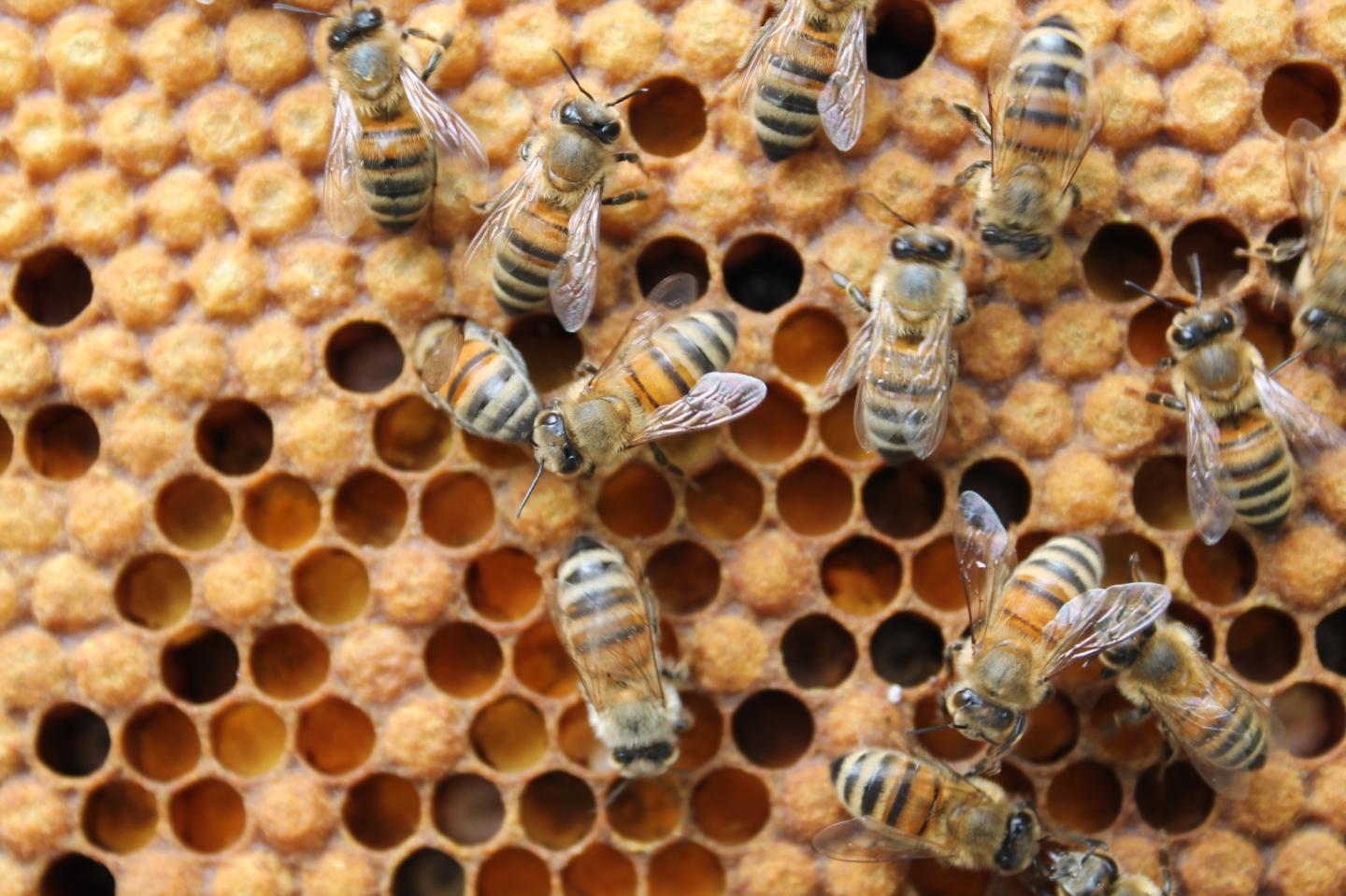
IMAGE

Credit: Credit: Emma Mullen

Honeybees – employed to pollinate crops during the blooming season – encounter danger due to lingering and wandering pesticides, according to a new Cornell University study that analyzed the bee's own food.

Researchers used 120 pristine honeybee colonies that were placed near 30 apple orchards around New York state. After allowing the bees to forage for several days during the apple flowering period, the scientists examined each hive's "beebread" – the bees' food stores made from gathered pollen – to search for traces of pesticides.

In 17 percent of colonies, the beebread revealed the presence of acutely high levels of pesticide exposure, while 73 percent were found to have chronic exposure.

"Surprisingly, there is not much known about the magnitude of risk or mechanisms of pesticide exposure when honeybees are brought in to pollinate major agricultural crops," said lead author Scott McArt, assistant professor of entomology at Cornell. "Beekeepers are very concerned about pesticides, but there's very little field data. We're trying to fill that gap in knowledge, so there's less mystery and more fact regarding this controversial topic."

More than 60 percent of the found pesticides were attributed to orchards and surrounding farmland that were not sprayed during the apple bloom season, according to the study. McArt said that persistent insecticides aimed at other crops may be surrounding the orchards. In addition, pre-bloom sprays in orchards may accumulate in nearby flowering weeds.

"We found risk was attributed to many different types of pesticides. Neonicotinoids were not the whole story, but they were part of the story." he said. "Because neonicotinoids are persistent in the environment and accumulate in pollen and nectar, they are of concern. But one of our major findings is that many other pesticides contribute to risk."

###

The study, "High Pesticide Risk to Honeybees Despite Low Focal Crop Pollen Collection During Pollination of a Mass Blooming Crop was published April 19 in Nature Scientific Reports.

The New York Farm Viability Institute funded this research.

Cornell University has television, ISDN and dedicated Skype/Google+ Hangout studios available for media interviews. For additional information, see this Cornell Chronicle story.

Media Contact

Melissa Osgood
[email protected]
607-255-2059
@cornell

http://pressoffice.cornell.edu

############

Story Source: Materials provided by Scienmag

Share12Tweet8Share2ShareShareShare2

Related Posts

Tracking Lanthanide-Labeled Microplastics in Plants

June 25, 2026

POSTECH Researchers Slash Cost of Reconstituted Cell-Free Systems by 95%

June 25, 2026

AI and Physics Collaborate to Design Advanced Hydrogen Storage Materials

June 25, 2026

Natural Hallucinogens: Evolution’s Ecological Tools, Not Mere Chemical Byproducts

June 25, 2026
Please login to join discussion

POPULAR NEWS

  • Saying Goodbye to PGY-6: Pediatric Fellowship Realities

    103 shares
    Share 41 Tweet 26
  • Multi-Hospital Study Reveals Long Covid Burden Is Twice as High as Current Estimates

    92 shares
    Share 36 Tweet 23
  • Detection of EDCs in Breast Milk and Infant Urine Up to Six Months Highlights Early Exposure Risks

    77 shares
    Share 31 Tweet 19
  • New Drug Candidate Developed at McMaster Shows Potential for Treating Brain Cancer

    58 shares
    Share 23 Tweet 15

About

We bring you the latest biotechnology news from best research centers and universities around the world. Check our website.

Follow us

Recent News

Tracking Lanthanide-Labeled Microplastics in Plants

POSTECH Researchers Slash Cost of Reconstituted Cell-Free Systems by 95%

AI and Physics Collaborate to Design Advanced Hydrogen Storage Materials

Subscribe to Blog via Email

Success! An email was just sent to confirm your subscription. Please find the email now and click 'Confirm' to start subscribing.

Join 82 other subscribers
  • Contact Us

Bioengineer.org © Copyright 2023 All Rights Reserved.

Welcome Back!

Login to your account below

Forgotten Password?

Retrieve your password

Please enter your username or email address to reset your password.

Log In
No Result
View All Result
  • Homepages
    • Home Page 1
    • Home Page 2
  • News
  • National
  • Business
  • Health
  • Lifestyle
  • Science

Bioengineer.org © Copyright 2023 All Rights Reserved.