• HOME
  • NEWS
  • EXPLORE
    • CAREER
      • Companies
      • Jobs
    • EVENTS
    • iGEM
      • News
      • Team
    • PHOTOS
    • VIDEO
    • WIKI
  • BLOG
  • COMMUNITY
    • FACEBOOK
    • INSTAGRAM
    • TWITTER
Saturday, May 9, 2026
BIOENGINEER.ORG
No Result
View All Result
  • Login
  • HOME
  • NEWS
  • EXPLORE
    • CAREER
      • Companies
      • Jobs
        • Lecturer
        • PhD Studentship
        • Postdoc
        • Research Assistant
    • EVENTS
    • iGEM
      • News
      • Team
    • PHOTOS
    • VIDEO
    • WIKI
  • BLOG
  • COMMUNITY
    • FACEBOOK
    • INSTAGRAM
    • TWITTER
  • HOME
  • NEWS
  • EXPLORE
    • CAREER
      • Companies
      • Jobs
        • Lecturer
        • PhD Studentship
        • Postdoc
        • Research Assistant
    • EVENTS
    • iGEM
      • News
      • Team
    • PHOTOS
    • VIDEO
    • WIKI
  • BLOG
  • COMMUNITY
    • FACEBOOK
    • INSTAGRAM
    • TWITTER
No Result
View All Result
Bioengineer.org
No Result
View All Result
Home NEWS Science News Biology

New Curtin research resurrects ‘lost’ coral species

Bioengineer by Bioengineer
May 5, 2022
in Biology
Reading Time: 3 mins read
0
David Juszkiewicz with a Plesiastrea coral. Photo - Nicole Carey
Share on FacebookShare on TwitterShare on LinkedinShare on RedditShare on Telegram

With about one-third of the world’s corals currently under threat of extinction due to climate change, Curtin researchers have made the encouraging discovery of a ‘lost’ species of coral that had been hidden for more than 50 years.
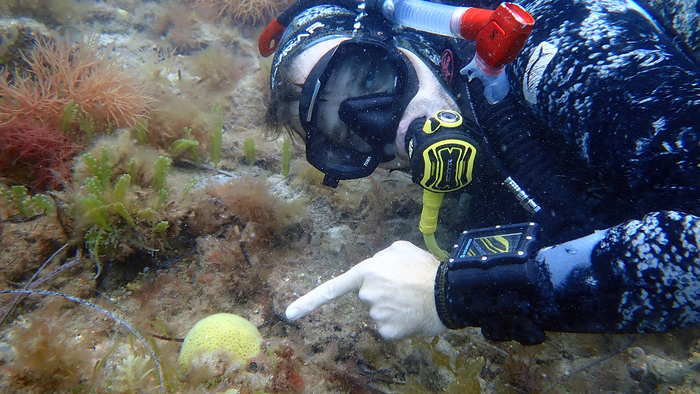
David Juszkiewicz with a Plesiastrea coral. Photo - Nicole Carey

Credit: Nicole Carey

With about one-third of the world’s corals currently under threat of extinction due to climate change, Curtin researchers have made the encouraging discovery of a ‘lost’ species of coral that had been hidden for more than 50 years.

Lead author PhD student Mr David Juszkiewicz, from the Coral Conservation and Research Group within the Trace and Environmental DNA (TrEnD) Laboratory in Curtin’s School of Molecular and Life Sciences, said researchers found the coral Plesiastrea versipora, which is widespread in the Indo-Pacific Ocean, was actually hiding a second, cryptic species.

“The species Plesiastrea peroni was described some 200 years ago however as time went on taxonomists clumped it with Plesiastrea versipora but we have now resurrected the former species, which had been hidden for more half a century,” Mr Juszkiewicz said.

“We trawled through 200 years of historical and modern-day literature to firstly understand the larger morphological characteristics of Plesiastrea versipora, which was first described as a single species in 1816.

“By diving on various sites around Australia and the Indo-Pacific, we collected samples, which we used to study the micromorphology and microstructure of the coral skeleton to further identify its unique intricate features.

“After carrying out genetic sequencing, we found this species of coral actually contained a second, cryptic species, which we named Plesiastrea peroni – and this is found north of the Tropic of Capricorn in Australia and across the Indo-Pacific.

“Being able to accurately identify species is paramount to quality ecological research and conservation decision-making, so this study will allow coral ecologists and biologists to know which species of Plesiastrea they are working on.”

Mr Juszkiewicz said the discovery of a new species assisted in biodiversity conservation and helped to prevent the loss of species diversity.

“With the ever-worsening impact of climate change on the marine environment, it has never been more important to understand coral species and where they occur,” Mr Juszkiewicz said.

“We cannot protect species if we do not know about their existence or their present-day geographic range so this study is a step towards achieving this.

“With many species of both marine and terrestrial life under threat from human-driven climate change, this study bolsters our understanding of the tree of life and highlights the importance of taxonomy projects that help us understand the organisms that exist on our planet, how they are all related and how to better protect them.”

The full research paper, ‘Phylogeography of recent Plesiastrea (Scleractinia: Plesiastreidae) based on anintegrated taxonomic approach’, was published in ‘Molecular Phylogenetics and Evolution’ and can be found online here.


Journal

Molecular Phylogenetics and Evolution

DOI

10.1016/j.ympev.2022.107469

Method of Research

Observational study

Subject of Research

Animals

Article Title

Phylogeography of recent Plesiastrea (Scleractinia: Plesiastreidae) based on anintegrated taxonomic approach’

Article Publication Date

5-May-2022

COI Statement

n/a

Share12Tweet8Share2ShareShareShare2

Related Posts

Ancient Plant Populations Reveal Fresh Insights into Climate Resilience — Biology

Ancient Plant Populations Reveal Fresh Insights into Climate Resilience

May 8, 2026
Rare Brain Disorders in Children Linked to Mutations in Lesser-Known Protein Complex — Biology

Rare Brain Disorders in Children Linked to Mutations in Lesser-Known Protein Complex

May 8, 2026

From Odd Insect to Underwater Predator: The Remarkable Evolution of a Bloodthirsty Fruit Fly

May 8, 2026

SNU Professor Sangwoo Seo’s Team Develops Next-Generation CRISPR Biocontainment Technology to Control Microbial Survival Without DNA Cleavage

May 8, 2026

POPULAR NEWS

  • Research Indicates Potential Connection Between Prenatal Medication Exposure and Elevated Autism Risk

    839 shares
    Share 336 Tweet 210
  • New Study Reveals Plants Can Detect the Sound of Rain

    726 shares
    Share 290 Tweet 181
  • Scientists Investigate Possible Connection Between COVID-19 and Increased Lung Cancer Risk

    68 shares
    Share 27 Tweet 17
  • Salmonella Haem Blocks Macrophages, Boosts Infection

    61 shares
    Share 24 Tweet 15

About

We bring you the latest biotechnology news from best research centers and universities around the world. Check our website.

Follow us

Recent News

Tracing Health & Longevity Across Four Generations

Ultrasound Neuromodulation Disrupts Pain Processing in Brain

Fall Risk and Counts by Functional Status in Hip Fracture

Subscribe to Blog via Email

Enter your email address to subscribe to this blog and receive notifications of new posts by email.

Join 82 other subscribers
  • Contact Us

Bioengineer.org © Copyright 2023 All Rights Reserved.

Welcome Back!

Login to your account below

Forgotten Password?

Retrieve your password

Please enter your username or email address to reset your password.

Log In
No Result
View All Result
  • Homepages
    • Home Page 1
    • Home Page 2
  • News
  • National
  • Business
  • Health
  • Lifestyle
  • Science

Bioengineer.org © Copyright 2023 All Rights Reserved.