In a groundbreaking advancement in oncological therapeutics, researchers have unveiled promising results from a phase II clinical trial investigating a novel combination therapy for cancer of unknown primary (CUP). The study, spearheaded by Zhang, X., Zhao, T., Xu, M., and their colleagues, introduces a second-line treatment regimen combining an anti-PD-1 immune checkpoint inhibitor with nab-paclitaxel—a nanoparticle albumin-bound form of the chemotherapeutic paclitaxel—and bevacizumab, an anti-angiogenic monoclonal antibody. Published in Nature Communications, this innovative therapeutic approach addresses one of the most challenging and enigmatic malignancies, offering renewed hope for patients who historically have had limited treatment options and poor prognoses.
Cancer of unknown primary presents a unique clinical conundrum wherein metastatic tumors are detected, but the primary tumor remains elusive despite exhaustive diagnostic efforts. This obscurity complicates treatment strategies, as common oncologic protocols often rely on primary tumor biology to select targeted therapies. Conventional treatment modalities for CUP have been largely empirical, with chemotherapy regimens providing modest benefits at best. The urgent need for tailored therapies targeting the tumor microenvironment and immune evasion mechanisms has motivated the exploration of immune checkpoint inhibitors and anti-angiogenic agents in this context.
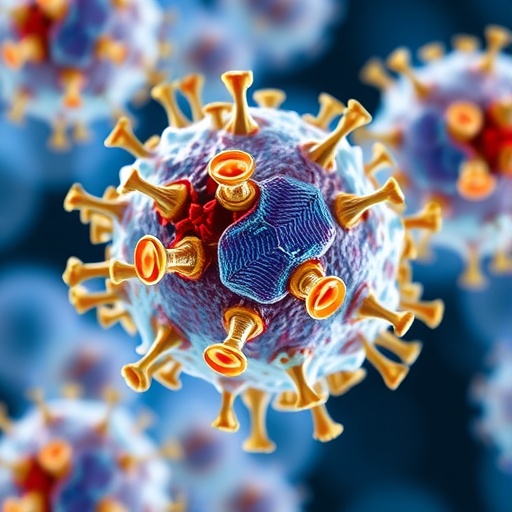
The rationale behind co-administering anti-PD-1 inhibitors with nab-paclitaxel and bevacizumab stems from the intricate interplay between tumor immunogenicity, angiogenesis, and chemotherapeutic sensitization. PD-1, or programmed death-1 receptor, is an immune checkpoint molecule expressed on T cells that downregulates immune responses when engaged by its ligands PD-L1 and PD-L2, commonly overexpressed on tumor cells. Blocking this pathway with anti-PD-1 antibodies reactivates T cell-mediated anti-tumor immunity. However, monotherapy with checkpoint inhibitors in CUP patients has yielded heterogeneous responses, necessitating combination strategies.
Nab-paclitaxel’s unique formulation leverages albumin’s natural transport pathways to enhance intratumoral drug delivery and minimize systemic toxicity, thereby potentiating chemotherapeutic effects. Beyond cytotoxicity, chemotherapy can induce immunogenic cell death, releasing tumor antigens and promoting dendritic cell activation, which synergizes with checkpoint inhibition. Meanwhile, bevacizumab targets vascular endothelial growth factor (VEGF), a key driver of tumor angiogenesis that also exerts immunosuppressive effects by recruiting regulatory T cells and myeloid-derived suppressor cells within the tumor niche. By normalizing tumor vasculature and mitigating VEGF-mediated immune evasion, bevacizumab complements the immune-activating properties of anti-PD-1 therapy.
The Fudan CUP-002 trial enrolled patients diagnosed with CUP who had exhausted first-line therapies or were intolerant to standard treatments. Researchers meticulously tailored dosing schedules to optimize efficacy while monitoring for adverse effects inherent in combined immunochemotherapy protocols. The trial’s endpoints included objective response rate, progression-free survival, overall survival, and safety assessments, providing a robust evaluation of the regimen’s clinical value.
Results from the study were compelling. A significant proportion of patients attained durable partial or complete responses, with enhanced progression-free survival compared to historical controls treated with conventional chemotherapy alone. The observed responses were particularly notable given the heterogeneity of CUP tumors and the absence of confirmed primary tumor sites, underscoring the regimen’s broad therapeutic potential. Importantly, the safety profile was manageable, with adverse events consistent with the known toxicities of the individual agents, and no unexpected synergistic toxicities emerged.
Mechanistic insights gleaned from biopsy samples and peripheral blood analyses revealed heightened infiltration of cytotoxic CD8+ T cells within tumor microenvironments post-treatment, accompanied by decreases in immunosuppressive cell populations. These immunologic shifts affirm the hypothesized synergy between anti-PD-1-mediated immune reactivation and bevacizumab-driven vascular normalization, augmented further by chemotherapy-induced antigen release. The integrative approach appears to recalibrate the tumor milieu from immunologically “cold” to “hot,” facilitating effective immune surveillance and tumor eradication.
Moreover, molecular profiling of responders indicated certain biomarkers predictive of treatment efficacy, including elevated PD-L1 expression and specific gene signatures associated with angiogenic pathways and immune cell infiltration. These findings pave the way for precision medicine approaches in CUP, enabling clinicians to identify patients most likely to benefit from this combination therapy and sparing others from ineffective and potentially toxic treatments.
The novelty and impact of this trial extend beyond CUP, offering a paradigm for tackling other malignancies characterized by therapeutic resistance and diagnostic uncertainty. By harnessing the complementary mechanisms of immune checkpoint blockade, chemotherapy enhancement, and anti-angiogenesis, this triad exemplifies the future of multidimensional cancer treatment strategies. It challenges researchers to continue unraveling tumor biology intricacies and develop increasingly sophisticated therapeutic combinations.
As the oncology community digests these findings, questions remain around long-term outcomes, resistance mechanisms that may eventually emerge, and the feasibility of integrating this regimen into standard practice given cost and resource considerations. Ongoing phase III trials and real-world evidence will be pivotal in validating efficacy and refining patient selection criteria. Additionally, expanding biomarker discovery efforts will enhance prognostic accuracy and therapeutic precision.
The psychological and clinical burden faced by patients with cancer of unknown primary cannot be overstated. This trial breathes new optimism into an area previously marked by therapeutic nihilism. The observed durable responses and improved survival metrics represent a clarion call to revisit treatment algorithms and prioritize immune-angiogenesis-chemotherapy synergistic regimens in refractory or diagnostically ambiguous cancers.
In conclusion, the Fudan CUP-002 phase II trial heralds a transformative advancement in oncology by demonstrating that a combination of anti-PD-1 immunotherapy, nab-paclitaxel chemotherapy, and bevacizumab anti-angiogenic therapy can deliver significant clinical benefits to patients with a notoriously difficult-to-treat cancer subtype. This tripartite strategy leverages complementary biological mechanisms to convert immunologically inert tumors into targets susceptible to immune-mediated eradication, thereby rewriting the therapeutic playbook for cancer of unknown primary.
Continued exploration of this regimen in larger, randomized trials alongside mechanistic studies will illuminate the path toward optimized, personalized cancer care. As we stand at this frontier of cancer therapy innovation, the integration of immune modulation, vascular normalization, and chemotherapeutic precision offers a beacon of hope for patients and clinicians confronting the complexities of cancer’s unknown origins.
Subject of Research: Cancer of unknown primary (CUP) treatment with combined anti-PD-1 immunotherapy, nab-paclitaxel chemotherapy, and bevacizumab anti-angiogenic therapy.
Article Title: Anti-PD-1 plus nab-paclitaxel and bevacizumab for second-line treatment of cancer of unknown primary (Fudan CUP-002): a phase II trial.
Article References:
Zhang, X., Zhao, T., Xu, M. et al. Anti-PD-1 plus nab-paclitaxel and bevacizumab for second-line treatment of cancer of unknown primary (Fudan CUP-002): a phase II trial.
Nat Commun (2026). https://doi.org/10.1038/s41467-026-72745-6
Image Credits: AI Generated
Tags: anti-PD-1 immune checkpoint inhibitorsbevacizumab anti-angiogenic therapycancer of unknown primary treatmentchallenges in unknown primary cancer diagnosiscombination therapy for metastatic cancerimmune evasion in cancernab-paclitaxel chemotherapynanoparticle albumin-bound paclitaxelnovel cancer therapeutics 2024phase II clinical trial oncologysecond-line cancer therapiestumor microenvironment targeting