• HOME
  • NEWS
  • EXPLORE
    • CAREER
      • Companies
      • Jobs
    • EVENTS
    • iGEM
      • News
      • Team
    • PHOTOS
    • VIDEO
    • WIKI
  • BLOG
  • COMMUNITY
    • FACEBOOK
    • INSTAGRAM
    • TWITTER
Sunday, May 10, 2026
BIOENGINEER.ORG
No Result
View All Result
  • Login
  • HOME
  • NEWS
  • EXPLORE
    • CAREER
      • Companies
      • Jobs
        • Lecturer
        • PhD Studentship
        • Postdoc
        • Research Assistant
    • EVENTS
    • iGEM
      • News
      • Team
    • PHOTOS
    • VIDEO
    • WIKI
  • BLOG
  • COMMUNITY
    • FACEBOOK
    • INSTAGRAM
    • TWITTER
  • HOME
  • NEWS
  • EXPLORE
    • CAREER
      • Companies
      • Jobs
        • Lecturer
        • PhD Studentship
        • Postdoc
        • Research Assistant
    • EVENTS
    • iGEM
      • News
      • Team
    • PHOTOS
    • VIDEO
    • WIKI
  • BLOG
  • COMMUNITY
    • FACEBOOK
    • INSTAGRAM
    • TWITTER
No Result
View All Result
Bioengineer.org
No Result
View All Result
Home NEWS Science News Biology

New beetle-dwelling roundworm species discovered in Japan

Bioengineer by Bioengineer
September 6, 2025
in Biology
Reading Time: 2 mins read
0
IMAGE
Share on FacebookShare on TwitterShare on LinkedinShare on RedditShare on Telegram

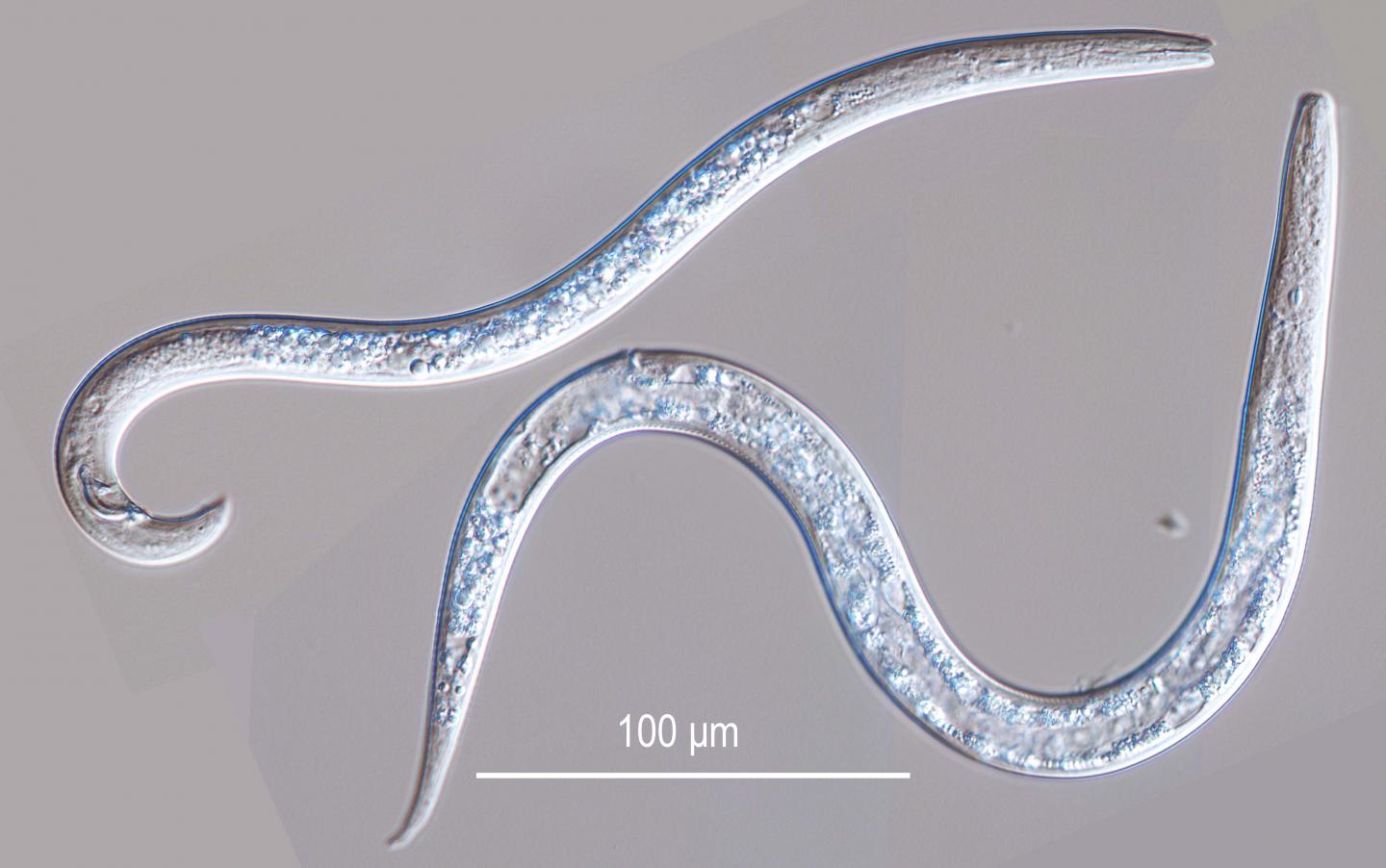
Cryptaphelenchus abietis, a new nematode species isolated from bark beetles that emerged from a dead log in Nagano, Japan, may become a useful lab species because of its culturability

Tsukuba, Japan – Sometimes a dead log isn’t just a dead log. This one in Japan turned out to be the habitat of a species previously unknown to science.

In a new study published in the journal Nematology, a University of Tsukuba-led research team has described a new species of nematode found inside bark beetles that emerged from a dead log of a fir tree.

Nematodes, also known as roundworms, are a diverse phylum (category) of unsegmented worm-like animals that live in a wide variety of habitats and have diverse life habits. Many nematodes, including this previously unknown species, are either parasitic or live inside a host organism for the duration of a particular life stage.

The log from the trunk of a fallen Veitch’s fir tree (Abies veitchii) was collected from the experimental forest of the Sugadaira Montane Research Center of the University of Tsukuba, Nagano, in June 2018. This log was found to be infected with bark beetles, including the species Cryphalus piceae. These beetles were dissected and their microbial contents cultured to allow the nematodes they contained to propagate. Nematodes were also isolated from the bark of the log. Although several other nematode species were identified, their cultures did not propagate, so only the new species was examined in detail for this study.

Principal investigator of the biodiversity project Professor Yousuke Degawa describes the novel nematode: “Members of the genus Cryptaphelenchus commonly lack a functional rectum and anus, which is a typical characteristic of predator/entemoparasitic species. This suggests that this mycophagous genus has retained this ancestral character. The female of the newly described species can be identified based on its long and slender tail, and the male has a cuticular extension surrounding its tail. We named the species Cryptaphelenchus abietis, for the name of the tree from which it was isolated.”

Molecular genetic sequencing clarified the phylogenetic position of this new species in relation to other nematode species. It was clearly a member of the genus Cryptaphelenchus, a group of nematodes that usually feed on fungi when they are not inside their associated insect hosts.

As Senior Researcher Natsumi Kanzaki, the study’s first author, explains, “Most similar nematodes have been found to be quite difficult to culture. Because of how easily Cryptaphelenchus abietis can be cultivated in a laboratory setting, this new species may be particularly useful for future studies of the physiological and ecological evolution of nematodes in relation to their genomic characters.”

###

The article, “Cryptaphelenchus abietis n. sp. (Tylenchomorpha: Aphelenchoididae) isolated from Cryphalus piceae (Ratzeburg) (Coleoptera: Scolytinae) emerged from Abies veitchii Lindl. (Pinaceae) from Nagano, Japan,” was published in Nematology at DOI: http://dx.doi.org/10.1163/15685411-bja10112

Media Contact
Naoko Yamashina
[email protected]

Related Journal Article

http://dx.doi.org/10.1163/15685411-bja10112

Tags: BiodiversityBiologyEntomologyEvolutionMolecular BiologyParasitology
Share13Tweet8Share2ShareShareShare2

Related Posts

Ancient Plant Populations Reveal Fresh Insights into Climate Resilience — Biology

Ancient Plant Populations Reveal Fresh Insights into Climate Resilience

May 8, 2026
Rare Brain Disorders in Children Linked to Mutations in Lesser-Known Protein Complex — Biology

Rare Brain Disorders in Children Linked to Mutations in Lesser-Known Protein Complex

May 8, 2026

From Odd Insect to Underwater Predator: The Remarkable Evolution of a Bloodthirsty Fruit Fly

May 8, 2026

SNU Professor Sangwoo Seo’s Team Develops Next-Generation CRISPR Biocontainment Technology to Control Microbial Survival Without DNA Cleavage

May 8, 2026
Please login to join discussion

POPULAR NEWS

  • Research Indicates Potential Connection Between Prenatal Medication Exposure and Elevated Autism Risk

    840 shares
    Share 336 Tweet 210
  • New Study Reveals Plants Can Detect the Sound of Rain

    727 shares
    Share 290 Tweet 181
  • Scientists Investigate Possible Connection Between COVID-19 and Increased Lung Cancer Risk

    68 shares
    Share 27 Tweet 17
  • Salmonella Haem Blocks Macrophages, Boosts Infection

    61 shares
    Share 24 Tweet 15

About

We bring you the latest biotechnology news from best research centers and universities around the world. Check our website.

Follow us

Recent News

Urdu Fall Risk Questionnaire Adapted for Elderly

Key Pharmacological Markers for HIV Prevention in MSM

Taking 8,500 Steps Daily May Aid Long-Term Weight Management, Study Finds

Subscribe to Blog via Email

Success! An email was just sent to confirm your subscription. Please find the email now and click 'Confirm' to start subscribing.

Join 82 other subscribers
  • Contact Us

Bioengineer.org © Copyright 2023 All Rights Reserved.

Welcome Back!

Login to your account below

Forgotten Password?

Retrieve your password

Please enter your username or email address to reset your password.

Log In
No Result
View All Result
  • Homepages
    • Home Page 1
    • Home Page 2
  • News
  • National
  • Business
  • Health
  • Lifestyle
  • Science

Bioengineer.org © Copyright 2023 All Rights Reserved.