Credit: The Journal of Molecular Diagnostics
Philadelphia, August 20, 2018 – Sarcomas are rare tumors that are often misdiagnosed. Specific recurrent chromosomal rearrangements, known as translocations, can serve as essential diagnostic markers and are found in about 20 percent of sarcomas. Identification of these translocations helps establish a correct diagnosis and guides treatment. A report in the Journal of Molecular Diagnostics describes a new assay, anchored multiplex PCR (AMP)-based targeted next-generation-sequencing (NGS), with superior diagnostic utility compared to conventional techniques. This includes the ability to analyze numerous target genes simultaneously and identify new fusion partners. In four cases, the assay diagnosed sarcoma in samples deemed falsely negative by conventional tests.
"Sarcomas are rare cancers of bone, fat, or muscle that are difficult to diagnose and are often misdiagnosed. More than 50 subtypes exist. Until now, for each sarcoma subtype and each translocation, a single assay test had to be performed detecting the presence of one single, specific gene fusion. Now, in contrast to conventional methods, 26 different genes can be analyzed for their involvement in a translocation in one single assay," explained Judith V.M.G. Bovée, MD, PhD, of the Department of Pathology, Leiden University Medical Center, Leiden, The Netherlands.
To validate the utility of this novel test, investigators analyzed 81 samples using the new AMP technique, for NGS using the Archer® FusionPlex® Sarcoma Kit. They then compared the results to those of more conventional methods, such as fluorescence in situ hybridization (FISH) and reverse-transcriptase PCR.
The goal of these techniques is to identify specific genetic abnormalities in which regions of genetic material are rearranged (translocated), which can help in diagnosis. "Both FISH and reverse transcription-PCR are accompanied by challenges in routine application. Due to these limitations, the need for novel methods for fusion detection has grown significantly as more and more recurrent translocations are revealed with the advance of NGS," noted co-author Suk Wai Lam, MD, of the Department of Pathology of Leiden University Medical Center, Leiden, The Netherlands.
Of the 81 samples analyzed by the new technique, 70 samples were successfully analyzed. Fusions were found in 48 of those, whereas 22 were fusion-negative. In 90 percent of the cases the results using the new assay agreed with the results of conventional testing.
In four cases, conventional methods missed the translocation (three with FISH and one with reverse transcription-PCR). This problem may occur more frequently in Ewing sarcoma, in which the primer used by reverse transcription-PCR is focused on the most common fusion type and may miss less common alternatives. In another case of Ewing sarcoma, the presence of complex rearrangements went beyond the capabilities of FISH, whereas NGS produced definitive results.
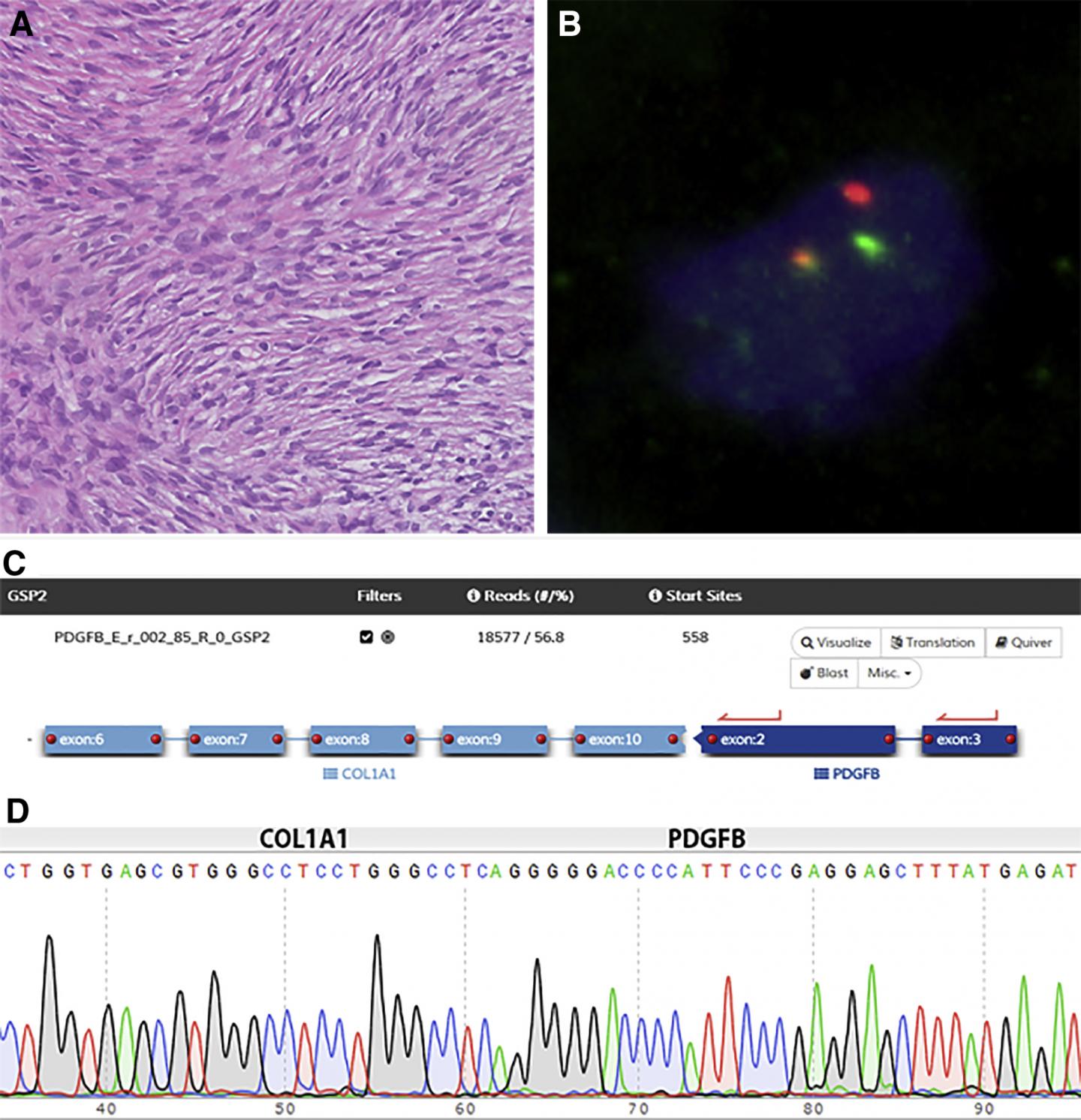
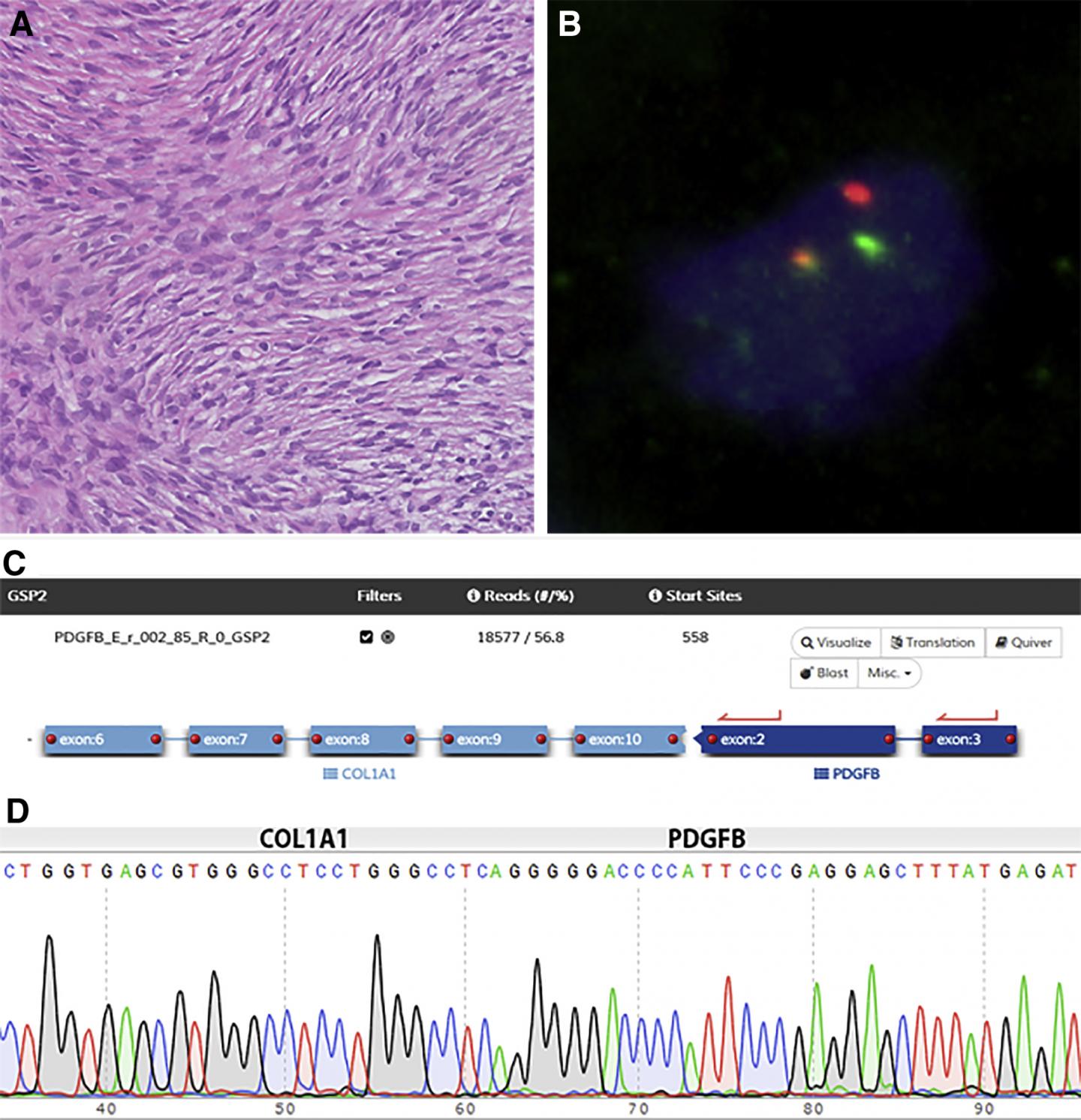
In a case of dermatofibrosarcoma protuberans, the more detailed findings provided by the new assay yielded crucial information that impacted patient management. The assay confirmed the presence of the rare COL1A1-PDGFB translocation, which opened the way for the patient to receive targeted therapy with imatinib.
The new assay also offers other distinct advantages. Its high sensitivity allows it to pick up the presence of a translocation in small samples, and it can be used for analysis of formalin-fixed, paraffin-embedded material as well as fresh frozen tissue. Nevertheless, the study showed a failure rate of 14 percent for AMP-based targeted NGS. "None of the molecular assays used in the current study was able to provide a hundred percent of certainty with respect to false-positive and false-negative results," stated Dr. Lam. "However, we believe this novel test will assist the pathologist in establishing the correct diagnosis in the complex world of sarcomas."
###
Media Contact
Eileen Leahy
[email protected]
732-238-3628
@elseviernews
http://www.elsevier.com
Related Journal Article
http://dx.doi.org/10.1016/j.jmoldx.2018.05.007