• HOME
  • NEWS
  • EXPLORE
    • CAREER
      • Companies
      • Jobs
    • EVENTS
    • iGEM
      • News
      • Team
    • PHOTOS
    • VIDEO
    • WIKI
  • BLOG
  • COMMUNITY
    • FACEBOOK
    • INSTAGRAM
    • TWITTER
Sunday, May 10, 2026
BIOENGINEER.ORG
No Result
View All Result
  • Login
  • HOME
  • NEWS
  • EXPLORE
    • CAREER
      • Companies
      • Jobs
        • Lecturer
        • PhD Studentship
        • Postdoc
        • Research Assistant
    • EVENTS
    • iGEM
      • News
      • Team
    • PHOTOS
    • VIDEO
    • WIKI
  • BLOG
  • COMMUNITY
    • FACEBOOK
    • INSTAGRAM
    • TWITTER
  • HOME
  • NEWS
  • EXPLORE
    • CAREER
      • Companies
      • Jobs
        • Lecturer
        • PhD Studentship
        • Postdoc
        • Research Assistant
    • EVENTS
    • iGEM
      • News
      • Team
    • PHOTOS
    • VIDEO
    • WIKI
  • BLOG
  • COMMUNITY
    • FACEBOOK
    • INSTAGRAM
    • TWITTER
No Result
View All Result
Bioengineer.org
No Result
View All Result
Home NEWS Science News Chemistry

New and unexplored dimension in the study of protein-protein interactions

Bioengineer by Bioengineer
December 10, 2020
in Chemistry
Reading Time: 3 mins read
0
IMAGE
Share on FacebookShare on TwitterShare on LinkedinShare on RedditShare on Telegram

IMAGE

Credit: Mary Zhu

Many proteins are required to maintain the structure, and to preserve the genetic integrity, of DNA. Sliding clamps are proteins that increase the efficiency of DNA replication. Without these proteins, cells would not be able to carry out continuous DNA synthesis, and organisms, from bacteria to humans, would not survive.

Sliding clamps are ring-shaped proteins that encircle DNA and bind to the DNA polymerase, the enzyme that performs the actual DNA replication. They effectively organize and orient the DNA and its ancillary proteins so as to enable replication. Sliding clamps are oligomeric proteins; they are made up of more than one identical copy of individual proteins called monomers.

The bacterial E. coli clamp, called beta, is made up of two identical monomers. Human cells contain clamps called PCNA, which are made up of three identical monomers. Strong intermolecular forces between these identical monomers ensure that the rings are stable in solution and do not fall off the DNA during replication.

The self-assembly of the monomers of sliding clamps into a stable doughnut-shape ring is controlled by ionic and other intermolecular forces. It is known that assembly of these structures can be influenced by the presence of salts, but other forms of molecular control over this self-assembly are not well understood. In an effort to understand the molecular basis for clamp self-assembly, associate Professor Marcia Levitus from School of Molecular Sciences and co-workers have now found that these protein doughnuts assemble in previously-unknown ways when exposed to molecules that bacteria typically use to tolerate high levels of salt in the environment.

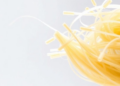
Specifically, potassium glutamate (KGlu) and glycine betaine are found to promote self-assembly of beta and PCNA clamps into structures containing many doughnuts stacked face-to-face. These structures resemble tubes of doughnuts, and are only observed in the presence of compounds that cells produce when they need to tolerate high salt concentrations in the growing medium.

Their research, which has just been published in the Biophysical Journal, is a result of a long-standing collaboration with Professor Linda Bloom who works in the department of biochemistry and molecular biology, University of Florida.

“In this study we examine non-Coulombic effects on the self-assembly properties of sliding clamps,” explained Levitus. “We determined relative diffusion coefficients of two sliding clamps using fluorescence correlation spectroscopy. Although so far we worked with two sliding clamps, our results suggest that our findings are not specific to these proteins and may be generalizable to a wide range of protein-protein interactions.” Levitus is also part of the Biodesign Center for Single Molecule Biophysics.

Cells accumulate glutamate and related molecules under stress, and so formation of high-order protein assemblies under these conditions has important biological implications. Specifically, this would represent a mechanism by which the presence of stressor compounds in the cell could control DNA replication.

###

Ian Gould contributed to this story

Media Contact
Jenny Green
[email protected]

Original Source

https://asunow.asu.edu/20201207-new-and-unexplored-dimension-study-protein-protein-interactions

Related Journal Article

http://dx.doi.org/10.1016/j.bpj.2020.11.013

Tags: BiochemistryChemistry/Physics/Materials SciencesGraduate/Postgraduate EducationK-12Microbiology
Share12Tweet8Share2ShareShareShare2

Related Posts

Miniature Sensor Uses Light to Detect Touch — Chemistry

Miniature Sensor Uses Light to Detect Touch

May 8, 2026
Iron Minerals Determine Whether Dissolved Organic Matter Fuels Microbes or Becomes Long-Term Carbon Storage — Chemistry

Iron Minerals Determine Whether Dissolved Organic Matter Fuels Microbes or Becomes Long-Term Carbon Storage

May 8, 2026

Kate Evans Appointed Associate Lab Director for Biological and Environmental Systems Science at ORNL

May 8, 2026

Advancing Multiscale Modeling and Overcoming Operational Challenges in Autothermal COâ‚‚-to-Methanol Reactors

May 8, 2026
Please login to join discussion

POPULAR NEWS

  • Research Indicates Potential Connection Between Prenatal Medication Exposure and Elevated Autism Risk

    840 shares
    Share 336 Tweet 210
  • New Study Reveals Plants Can Detect the Sound of Rain

    727 shares
    Share 290 Tweet 181
  • Scientists Investigate Possible Connection Between COVID-19 and Increased Lung Cancer Risk

    68 shares
    Share 27 Tweet 17
  • Salmonella Haem Blocks Macrophages, Boosts Infection

    61 shares
    Share 24 Tweet 15

About

We bring you the latest biotechnology news from best research centers and universities around the world. Check our website.

Follow us

Recent News

Evaluating Digoxin Use in Patients with Symptomatic Rheumatic Heart Disease

Evaluating the Effectiveness and Safety of Digitalis Glycosides in Treating Heart Failure

Urdu Fall Risk Questionnaire Adapted for Elderly

Subscribe to Blog via Email

Enter your email address to subscribe to this blog and receive notifications of new posts by email.

Join 82 other subscribers
  • Contact Us

Bioengineer.org © Copyright 2023 All Rights Reserved.

Welcome Back!

Login to your account below

Forgotten Password?

Retrieve your password

Please enter your username or email address to reset your password.

Log In
No Result
View All Result
  • Homepages
    • Home Page 1
    • Home Page 2
  • News
  • National
  • Business
  • Health
  • Lifestyle
  • Science

Bioengineer.org © Copyright 2023 All Rights Reserved.