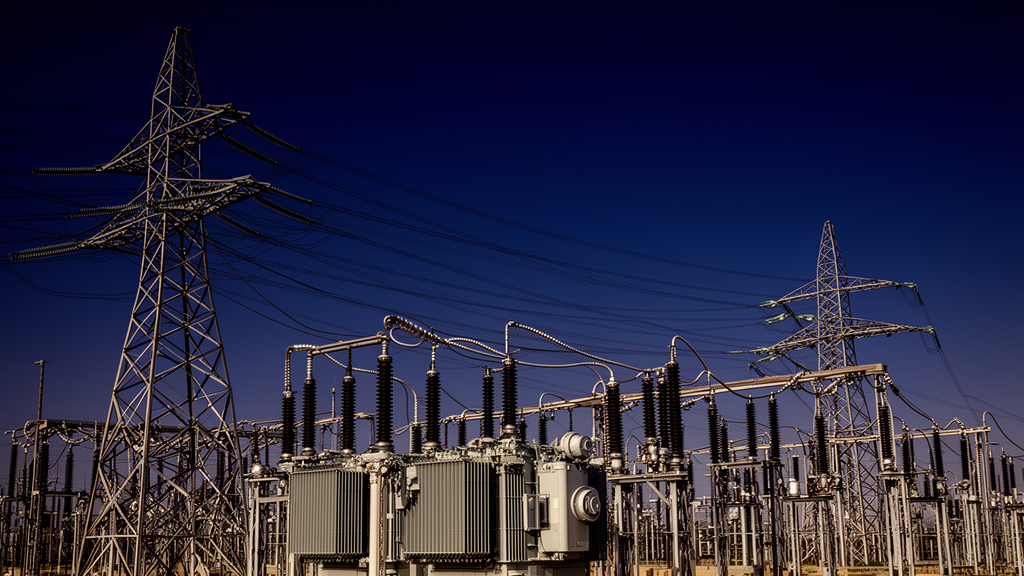
The study, published in the journal Frontiers of Optoelectronics, introduces a method called Dual Fusion Enhancement Net, or DFEN, which aims to address the color aberration and noise that typically degrade nighttime surveillance footage. By decomposing the enhancement task into two distinct stages, the model seeks to provide a more efficient and accurate solution for computer vision systems that rely on clear imagery for operational stability.
The primary motivation for this research stems from the critical role of power inspection in maintaining the stable operation of the power grid. Currently, mainstream inspection solutions rely on analyzing images captured by monitoring equipment through manual review or computer vision techniques. However, images collected during nighttime or in bad weather often suffer from insufficient lighting, leading to reduced contrast and color distortion. These visual degradations not only affect the subjective perception of human observers but also significantly reduce the detection accuracy of subsequent automated computer vision systems, making the improvement of low-light image quality a vital area of research.
The DFEN architecture is built upon a double U-Net structure, a design choice that allows the algorithm to handle the enhancement process in two sequential phases. The first stage focuses on brightness adjustment, while the second stage is dedicated to detail revision. This decomposition mirrors the imaging steps of a digital camera, which first performs signal amplification and then executes image signal processing. By separating these tasks, the model can focus on different goals in each stage, theoretically allowing for better enhancement results than methods that attempt to correct all issues simultaneously.
To address the loss of high-resolution details that often occurs when neural networks process images through multiple layers, the researchers introduced a dual branch feature fusion module. This module selectively reconstructs features of the same scale from the two-stage network through both channel and spatial fusion branches. By shortening the feature path and preserving high-resolution information, this component helps the model maintain texture detail and improve color restoration. The module operates by splitting input feature streams and performing adaptive selection and aggregation in parallel branches before concatenating the outputs to form a robust feature representation.
Another key innovation in the DFEN model is the learnable regularized attention module, which is designed to balance the enhancement effect across different regions of an image. In high dynamic range scenes, applying a uniform enhancement standard can lead to overexposure in bright areas while leaving dark areas under-corrected. The attention module extracts an illumination map from the low-light image, guiding the model to adaptively adjust the enhancement based on local lighting conditions. This mechanism effectively suppresses overexposure in bright regions and ensures that the model can distinguish between areas with similar brightness but different colors, thereby reducing color distortion.
The training process for DFEN utilizes a cosine training strategy to smooth the transition between the brightness adjustment and detail revision stages. By dynamically adjusting the weights of the loss functions during training, the strategy allows the network to focus on the initial brightness correction before gradually shifting its attention to fine detail restoration. This approach prevents the inconsistent goals of the two stages from interfering with each other, ensuring that the model learns to perform both tasks effectively. The use of distinct loss functions for the intermediate and final output images further refines the model’s ability to restore details accurately.
To validate the effectiveness of the proposed method, the researchers tested DFEN on several public datasets, including LOL, LOLv2, and SICE, as well as a self-constructed dataset called Dark Grids. The Dark Grids dataset was specifically created to represent the low-light power inspection scenes encountered in the project, containing 530 pairs of training samples and 103 pairs of test samples with a resolution of 1224 by 1024 pixels. The images were captured using a 12-bit industrial camera, with reference images generated through multi-frame high dynamic range fusion to ensure high-quality ground truth data for evaluation.
Quantitative comparisons with thirteen mainstream low-light image enhancement methods, including both traditional algorithms and deep learning models, demonstrated that DFEN achieves superior enhancement results with a similar number of parameters. The model outperformed competitors in terms of Structural Similarity Index Measure, Peak Signal-to-Noise Ratio, and Lightness Order Error, which evaluates the preservation of naturalness in lightness. In particular, the lightest version of the DFEN model reached a processing speed of 11 frames per second for images of size 1224 by 1024 pixels when run on an RTX 3090 GPU, highlighting its potential for real-time applications in edge devices with limited computational capability.
Ablation studies further confirmed the necessity of each component in the DFEN architecture. Removing the feature fusion module led to blurred details and worse evaluation metrics, while the introduction of the learnable regularized attention module significantly improved the model’s ability to distinguish different lighting regions. The cosine training strategy was also shown to be essential, as removing it resulted in a decline in enhancement performance. These experiments underscore the importance of the integrated design in achieving the model’s overall effectiveness in handling complex low-light scenarios.
The study also evaluated the adaptability of DFEN to various lighting conditions using the Dark Grids dataset. In night dark scenes, the model was able to recover color and texture information effectively when the exposure duration reached 32 milliseconds. In high dynamic range scenes, DFEN avoided the aggravation of over-exposure in bright regions, a common issue observed in other methods like CRM, EnlightenGAN, and SCI. This adaptability suggests that the model is well-suited for the diverse lighting conditions encountered in real-world power grid inspection environments.
Despite its promising results, the research acknowledges certain limitations and areas for future development. The construction of paired datasets for training is a complex process, and the researchers are currently exploring unsupervised training strategies to reduce the dependence on high-quality paired data. Additionally, the current experiments were conducted on a server with an RTX 3090 GPU, and future work will focus on deploying the model on edge computing platforms to enable its practical use in grid inspection systems. This transition to edge deployment is crucial for ensuring that the model can operate efficiently in the field, where computational resources may be more constrained.
By combining a two-stage processing approach with advanced feature fusion and attention mechanisms, the model offers a robust solution to the challenges posed by poor lighting conditions.
The DFEN model is designed to be size-controllable, allowing researchers to adjust the network’s capacity by modifying the channel numbers in the initial convolutional layer. This flexibility enables the algorithm to balance computational efficiency against enhancement quality based on specific application requirements. In the experimental setup, three distinct model sizes were evaluated, designated as DFEN-s, DFEN-m, and DFEN-l, corresponding to base channel counts of 8, 16, and 24, respectively. The architecture utilizes a double U-Net structure where the first stage performs brightness adjustment through point-wise multiplication with the input image, while the second stage handles detail revision via point-wise addition.
Training the DFEN model involves a specific cosine strategy that dynamically adjusts the weights of the loss functions over the course of 600 epochs. The total loss function is a weighted combination of the intermediate output loss and the final output loss, with the weighting coefficient following a cosine descent curve from 1 to 0.
The data was captured using a 12-bit industrial camera in various power grid inspection scenarios, including nighttime transmission tower scenes and high-dynamic-range environments. To generate reference images, the researchers captured long-exposure images and image sequences with varying exposure times, filtering for high similarity between the initial and final long-exposure frames. The reference images were then created using a multi-frame high dynamic range fusion algorithm in Adobe Photoshop CC. This dataset provides a realistic evaluation environment for the model, reflecting the specific challenges of low-light power inspection where public datasets are unavailable. The inclusion of diverse lighting conditions in the dataset is crucial for the effectiveness of the learnable regularized attention module, which requires varied illumination to properly distinguish between different regions and suppress overexposure.
Subject of Research: Development of a two-stage low-light image enhancement network for power grid inspection
Article Title: Low-light enhancement method with dual branch feature fusion and learnable regularized attention
Article References: Sun, Y., Ni, M., Zhao, M., Yang, Z., Peng, Y., & Cao, D. (2024). Low-light enhancement method with dual branch feature fusion and learnable regularized attention. Frontiers of Optoelectronics, 17(1), Article 28. https://doi.org/10.1007/s12200-024-00129-z
Image Credits: AI Generated
DOI: 10.1007/s12200-024-00129-z
Keywords: low-light enhancement, computer vision, power grid inspection, deep learning, image processing, DFEN, feature fusion, attention mechanism, nighttime imaging, edge computing, Low-light, enhancement
News Source: Faith Mcneil. (November 11, 2026). New AI Model Enhances Low-Light Power Grid Images. Scienmag.