Credit: Carl R. Woese Institute for Genomic Biology, University of Illinois at Urbana-Champaign
As farmers survey their fields this summer, several questions come to mind: How many plants germinated per acre? How does altering row spacing affect my yields? Does it make a difference if I plant my rows north to south or east to west? Now a computer model can answer these questions by comparing billions of virtual fields with different planting densities, row spacings, and orientations.
The University of Illinois and the Partner Institute for Computational Biology in Shanghai developed this computer model to predict the yield of different crop cultivars in a multitude of planting conditions. Published in BioEnergy-Research, the model depicts the growth of 3D plants, incorporating models of the biochemical and biophysical processes that underlie productivity.
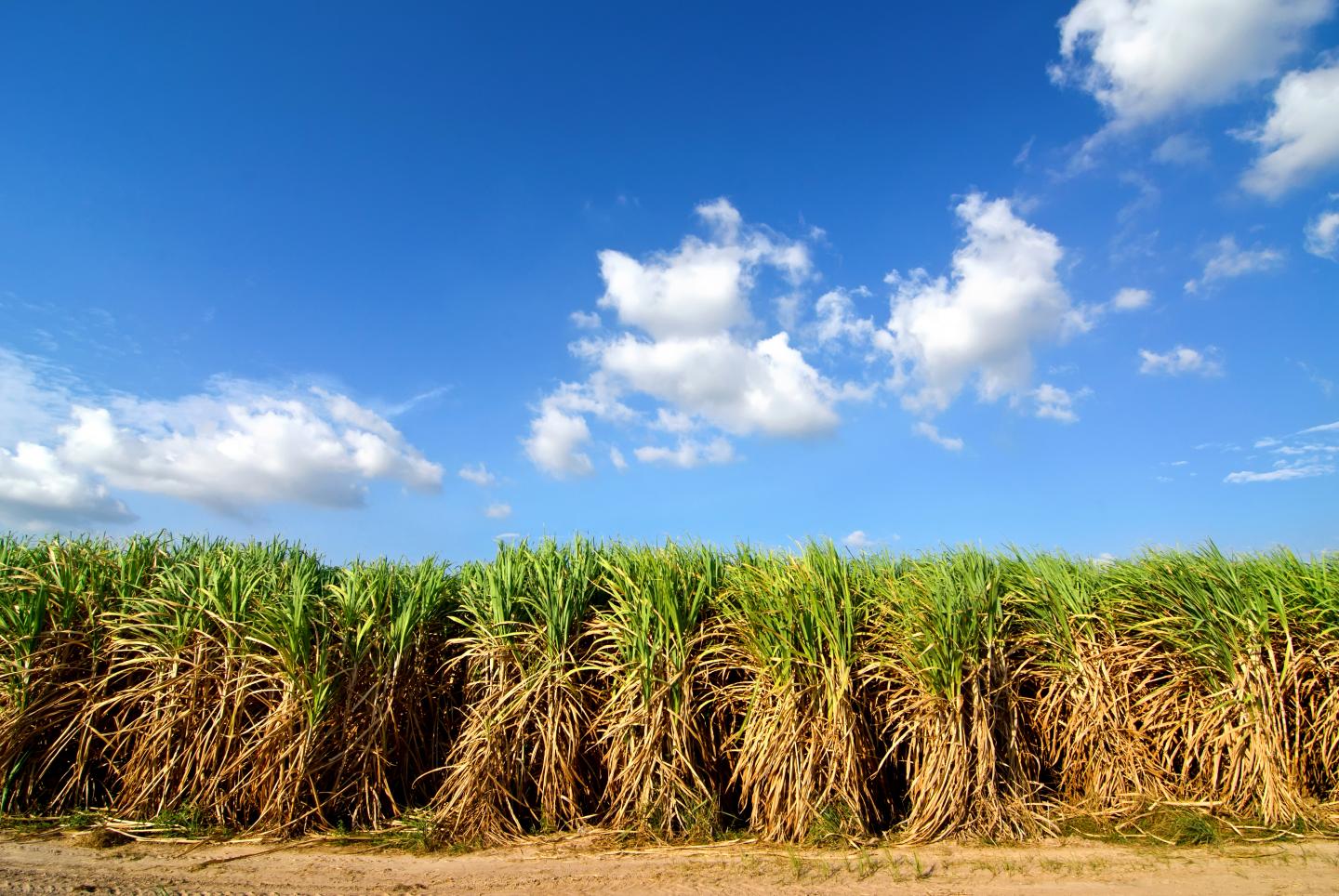
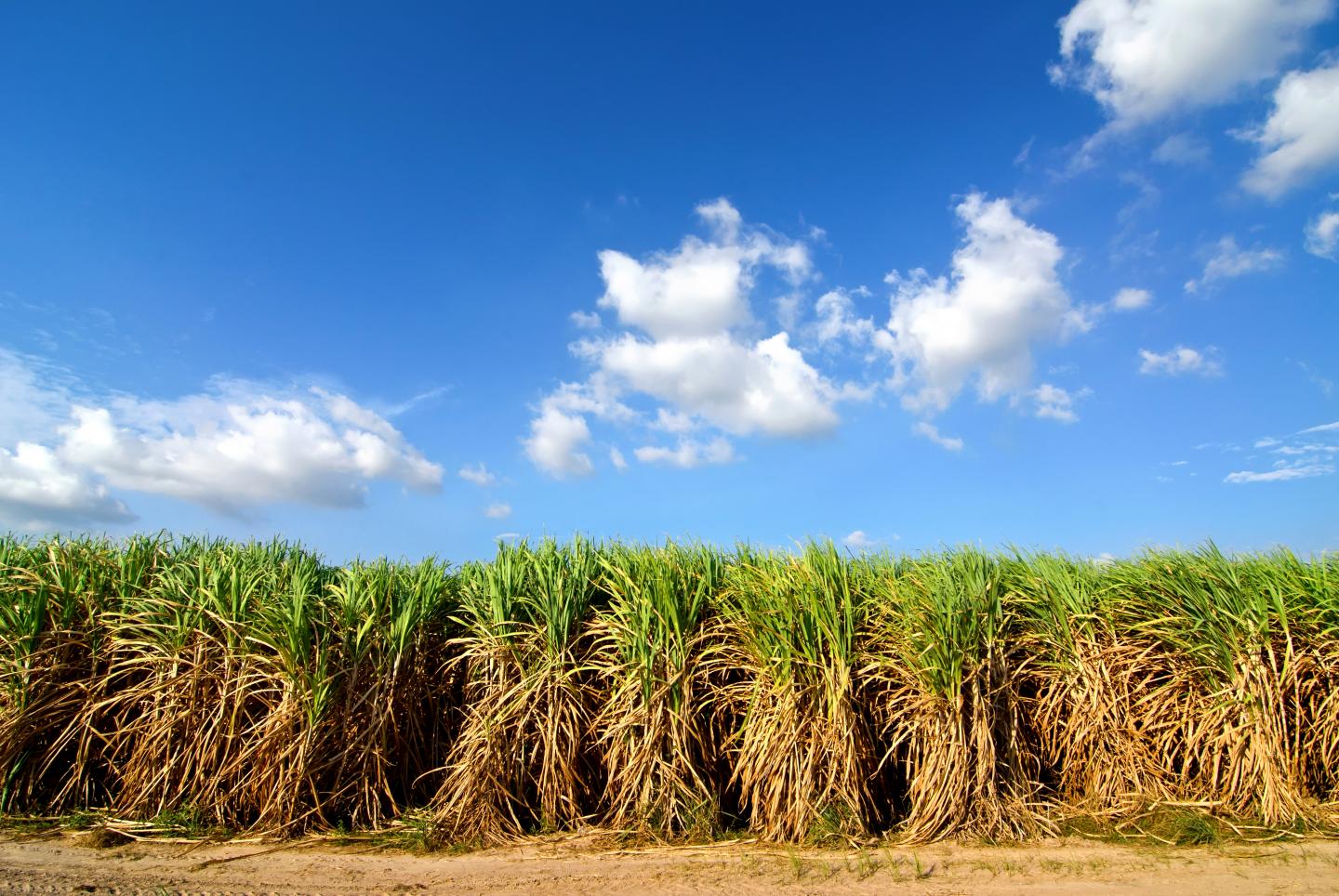
Teaming up with the University of Sao Paulo in Brazil, they used the model to address a question for sugarcane producers: How much yield might be sacrificed to take advantage of a possible conservation planting technique?
"Current sugarcane harvesters cut a single row at a time, which is time-consuming and leads to damage of the crop stands," said author Steve Long, Gutgsell Endowed Professor of Plant Biology and Crop Sciences at the Carl R. Woese Institute for Genomic Biology. "This could be solved if the crop was planted in double rows with gaps between the double rows. But plants in double rows will shade each other more, causing a potential loss of profitability."
The model found that double-row spacing costs about 10% of productivity compared to traditional row spacing; however, this loss can be reduced to just 2% by choosing cultivars with more horizontal leaves planted in a north-south orientation.
"This model could be applied to other crops to predict optimal planting designs for specific environments," said Yu Wang, a postdoctoral researcher at Illinois who led the study. "It could also be used in reverse to predict the potential outcome for a field."
The authors predict this model will be especially useful when robotic planting becomes more commonplace, which will allow for many more planting permutations.
###
This research was supported by the IGB, Energy Biosciences Institute, Realizing Increased Photosynthetic Efficiency (RIPE) project, and the Chinese Academy of Sciences.
The paper "Development of a Three-Dimensional Ray-Tracing Model of Sugarcane Canopy Photosynthesis and Its Application in Assessing Impacts of Varied Row Spacing" is published by BioEnergy-Research (DOI: 10.1007/s12155-017-9823-x). Co-authors include: Yu Wang, Qingfeng Song, Deepak Jaiswal, Amanda P. de Souza, and Xin-Guang Zhu.
The Carl R. Woese Institute for Genomic Biology (IGB) advances life sciences research through interdisciplinary collaborations within a state-of-the-art genomic research facility at the University of Illinois.
The Energy Biosciences Institute (EBI) is a public-private collaboration to help solve the global energy challenge.
Realizing Increased Photosynthetic Efficiency (RIPE) is an international research project funded by the Bill & Melinda Gates Foundation to engineer plants to more efficiently turn the sun's energy into food to sustainably increase worldwide food productivity.
Media Contact
Claire Benjamin
[email protected]
217-244-0941
@IGBIllinois
http://www.igb.uiuc.edu
Original Source
http://ripe.illinois.edu/news/new-3d-model-predicts-best-planting-practices-for-farmers http://dx.doi.org/10.1007/s12155-017-9823-x
############
Story Source: Materials provided by Scienmag