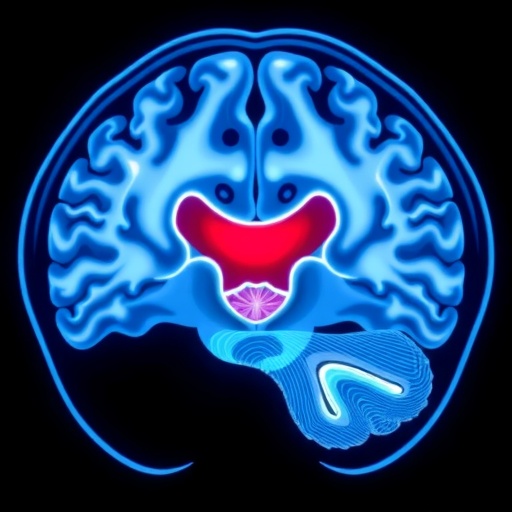
In the intricate world of neurosurgery, the balance between aggressive cancer removal and preservation of a patient’s neurological function stands as a paramount challenge. This delicate equilibrium is strikingly addressed through awake brain mapping, a technique evolving since its inception decades ago. By keeping patients awake during surgery, surgeons engage in real-time assessment of brain functions, meticulously stimulating the cortex and analyzing responses to minimize harm to critical neurocognitive domains such as speech and movement.
Awake brain mapping is particularly critical when excising malignant brain tumors, where cancer cells infiltrate perilously close to or within functional brain tissue. Traditionally, neurosurgeons have relied on binary outcomes from direct electrical stimulation: a specific brain region either prompts an error when stimulated or it does not. However, recent advances suggest that this black-or-white interpretation oversimplifies the brain’s complex and dynamic responses, potentially limiting surgical precision and patient outcomes.
A groundbreaking study, to be published soon in Science Advances, ushers in a paradigm shift by delving into subtle fluctuations in patient behavior during awake mapping procedures. Through an in-depth meta-analysis of data accrued over ten years, investigators have uncovered nuanced patterns of errors and reaction times in patients undertaking linguistic tasks under cortical stimulation. This granular data opens a novel dimension for understanding brain function beyond binary categorizations, suggesting that changes in response speed—even absent overt mistakes—carry crucial information about underlying neural networks.
At the heart of this research lies the revelation that parametric variations in stimulation—such as duration, onset, and offset relative to task timing—exert measurable effects on patient responses. This fine-tuned correlation between stimulation parameters and behavioral outcomes, previously unexplored, enriches the interpretative framework surgeons employ intraoperatively. Decoding these subtleties promises enhanced mapping fidelity, tailoring surgical resections with unprecedented precision to individual patient’s functional anatomy.
The implications of viewing brain mapping results along a continuous spectrum rather than discrete categories are profound. For instance, a cortical site may not solely dictate language production but modulate it in graded ways, influencing response latency or accuracy variably across time. Recognizing this gradation facilitates a more personalized assessment, helping surgeons estimate surgical risks and benefits with greater confidence. This approach acknowledges the intrinsic variability in neuroanatomy and functional organization across patients and even within different cortical regions of the same brain.
Personalization of brain surgery, as spotlighted in this study, evolves into a nuanced art where patients’ unique priorities guide clinical decisions. For example, a business executive may prioritize preserving speech capabilities at some cost to fine motor skills, whereas a professional musician might have the converse preference. The ability to simulate distinct surgical strategies and predict corresponding neurocognitive outcomes opens the door for shared decision-making anchored firmly in patient-specific functional profiles.
Integrating these scientific advances into clinical practice is exemplified by MindTrace, a startup emerging from Carnegie Mellon University’s neuroscience research hub. Supported by significant federal funding, MindTrace’s software platform harmonizes neurocognitive assessments conducted before, during, and after surgery. This real-time data integration equips neurosurgeons with a comprehensive behavioral roadmap, enabling fluid adjustment of surgical tactics to safeguard essential brain functions dynamically.
Since its clinical launch, MindTrace has been adopted by a consortium of leading U.S. hospitals, including the University of Rochester’s Strong Memorial Hospital, where surgeons like Dr. Tyler Schmidt have employed the technology in over a dozen awake brain surgeries. According to Dr. Schmidt, this systematic approach has transformed the questions neurosurgeons ask—from merely “Can tumor tissue be removed safely?” to “How can we optimize surgical outcomes so patients return to their professional and personal lives with minimal functional losses?”
This paradigm shift reflects a broader evolution in neurosurgical oncology, where quality of life metrics now stand alongside traditional survival metrics as core evaluative benchmarks. By capturing a rich repository of postoperative cognitive and motor function data, the tools developed from this research enhance predictive modeling, allowing increasingly sophisticated forecasting of patient recovery trajectories.
Ultimately, this research is a testament to the powerful synergy of neuroscience, engineering, and clinical medicine. It exemplifies how deep scientific inquiry into brain-behavior relationships, coupled with innovative technological solutions, can meaningfully elevate patient care standards. With each refinement in awake brain mapping, neurosurgeons are better equipped to navigate the labyrinth of the human brain with a surgeon’s scalpel and a scientist’s insight, striving to maximize tumor removal while protecting the very essence of the individual’s identity and agency.
The journey ahead involves further elucidation of stimulation parameters, continued expansion of personalized predictive models, and sustained efforts to translate laboratory findings into clinical protocols globally. As the field progresses, it envisions a future where every awake brain surgery not only eradicates disease but also honors the complexity and diversity of human brain function on a highly individualized level.
This convergence of research and technology heralds a new era in which the brain’s enigmatic language is decoded not just in words or errors but in the fine gradations of response—each subtle shift a clue enabling safer, smarter, and more compassionate neurosurgery tailored exquisitely to each patient’s life narrative.
Subject of Research: People
Article Title: Causal parametric language mapping with electrical stimulation during awake neurosurgery
News Publication Date: 25-Feb-2026
Web References:
DOI: 10.1126/sciadv.adw1599
Image Credits: Matt Wittmeyer
Keywords: Personalized medicine, Brain tumors
Tags: advances in brain tumor excisionawake brain mapping in neurosurgerybrain tumor removal techniquescortical stimulation for brain surgerydynamic brain response during surgerymeta-analysis of brain mapping dataminimizing neurocognitive harm in neurosurgeryneurosurgical methods for malignant brain tumorsneurosurgical precision improvementspatient behavior analysis in awake surgerypreserving neurological function during surgeryreal-time brain function assessment