For more than a decade, the story of deep learning has been told largely in terms of depth. Each new generation of record-setting models has stacked more layers onto the previous one, and the word “deep” in deep learning has become shorthand for progress itself. A new study published in Neural Processing Letters argues that this vertical obsession has left half of the design space underexplored. Researchers Longfei Tan and Huihuang Zhao of Hengyang Normal University, together with Wei-Liang Meng of the Institute of Automation at the Chinese Academy of Sciences, have introduced the Neuron Bundle Network, or NB-Net, an architecture that takes the opposite tack: instead of stretching networks downward, it widens them outward, arranging computational units in parallel bundles whose organization is inspired by how biological neurons diverge and converge their signals.
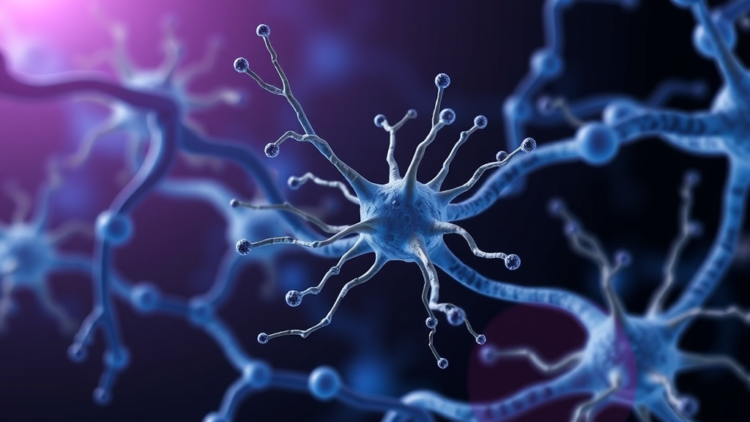
The biological inspiration at the heart of NB-Net comes from a structural principle familiar to neuroscientists. In living nervous systems, a single neuron frequently fans its output out to many downstream targets, and those signals are later gathered and integrated at convergent junctions further along the pathway. This divergent-convergent pattern allows nervous systems to process multiple aspects of a stimulus simultaneously before reconciling them into a unified response. The research team asked a deceptively simple question: if biological computation relies so heavily on this broad, parallel organization rather than on arbitrarily long chains of processing, could artificial networks benefit from a similar width-first philosophy, achieving strong representation quality without resorting to very deep backbones?
NB-Net answers that question with a concrete architectural recipe. The building block of the network is the Neuron Bundle Layer, a multi-branch structure in which several parallel convolutional branches all receive the same input tensor and process it simultaneously. Rather than forcing every branch to use identical operations, the design employs grouped convolutions with different kernel sizes across the branches. This means that at any given stage of the network, the model is simultaneously extracting features at multiple spatial scales from the very same signal. Small kernels capture fine-grained local detail, while larger kernels perceive coarser structure, and the network as a whole maintains a rich, multi-scale view of its input that a single-pathway design of comparable cost would struggle to match.
Of course, running many branches in parallel creates its own challenge: at some point, the network must fuse the separate streams of features back together into a coherent representation. Early attempts at such fusion in multi-branch architectures have often relied on a single 1×1 convolution that collapses all channels at once, a move that can be numerically unstable when the incoming branches are numerous or heterogeneous. NB-Net instead introduces a two-stage 1×1 convolution fusion module. In the first stage, the module performs a moderate compression of the concatenated channel dimension, gently reducing the volume of information rather than merging everything in one abrupt step. In the second stage, the module completes the integration of the compressed features. The authors report that this progressive fusion improves training stability compared with a single 1×1 merge, because the network is never forced to reconcile wildly different feature distributions in a single transformation.
Repeat the Neuron Bundle Layer and its fusion module in succession, and the result is a network that grows primarily in width rather than depth. The team subjected this design to a systematic set of ablation experiments, examining how branch configuration, residual connections, and width settings each affect performance. Residual connections, the shortcut pathways popularized by deep residual networks, were found to interact meaningfully with the multi-branch structure, helping gradients flow through the widened architecture during training. The analysis of width settings demonstrated that the framework scales in a controlled fashion: increasing the number of parallel channels raises capacity, but parameter counts grow in a disciplined, predictable manner rather than exploding as they often do when architectures are naively broadened.
The empirical case for NB-Net rests on two of the most widely used benchmarks in computer vision. On CIFAR-10, the standard small-image classification suite that serves as a proving ground for new architectural ideas, the network delivered competitive classification accuracy against established baselines. More significantly, on ImageNet, the large-scale benchmark whose thousand object categories have historically rewarded sheer architectural depth, NB-Net achieved accuracy on par with competing designs while keeping parameter growth under tight control. In a field where improvements are often purchased with dramatic increases in model size, the ability to hold the line on parameters while remaining competitive is itself a noteworthy result, and it supports the paper’s central claim that width-oriented design, when done systematically, deserves a seat at the table alongside depth scaling.
The publication arrives at a moment of genuine ferment in architectural research. As the costs of training ever-larger monolithic models attract scrutiny, many groups are revisiting efficiency-driven strategies such as grouped convolutions, multi-branch topologies, and staged feature fusion. NB-Net contributes to this conversation a coherent biological rationale that ties these elements together. The divergent-convergent organization it emulates is not merely a decorative metaphor; it dictates the concrete structure of the network, from the parallel branches of each Neuron Bundle Layer to the progressive, two-stage reconciliation of their outputs. The result is an architecture in which the biological principle and the engineering mechanism reinforce one another, a combination that has historically produced some of the most durable ideas in machine learning, from convolutional receptive fields to attention mechanisms.
Openness was clearly a priority for the research team. The article is published open access under a Creative Commons Attribution 4.0 license, meaning that anyone can read, reuse, and build upon the work with appropriate credit. In addition, the authors have released their implementation in a public code repository on GitHub, allowing other researchers to reproduce the reported benchmarks, stress-test the two-stage fusion module on their own tasks, or graft Neuron Bundle Layers into entirely different network families. The study was supported by funding from the National Natural Science Foundation of China, the Hunan Provincial Natural Science Foundation, and the Science and Technology Innovation Program of Hunan Province, reflecting sustained institutional investment in fundamental artificial intelligence research in China.
Whether NB-Net or its descendants will change mainstream practice remains to be seen, but the study makes a persuasive case that the width of a network is not a second-class design variable. By borrowing a page from the divergent-convergent wiring of biological neurons, the researchers have shown that parallel, multi-scale branches, fused with care, can rival deep stacks of layers on the benchmarks that matter, all while keeping parameter budgets in check. For a discipline searching for ways to advance without simply building bigger and taller models, the message is timely: sometimes the most productive direction is sideways.
Subject of Research: A biologically inspired, width-oriented multi-branch neural network architecture with two-stage feature fusion
Article Title: NB-Net: A Biologically-Inspired Framework for Neural Network Width Expansion
Article References: Tan, L., Zhao, H., & Meng, W.-L. (2026). NB-Net: A Biologically-Inspired Framework for Neural Network Width Expansion. Neural Processing Letters. https://doi.org/10.1007/s11063-026-11880-z
Image Credits: AI Generated
DOI: 10.1007/s11063-026-11880-z
Keywords: neural networks, network width, biologically-inspired architecture, NB-Net, feature fusion, grouped convolutions, deep learning, image classification, CIFAR-10, ImageNet, multi-branch architecture, parameter efficiency
Cite Scienmag News
APA MLA Chicago
Cassandra Pierce. (September 12, 2026). Neurons Point the Way: NB-Net Puts Network Width, Not Depth, in the Spotlight. Scienmag. https://scienmag.com/neurons-point-the-way-nb-net-puts-network-width-not-depth-in-the-spotlight/
Cassandra Pierce. “Neurons Point the Way: NB-Net Puts Network Width, Not Depth, in the Spotlight.” Scienmag, 12 September 2026, https://scienmag.com/neurons-point-the-way-nb-net-puts-network-width-not-depth-in-the-spotlight/. Accessed 12 September 2026.
Cassandra Pierce. “Neurons Point the Way: NB-Net Puts Network Width, Not Depth, in the Spotlight.” Scienmag. September 12, 2026. https://scienmag.com/neurons-point-the-way-nb-net-puts-network-width-not-depth-in-the-spotlight/
Copy citation Download RIS
Tags: biological inspiration in deep learningbiological principles in AIbiologically-inspired architectureCIFAR-10deep learningdeep learning model efficiencydivergent-convergent neural processingenhancing deep learning modelsexploring alternative neural network designsfeature fusiongrouped convolutionsimage classificationImageNetinnovative neural network structuresmulti-branch architectureNB-Netnetwork widthnetwork width vs depthNeural network architectureneural networksneural signal processingneuron bundle network (NB-Net)parallel computational unitsparameter efficiency