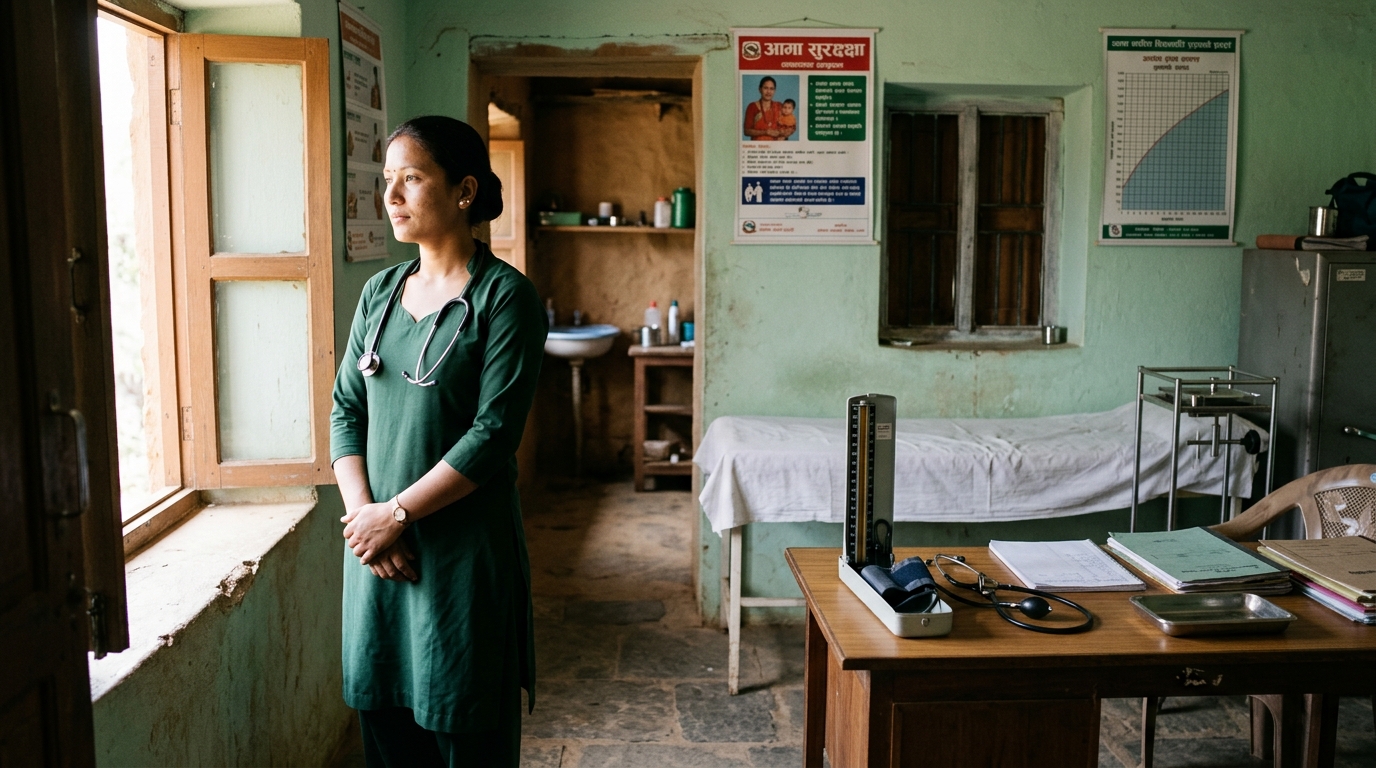
A quantitative cross-sectional study conducted in Dhading district, Nepal, identifies significant gaps in clinical confidence among healthcare professionals providing maternity care. The research, published in Discover Health Systems, assessed the status of maternity care practices and the perceived confidence of providers in using specific clinical skills. The findings indicate that lower confidence is significantly associated with limited attendance in Skilled Health Personnel (SHP) or Skilled Birth Attendant (SBA) training, scarce recent experience with high-risk cases, and a weak understanding of national maternal and newborn health strategies. These results highlight the complex interplay between formal training, practical exposure, and policy awareness in determining the quality of care in low-resource settings.
The study aimed to address the critical need for improving maternity care quality to reduce maternal mortality, a persistent challenge in low- and middle-income countries. In Nepal, while the proportion of deliveries attended by skilled professionals has increased dramatically from 10% in 1996 to 80% in 2022, maternal mortality remains a concern. Approximately two-thirds of maternal deaths in the country are caused by direct obstetric factors, including hemorrhage and hypertensive disorders, many of which are preventable with timely and appropriate care. The research specifically sought to understand how healthcare professionals perceive their own clinical practice and whether structural or cognitive barriers hinder their ability to provide care with confidence.
Researchers employed a descriptive cross-sectional design to examine these dynamics among professionals working in public health facilities. The study site was Dhading district, selected because it reported lower rates of facility-based deliveries and SBA attendance compared to national averages in 2017. The participants included a diverse group of providers such as doctors, nurses, auxiliary nurse midwives, health assistants, and community medicine assistants, reflecting the actual staffing patterns in rural Nepali healthcare systems.
Data were collected using a structured, self-administered questionnaire consisting of 70 items. This instrument assessed general characteristics, maternity care experience, training history, and confidence in 24 core maternity care skills. Confidence in each skill was self-assessed using a four-point Likert-type scale, ranging from “not confident” to “very confident.” The total confidence score ranged from 24 to 96, with higher scores indicating greater perceived ability. The questionnaire items were primarily based on the key competencies outlined in the Skilled Birth Attendant Follow-up Enhancement Program Tool, ensuring alignment with national training standards.
The demographic profile of the participants revealed that 96.1% were women, with a mean age of 30.5 years. Most participants worked at health posts and held temporary positions, with auxiliary nurse midwives comprising the largest professional group at 69.0%. On average, these professionals had 92 months of work experience and 77 months of delivery-care experience. However, the average number of deliveries performed in the previous year was only 44, a figure far below the World Health Organization benchmark of 175 deliveries associated with adequate clinical exposure. This low volume of practice suggests that many providers in Dhading district have limited hands-on opportunities to maintain and refine their emergency obstetric skills.
The results showed that participants reported relatively high confidence in managing common conditions such as postpartum hemorrhage and eclampsia. However, confidence levels dropped significantly for abnormal and advanced procedures. The lowest median confidence scores, with a median of 2, were observed for vacuum extraction and manual vacuum aspiration. More than half of the healthcare professionals had not conducted several critical emergency procedures, including vacuum extraction, adult resuscitation, and breech delivery, within the preceding three months. This pattern indicates that confidence is closely linked to recent practical experience, with skills that are rarely performed in low-volume settings becoming sources of significant uncertainty for providers.
Statistical analysis using multiple linear regression identified three key factors significantly associated with higher confidence in maternity care practice. First, attendance in SHP/SBA training was a strong predictor, with participants who had completed this training showing significantly higher total confidence scores. Second, a higher total score for maternity care provided within the past three months was associated with greater confidence, reinforcing the importance of recent clinical exposure. Third, a better understanding of national maternal and newborn health strategies and programs was linked to higher confidence levels. These findings suggest that both technical training and cognitive awareness of policy frameworks play crucial roles in shaping a provider’s self-assessed capability.
The study highlights the distinction between confidence and competence, noting that high confidence in rare procedures may reflect theoretical knowledge rather than current proficiency. In remote settings, taking on unfamiliar tasks or making independent clinical decisions in the absence of a doctor can contribute to confidence development, but this is often constrained by the lack of high-acuity cases. Structural differences across facility types further limit opportunities for high-risk deliveries, creating a cycle where limited exposure leads to diminished confidence, which may in turn discourage proactive clinical engagement during emergencies. This dynamic underscores the need for interventions that go beyond initial training to include continuous skill maintenance.
Inventory sufficiency and supervision frequency were not significantly associated with confidence in the final model, suggesting that material readiness alone is insufficient to build professional assurance. While supply reliability is essential for service readiness, the study indicates that workforce-focused capacity building is more directly linked to perceived confidence. The authors suggest that integrating simulation-based training, structured rotations to higher-volume facilities, and telemedicine mentoring could help maintain essential skills for high-acuity, low-frequency events. These approaches aim to bridge the gap between theoretical knowledge and practical proficiency, particularly for procedures that are critical for maternal survival but infrequently encountered in rural districts.
Understanding of national policies was found to function as a cognitive anchor that stabilizes clinical judgment and bolsters confidence. Familiarity with frameworks such as the Safe Motherhood Program and the MNH Roadmap may reduce uncertainty in emergency situations and support decision-making. The study suggests that policy knowledge is not merely administrative but plays a functional role in professional accountability and security. Strengthening the dissemination of these guidelines and integrating policy education into training programs could enhance policy literacy and application, thereby supporting improved clinical performance and maternal health outcomes.
The study has several limitations that must be considered when interpreting the findings. The cross-sectional design prevents causal inference, and the data from a single district may limit generalizability to other regions with different healthcare structures. Confidence was measured through self-administered questionnaires rather than objective assessments, which may introduce social desirability bias. Additionally, the small subgroup sample sizes limit the statistical comparability of analyses across different professional cadres. The subjective nature of confidence means that the findings reflect perceived rather than verified proficiency, highlighting the need for future studies that incorporate objective skill assessments and longitudinal designs.
In conclusion, the study demonstrates that insufficient training, limited clinical exposure to high-risk cases, and inadequate understanding of national health strategies are associated with lower confidence among healthcare professionals in Dhading district. Strengthening routine SBA training, providing structured clinical rotations, and integrating simulation-based drills are recommended to address these gaps. Policymakers are encouraged to ensure the broad dissemination of maternal and newborn health strategies and to align administrative classifications with verified clinical competencies. By enhancing professional, institutional, and policy components, the healthcare system can support improved care processes and contribute to better maternal health outcomes in Nepal and similar low-resource settings.
Beyond initial training exposure, the investigation contextualizes provider preparedness within Nepal’s evolving maternal health policy framework. The national workforce strategy transitioned from a three-month classroom and clinical Skilled Birth Attendant course toward a modular Skilled Health Personnel curriculum, differentiating personnel into physicians or nurses who complete four modules and auxiliary nurse midwives who complete three. Although recent administrative policy reclassified all auxiliary nurse midwives as skilled birth attendants, the authors emphasize that administrative designations do not automatically ensure clinical proficiency during acute obstetric emergencies. Furthermore, severe rural staffing constraints routinely require health assistants and community medicine assistants to assist or conduct deliveries, despite lacking official recognition in the national framework or formally defined clinical scopes of practice.
The statistical assessment established strong psychometric properties for the measurement instrument, yielding an overall Cronbach alpha of 0.908. Principal component analysis indicated that the first component accounted for 38.4 percent of the total variance, demonstrating a unidimensional structure where advanced obstetric procedures had high component loadings. Complex interventions such as shoulder dystocia management, vacuum extraction, breech delivery, and manual vacuum aspiration loaded most heavily, while basic tasks including kangaroo mother care, community education, and staff mentoring showed lower loadings. Furthermore, while common skills remained practiced, critical emergency actions had been performed within the prior three months by only a minority of providers, including manual placenta removal at 34.9 percent, shoulder dystocia management at 31.0 percent, and cervical tear repair at 24.0 percent.
The field methodology also accommodated real-world rural service dynamics across Dhading district, where researchers surveyed 62 public health facilities between March and May 2023 following approvals from Kobe University and the Nepal Health Research Council. Because district registries enumerated only 103 formally certified skilled birth attendants, in-person recruitment deliberately incorporated unregistered frontline delivery providers to reflect actual service delivery. The analysis handled missing entries through listwise deletion with an overall missing data rate of just 5.15 percent, while regression diagnostics confirmed linear model reliability with variance inflation factors below 1.95 and Cook distance values under five.
Subject of Research: Maternity care practice and skill confidence among healthcare professionals in Dhading district, Nepal
Article Title: Maternity care practice and skill confidence among healthcare professionals in Dhading district, Nepal
Article References: Takei, T., Timalsena, D., Negi, B., & Kotera, S. (2026). Maternity care practice and skill confidence among healthcare professionals in Dhading district, Nepal. Discover Health Systems, 5(1), Article 55. https://doi.org/10.1007/s44250-026-00398-9
Image Credits: AI Generated
DOI: 10.1007/s44250-026-00398-9
Keywords: Maternity, care, practice, skill, confidence, healthcare, professionals, Dhading, district, Nepal, scientific research
News Source: Ophelia Keating. (November 9, 2026). Nepal Study Links Training Gaps to Low Maternity Care Confidence. Scienmag.