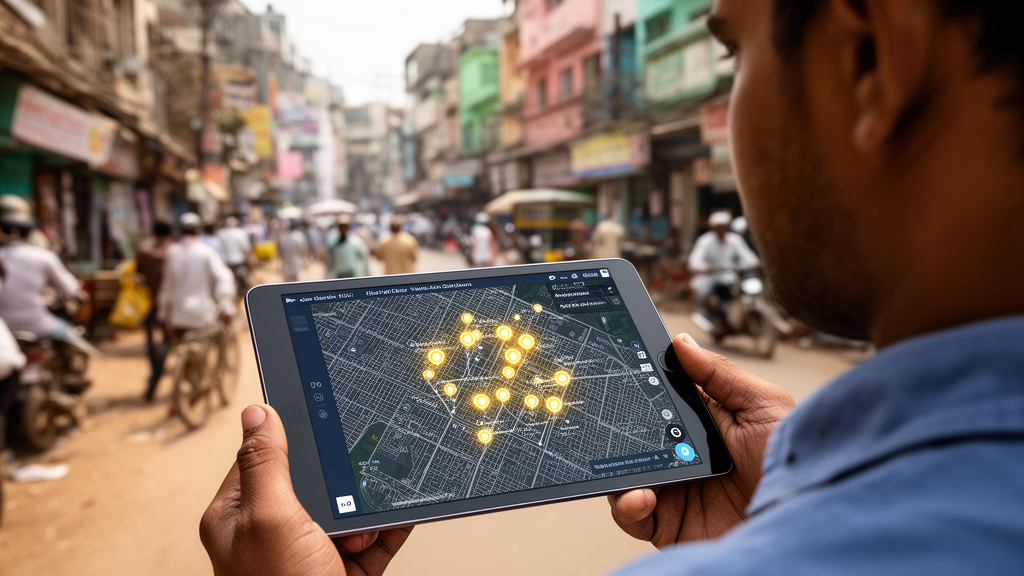
A recent cross-sectional observational study conducted in Guntur, a tier-2 city in the southern Indian state of Andhra Pradesh, has provided a detailed look at the geographic distribution of private dental clinics using mobile-based geospatial technology. By systematically traversing the 168.4 square kilometer municipal area between April 17 and May 17, 2025, researchers mapped 165 operational private dental clinics to evaluate supply-side spatial distribution patterns. The study utilized the open-access mobile data collection platform Epicollect5 to capture geographic coordinates, clinic names, and photographs, aiming to demonstrate the feasibility of real-time, low-cost documentation of healthcare infrastructure in urban environments where official administrative registries are frequently fragmented or incomplete. The findings reveal a pronounced central clustering of dental services, offering a robust baseline dataset that highlights the current landscape of private outpatient care in a rapidly urbanizing Indian context.
The study was motivated by the persistent challenge of uneven geographic distribution of oral healthcare services, a concern common across both high-income and low- and middle-income countries. As urban environments grow, service provision often becomes increasingly market-driven, frequently resulting in a concentration of private dental clinics in economically vibrant urban cores, while peripheral populations face reduced accessibility. In India, this structural imbalance is exacerbated by the absence of a uniformly enforced national registration protocol for private dental clinics. Because many practitioners perceive regulatory registration as administratively burdensome and inspection-intensive, voluntary reporting is historically low. Consequently, administrative databases often significantly underestimate the actual volume of available facilities, rendering conventional registry data insufficient for evidence-based urban health planning.
To overcome these limitations, the research team adopted a structured grid-based coverage strategy, segmenting the Guntur municipal area into geographic quadrants aligned with major arterial road networks. Investigators conducted field work on foot or by vehicle, covering all motorable public roads, commercial corridors, and accessible residential streets. This approach ensured a methodical survey of central commercial hubs, mixed residential-commercial corridors, and peripheral wards. To ensure data accuracy, the team used the mobile platform to capture automatic high-accuracy GPS coordinates for each facility. Duplicate entries were managed through the platform’s real-time map interface and post-survey reviews of coordinate proximity, clinic names, and photographs, ensuring each physically separate clinic branch was treated as a distinct facility while excluding non-operational clinics, public hospitals, and unadvertised home-based consultations.
The statistical analysis of the distribution was performed using the Nearest Neighbor Index (NNI) to objectively evaluate point-pattern dispersion. For the 165 mapped clinics, the observed mean nearest-neighbor distance was 0.236 kilometers, which stood in stark contrast to the expected mean distance of 0.50 kilometers under a hypothetical random spatial distribution. This calculation yielded an NNI of 0.47, with a standardized Z-score of -13.09 and a p-value of less than 0.001. An NNI value substantially less than 1 indicates statistically significant spatial clustering. These results formally confirm the descriptive observation that dental clinics are not randomly distributed throughout Guntur but are instead heavily concentrated in specific zones, particularly those with higher commercial activity.
When broken down by urban functional zones, the concentration becomes even more apparent. The research team found that 75 clinics, or 45.4 percent of the total, were located within central commercial zones. Another 50 clinics, accounting for 30.3 percent of the sample, were situated in mixed residential-commercial corridors. In contrast, predominantly residential zones held only 30 clinics (18.2 percent), while the peripheral urban zones contained only 10 clinics (6.1 percent). This granular data reveals a consistent trend where facilities aggregate in the city center and along major commercial corridors, leaving peripheral neighborhoods with a notably lower density of private dental service points. These zones were defined based on predominant observed land-use characteristics, providing a descriptive framework for analyzing how infrastructure supply aligns with city layout.
It is critical to distinguish these supply-side geographic patterns from definitive assessments of health inequity. The authors emphasize that while the observed central clustering reflects the geographic disparity in the supply of dental clinics, the study did not evaluate demand-side factors such as population density, service utilization rates, socioeconomic status, travel times, or clinical outcomes. Therefore, the findings describe geographic distribution rather than direct health inequities. The concentration of clinics in central areas may be driven by factors like commercial viability, foot traffic, and overall economic activity, but these variables were not directly measured. The dataset effectively establishes a descriptive baseline for future studies that might incorporate population-level data to better understand accessibility and health equity in Guntur.
This study aligns with long-standing concerns regarding oral healthcare access documented in broader public health literature. Earlier seminal work by researchers like Petersen, and later population-level analyses using Global Burden of Disease data by authors including Peres, have consistently shown that global dental workforce growth does not automatically translate into equitable access, especially where private care dominates. In these settings, the workforce is often skewed toward more economically advantaged areas, creating a structural mismatch between service availability and population health needs. The findings in Guntur mirror this global pattern, demonstrating that urban density of private clinics does not necessarily equate to uniform population coverage, particularly in mid-sized cities undergoing rapid urbanization.
The practical application of mobile-based, open-access platforms like Epicollect5 offers a replicable methodology for settings facing similar data-scarcity issues. By providing a scalable approach to documenting infrastructure, the researchers aim to provide a pragmatic alternative to reliance on incomplete official registries. While the study does not claim novelty in the use of GIS or smartphone-based mapping, its value lies in the field-tested application of these tools to generate spatial intelligence in a data-constrained environment. Such methodologies can support health system planning by providing a visual and statistical representation of facility locations that, while not a substitute for comprehensive population-based studies, can serve as a crucial first step in organizing and planning urban oral health services.
The study acknowledges several limitations that must be considered when interpreting the results. First, because the survey relied on visible frontage signage and field traversal, clinics lacking street-level signage, those operating from upper floors, or those situated within gated residential complexes may have been excluded from the count. This reliance may have led to a conservative underestimation of the total number of private dental practices. Second, the study was a cross-sectional snapshot conducted between April and May 2025; consequently, it did not account for temporal variations in clinic operations or availability. Furthermore, because it did not assess individual clinic capacity, service scope, or operating hours, the findings provide a view of facility count rather than total service capacity.
The research concludes that mobile-based geospatial mapping is a feasible and reproducible protocol for documenting private dental infrastructure in mid-sized urban settings. Although it stops short of making direct policy recommendations or claiming proof of health inequality, the study provides a robust, spatially explicit baseline for Guntur. For health system planners, these results underscore the need to look beyond aggregate numbers and examine the spatial organization of services. Future research, particularly multi-city comparative studies that incorporate demand-side indicators, population distribution, and socioeconomic data, will be essential to transform this supply-side mapping into a more comprehensive understanding of health accessibility and the potential impact of targeted decentralization or incentive programs.
Subject of Research: Geospatial mapping and distribution analysis of private dental clinics in Guntur, India.
Article Title: Spatial distribution of dental clinics using a mobile based geospatial platform in Guntur, India
Article References: Pachava, S., & Pasumarthi, M. R. (2026). Spatial distribution of dental clinics using a mobile based geospatial platform in Guntur, India. Discover Public Health, 23(1), Article 1809. https://doi.org/10.1186/s12982-026-03222-0
Image Credits: AI Generated
DOI: 10.1186/s12982-026-03222-0
Keywords: Geospatial Analysis, Dental Healthcare, Guntur, India, Public Health, Mobile Technology, Epicollect5, Healthcare Disparity, Spatial Clustering, Urban Planning, Healthcare Access, Facility Mapping, Health Informatics, Cross-sectional Study, Private Sector Healthcare, Urban Development, Spatial Statistics
News Source: Ophelia Keating. (November 16, 2026). Mapping Dental Clinic Clusters Using Mobile Geospatial Technology in India. Scienmag.