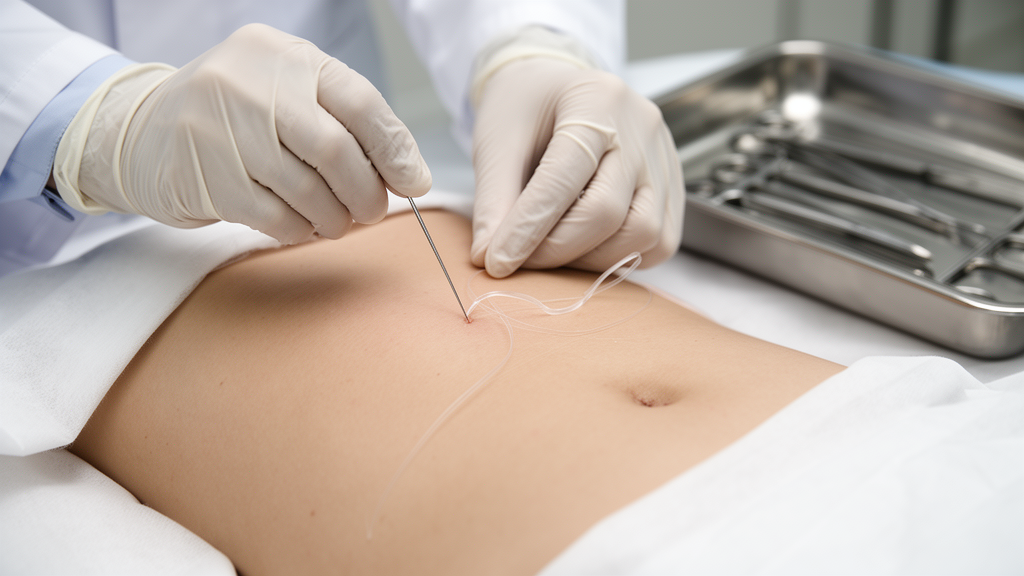
A technique borrowed from traditional Chinese medicine that leaves tiny dissolvable threads embedded in acupuncture points has produced measurable, cumulative weight loss in a large group of obese women, according to a retrospective cohort study published in Frontiers in Medicine. The procedure, known as acupoint catgut embedding, involves placing absorbable polydioxanone sutures under the skin at classical acupuncture locations, where they slowly degrade and provide continuous mechanical and neurological stimulation for weeks after a single session. Researchers at a Chinese medical centre analysed records from 98 obese women who underwent repeated embedding sessions and compared their body mass index trajectories with 33 untreated volunteers measured over the same period, finding that the treated group diverged progressively from the control group with each successive treatment.
The study addressed a persistent gap in the evidence base for acupuncture-derived weight-loss therapies. Most previous trials of acupoint catgut embedding were short, involved small samples, or pooled patients of both sexes and varying obesity severity. Because obesity places enormous strain on health systems, driving hypertension, dyslipidaemia, coronary artery disease, stroke, and hormone-related cancers such as endometrial and breast malignancies, clinicians have been searching for adjunctive options that sit between lifestyle counselling and bariatric surgery. Existing pharmacological options, including glucagon-like peptide-1 receptor agonists, produce impressive short-term results but are expensive, access remains uneven, and weight regain after discontinuation is common. Surgery is generally reserved for severe obesity. The Chinese team therefore set out to characterise what repeated embedding sessions achieve in routine clinical practice rather than in the artificial conditions of a randomised trial.
The technique itself is conceptually simple but physiologically intricate. A sterile needle introduces a short segment of absorbable suture material, in this case polydioxanone rather than traditional catgut, into the subcutaneous tissue at points such as those along the abdomen and lower limbs that traditional medicine associates with the spleen and digestive function. The suture then remains in place for roughly two to four weeks, mechanically stimulating the tissue and, according to the mechanistic literature, modulating afferent nerve signalling, hypothalamic appetite regulation, and endocrine pathways involved in energy balance. Animal studies have suggested that embedding at acupoints can influence leptin signalling and insulin resistance, while imaging work in humans has shown changes in brain regions governing satiety. Because the stimulus persists long after the needle is withdrawn, embedding requires far fewer clinic visits than conventional acupuncture, which typically demands sessions several times per week.
In the retrospective analysis, the researchers identified women aged 18 to 60 with a body mass index of at least 30 kilograms per square metre who had completed a standardised course of embedding sessions between defined dates, with no more than a fortnight between consecutive treatments. The comparison group consisted of volunteers who underwent baseline measurements and then simply continued their usual routines, returning for repeat measurements at the same intervals. Crucially, the two groups were statistically indistinguishable at the outset: mean body mass index, body weight, waist circumference, age distribution, and the proportion of patients with obesity-related comorbidities all matched closely, which strengthens the argument that subsequent divergence reflects the intervention rather than baseline differences.
The results showed a clear dose-response pattern with respect to the number of sessions received. After the first embedding treatment, the treated group already weighed slightly less than controls, but the difference did not reach statistical significance. After the second session, the gap became significant, and it widened further after the third and fourth treatments. By the end of the observation period, women who had received four sessions had lost substantially more weight than untreated controls, and the magnitude of the difference scaled with the cumulative number of embeddings rather than plateauing after an initial response. Within the treated group, body mass index declined steadily from baseline through each successive measurement point, whereas the control group’s values remained essentially flat throughout.
Secondary outcomes reinforced the primary finding. Waist circumference, a proxy for visceral adiposity and a stronger predictor of cardiometabolic risk than overall weight, shrank progressively in the treated group and was significantly smaller than in controls by the later measurement points. Body weight followed the same trajectory. The researchers also reported that the treatment was well tolerated: the most common adverse events were localised bruising, soreness at the insertion site, and transient subcutaneous nodules where the suture material sat before being absorbed, all of which resolved without intervention. No serious adverse events were recorded across the treatment course, an important consideration for a procedure that patients might otherwise undergo repeatedly over months or years.
The authors interpret the cumulative pattern as evidence that the therapeutic effect of acupoint embedding builds with repeated stimulation rather than producing a one-off shift. This aligns with the traditional rationale that persistent stimulation of specific points gradually recalibrates autonomic and endocrine regulation of appetite and metabolism. It also aligns with mechanistic studies showing that embedded sutures provoke a localised, low-grade inflammatory and healing response that evolves over several weeks, potentially sustaining the afferent signalling that conventional needles deliver only transiently. If the effect is genuinely cumulative, the finding has practical implications: patients and practitioners should not judge the therapy after a single session, and treatment protocols may need to specify a minimum number of embeddings before efficacy can be fairly assessed.
Several caveats temper the enthusiasm. The study was retrospective and single-centre, meaning that patients who chose embedding may have differed from controls in motivation, diet, or physical activity in ways the available records could not capture. The control group was small, and although baseline matching was good, residual confounding cannot be excluded. The follow-up window captured the treatment course and a short period afterwards but did not address long-term weight maintenance, which is the central challenge of any obesity therapy. The authors themselves note that randomised controlled trials with blinded outcome assessment, longer follow-up, and standardised lifestyle advice are needed before embedding can be recommended as an evidence-based adjunct. They also emphasise that the procedure should be performed by trained practitioners under sterile conditions, given that it involves breaking the skin and leaving foreign material in place.
Nevertheless, the study adds to a growing international literature suggesting that acupoint embedding may occupy a useful niche in weight management. Meta-analyses of embedding trials have reported pooled effects on body weight and body mass index that exceed those of conventional manual acupuncture, plausibly because of the sustained stimulus. The technique is already widely used in China for obesity, simple obesity in adolescents, and related metabolic conditions, and it is gaining attention elsewhere as patients seek alternatives to pharmacotherapy. The cumulative dose-response observed here, if replicated prospectively, would give clinicians a rational framework for treatment scheduling and for counselling patients about realistic expectations.
For now, the message for patients is cautiously optimistic but measured. Acupoint catgut embedding appears safe in experienced hands and produced progressive, statistically meaningful reductions in body mass index and waist circumference across repeated sessions in this cohort. It is not a substitute for dietary and behavioural change, and its effects, while encouraging, were modest in absolute terms compared with modern anti-obesity medications or surgery. But for women with obesity who cannot access or tolerate drug therapy, or who want a low-burden adjunct that requires only a handful of clinic visits, the accumulating evidence suggests that the humble dissolvable thread may deserve a place in the therapeutic toolkit, provided that larger randomised trials confirm what this real-world cohort observed.
Subject of Research: Cumulative effects of acupoint catgut embedding on weight loss in obese women
Article Title: Cumulative weight reduction across repeated acupoint catgut embedding sessions in obese women: a retrospective cohort study
Article References: Ji, X., Xin, X., Li, D., Hou, L., & Ye, Y. (2026). Cumulative weight reduction across repeated acupoint catgut embedding sessions in obese women: a retrospective cohort study. Frontiers in Medicine, 13, Article 1945172. https://doi.org/10.3389/fmed.2026.1945172
Image Credits: AI Generated
DOI: 10.3389/fmed.2026.1945172
Keywords: acupoint catgut embedding, obesity, body mass index, weight loss, traditional Chinese medicine, polydioxanone suture, retrospective cohort study, waist circumference, acupuncture, metabolic health, adiposity, complementary therapy
News Source: Daisy Hatcher. (October 16, 2026). Needle-Implanted Sutures Show Cumulative Weight Loss in Obese Women. Scienmag.