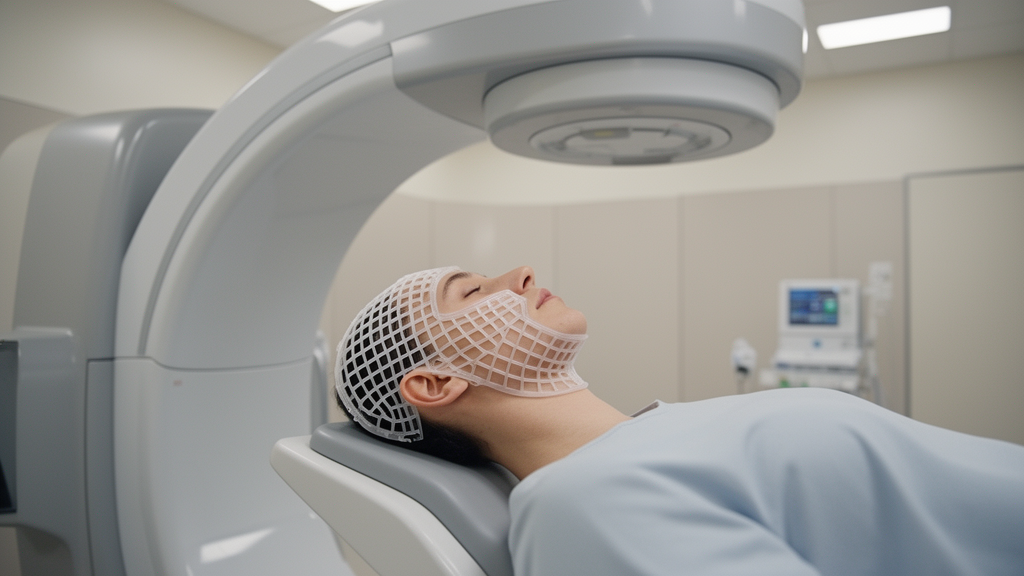
Neck-region positional discordance progressively intensifies during radiotherapy courses for nasopharyngeal carcinoma, according to findings from a single-center retrospective longitudinal cohort study of 822 patients. Evaluating 5,436 evaluable cone-beam computed tomography fractions, investigators found that mean neck translational vector error was substantially greater than head translational vector error, recording 2.91 ± 1.54 millimeters compared with 2.38 ± 1.26 millimeters. Furthermore, the neck translational vector error expanded over time, climbing from 2.69 ± 1.42 millimeters during the early phase of treatment to 3.23 ± 1.70 millimeters in the late treatment phase. This differential divergence between anatomical regions across treatment intervals was confirmed by a statistically significant region-by-phase interaction with a P value of less than 0.001.
The research, published in Frontiers in Medicine within the Medical Imaging and Nuclear Medicine section, was conducted by investigators Xuan Guo, Yan Xiong, Biaoshui Liu, and corresponding author Guican Guo from Sun Yat-Sen University Cancer Center in Guangzhou, China, in collaboration with Xiaoqi Yang from the Hospital of Renmin University of China in Beijing. The team noted that while regional head-neck positional discordance can develop during radiation therapy for nasopharyngeal carcinoma, its longitudinal evolution, measurement reproducibility, and capacity to signal subsequent cervical geometric instability had previously remained incompletely characterized. To track these spatial discrepancies across treatment schedules, the authors analyzed paired six-dimensional registration-derived positional measurements across three distinct intervals: an early phase covering weeks 1 and 2, a middle phase covering weeks 3 and 4, and a late phase spanning from week 5 onward.
The primary clinical endpoint evaluated by the researchers was study-defined patient-level neck-dominant setup instability occurring during the middle-to-late radiotherapy phases. Overall, this primary geometric instability outcome manifested in 254 out of the 822 patients enrolled in the cohort, representing an incidence rate of 30.9 percent across the entire study population. In addition to assessing the aggregate outcome across middle and late fractions, the investigators examined phase-specific occurrences among phase-evaluable patients. These phase-specific rates exhibited a marked longitudinal rise as radiation therapy progressed, with neck-dominant setup instability identified in 20.9 percent of phase-evaluable patients during the early phase, 29.4 percent during the middle phase, and 36.7 percent in the late phase.
To characterize the factors linked to subsequent instability, the investigators applied longitudinal mixed-effects models, generalized estimating equations, and multivariable logistic regression alongside sensitivity analyses. Multivariable analysis demonstrated that advanced nodal tumor characteristics independently correlated with the primary middle-to-late outcome. Patients presenting with N2–3 stage disease experienced a higher likelihood of subsequent neck-dominant setup instability, with an adjusted odds ratio of 1.44 and a 95 percent confidence interval ranging from 1.08 to 1.92. Additionally, baseline nodal tumor burden was identified as an important variable, where each 10-cubic-centimeter increase in nodal gross tumor volume was associated with an adjusted odds ratio of 1.09, accompanied by a 95 percent confidence interval of 1.04 to 1.15.
Early setup measurements captured during cone-beam computed tomography alignment within the first two weeks also provided strong statistical associations with subsequent geometric instability. Specifically, patients exhibiting an early head-neck translational discordance of 1.5 millimeters or greater had nearly double the odds of developing subsequent neck-dominant setup instability, registering an adjusted odds ratio of 1.91 with a 95 percent confidence interval of 1.42 to 2.57. Rotational displacement during initial alignment was similarly informative: an early neck pitch rotational error of 1.0 degree or greater was associated with an adjusted odds ratio of 1.58, with a 95 percent confidence interval between 1.16 and 2.15, demonstrating that both early rotational and translational variations in the cervical region reflect subsequent positioning challenges.
The investigators also assessed the reproducibility of their spatial registration methods and performed an exploratory focused dosimetric analysis to gauge potential clinical impact. Inter-observer reproducibility evaluations demonstrated high agreement among independent observers, yielding an intraclass correlation coefficient of 0.94 for translational discordance measurements and a Cohen kappa of 0.84 for classification of neck-dominant setup instability.
Drawing upon early regional cone-beam computed tomography metrics and anatomical nodal burden, the authors developed and internally validated an early prediction model to identify individuals at elevated risk of cervical geometric instability. The predictive model achieved an area under the receiver operating characteristic curve of 0.77, with a 95 percent confidence interval of 0.73 to 0.81, in the training cohort, and maintained an area under the curve of 0.74, with a 95 percent confidence interval of 0.68 to 0.80, in the internal validation cohort. The authors concluded that while reproducibility data and exploratory dosimetry offer preliminary support for this geometric construct, the model demonstrates moderate internal predictive performance, meaning prospective and external validation remain essential before these metrics or predictive models can guide clinical decision-making.
Subject of Research: Longitudinal head-neck positional discordance and geometric instability during nasopharyngeal carcinoma radiotherapy
Article Title: Longitudinal head-neck positional discordance during nasopharyngeal carcinoma radiotherapy and early CBCT prediction of neck-dominant geometric instability
Article References: Guo, X., Yang, X., Xiong, Y., Liu, B., & Guo, G. (2026). Longitudinal head-neck positional discordance during nasopharyngeal carcinoma radiotherapy and early CBCT prediction of neck-dominant geometric instability. Frontiers in Medicine, 13, Article 1986134. https://doi.org/10.3389/fmed.2026.1986134
Image Credits: AI Generated
DOI: 10.3389/fmed.2026.1986134
Keywords: nasopharyngeal carcinoma, radiotherapy, cone-beam computed tomography, image-guided radiotherapy, setup instability, neck-dominant setup instability, positional discordance, six-dimensional registration, translational vector error, neck pitch error, nodal gross tumor volume, planning target volume, retrospective cohort study, prediction model, inter-observer reproducibility, radiation oncology, cervical alignment, intraclass correlation coefficient
News Source: Nathaniel Bowman. (November 11, 2026). Neck Positional Errors Rise During Radiotherapy for Nasopharyngeal Carcinoma. Scienmag.