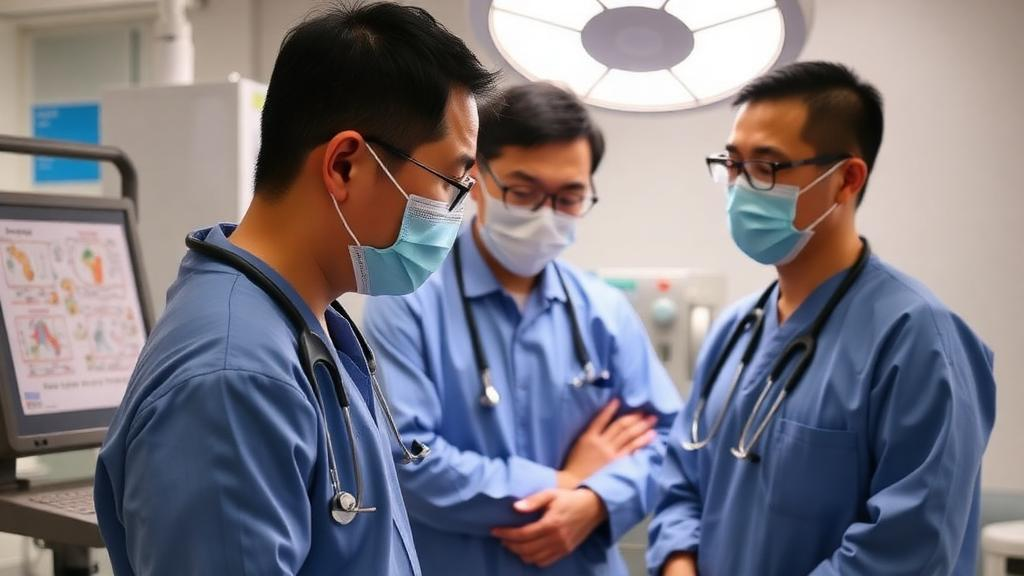
Nearly half of Chinese anesthesiologists are burning out on the job, and the reasons may be written directly into the architecture of their work. A new multicenter cross-sectional study published in BMC Public Health surveyed 698 anesthesiologists across 72 hospitals in 22 Chinese provinces and found that 46.4 percent met established criteria for burnout. Using the Job Demands–Resources model, a widely applied framework in occupational health psychology, the researchers showed that the balance between what a job demands and what it provides in return is a powerful statistical predictor of who succumbs to exhaustion, cynicism, and a fading sense of professional accomplishment.
Burnout is no longer a vague complaint. The World Health Organization included it in the 11th revision of the International Classification of Diseases as an occupational phenomenon, defined through three dimensions: emotional exhaustion, depersonalization, and reduced personal accomplishment. For anesthesiologists, the occupational terrain is particularly hazardous. The specialty combines high clinical responsibility, continuous vigilance during procedures, time pressure, irregular schedules, and frequent night shifts. A single lapse in attention can have immediate consequences for a patient under anesthesia, which makes sustained cognitive load an unavoidable feature of the job rather than an occasional spike.
The research team, led by Yuyan Wu and Shunyu Yao of the Department of Anesthesiology at the First Affiliated Hospital of the University of Science and Technology of China, recruited participants through multicenter purposive sampling between June 16 and June 30, 2026. Each respondent completed a general information questionnaire, a questionnaire constructed around the Job Demands–Resources model, and the Maslach Burnout Inventory–Human Services Survey, the most widely validated instrument for measuring the three burnout dimensions in service professions. The study protocol received an ethics exemption from the Ethics Committee of the First Affiliated Hospital of the University of Science and Technology of China because the survey was anonymous and collected no personally identifiable information, and all participants gave informed consent before taking part.
The analytical strategy moved from description to inference in careful steps. Chi-square tests first compared demographic and occupational characteristics between anesthesiologists classified as burned out and those who were not, revealing significant differences in sex, age, educational level, marital status, professional title, work experience, weekly working hours, and the number of night shifts worked. Spearman correlation analyses then quantified the associations between job demands, job resources, and each burnout dimension. The pattern was consistent: higher job demands correlated positively with emotional exhaustion, depersonalization, and reduced personal accomplishment, while greater job resources correlated negatively with all three. Finally, hierarchical multivariable logistic regression models, computed in R software and RStudio, isolated the factors independently associated with burnout after adjusting for confounders.
The regression results carry a counterintuitive headline. In the fully adjusted model, anesthesiologists aged 31 to 40 years had roughly 9.7 times the odds of burnout compared with colleagues aged 30 or younger, with an odds ratio of 9.677 and a 95 percent confidence interval spanning 2.287 to 40.940. Those aged 41 to 50 fared similarly, with an odds ratio of 8.305. Mid-career clinicians, in other words, appear to bear the heaviest burden, likely because they combine peak clinical workload with growing administrative and teaching responsibilities. By contrast, married participants had 78 percent lower odds of burnout than unmarried ones, with an odds ratio of 0.221, and those with more than ten years of work experience had 82 percent lower odds than colleagues with fewer than five years, with an odds ratio of 0.178.
The core of the Job Demands–Resources model lies in the tension between two families of occupational characteristics. Job demands are the physical, psychological, social, or organizational aspects of work that require sustained effort, such as workload, time pressure, and emotional strain. Job resources are the aspects that help workers achieve goals, buffer demands, and grow professionally, including autonomy, supervisor support, feedback, and team cohesion. The theory predicts that demands activate a health-impairment process leading toward exhaustion, while resources activate a motivational process that protects engagement. The Chinese data align closely with this prediction. At the sample mean of job resources, each unit increase in job demands raised the odds of burnout by 28.7 percent, with an odds ratio of 1.287 and a confidence interval of 1.228 to 1.350. At the sample mean of job demands, each unit increase in job resources lowered the odds by 15 percent, with an odds ratio of 0.850.
Perhaps the most technically interesting finding is the statistically significant interaction between demands and resources, with an odds ratio of 1.009, a 95 percent confidence interval of 1.003 to 1.016, and a P value of 0.006. Although the magnitude of the interaction coefficient is small, its statistical significance suggests that the protective effect of job resources is not constant across levels of demand. In practical terms, resources appear to matter most where demands are highest, which is precisely the prediction the Job Demands–Resources model makes about buffering. For hospital administrators, this implies that simply adding wellness programs without addressing workload may yield disappointing returns, whereas strengthening resources such as staffing flexibility, decision latitude, and peer support could meaningfully blunt the impact of unavoidable clinical pressure.
The study has limitations that temper interpretation. Its cross-sectional design captures a single moment in time, so the direction of causality between demands, resources, and burnout cannot be established with certainty; it is plausible that burned-out physicians also perceive their work environment more negatively. Purposive sampling, rather than random sampling, may limit the generalizability of the prevalence estimate to the entire population of Chinese anesthesiologists. Self-reported questionnaires are also vulnerable to response bias, and the Maslach Burnout Inventory, while validated, relies on honest introspection. The authors note that the findings may inform future evaluations of organizational strategies that optimize workload and strengthen workplace resources, framing the work as a foundation for intervention studies rather than a prescription in itself.
Why should readers outside the operating theater care? Anesthesiologists are the safety net of surgical medicine, and their cognitive endurance directly shapes patient outcomes. Burnout in this workforce has been linked in broader literature to medical errors, turnover intentions, and staff shortages, making it a systemic risk rather than a private struggle. The WHO’s classification of burnout as an occupational phenomenon reflects a global shift toward treating it as a workplace design problem, not an individual failing. The Chinese study adds granular evidence about which demographic groups, such as mid-career clinicians in their thirties and forties, and which structural levers, such as resource provision, deserve targeted attention.
The broader lesson is that burnout is measurable, modeled, and modifiable. The Job Demands–Resources framework gives researchers a common language for comparing occupational stress across specialties and countries, and the Chinese anesthesiology data now provide one of the more detailed national snapshots. If future longitudinal and intervention studies confirm that boosting resources can offset rising demands, the findings could reshape how hospitals schedule, staff, and support the physicians who keep patients alive through their most vulnerable moments. For now, the message from 72 hospitals across 22 provinces is clear: nearly half of the anesthesiologists surveyed are running on empty, and the balance sheet of demands versus resources tells much of the story.
Subject of Research: Occupational determinants of burnout among Chinese anesthesiologists analyzed through the Job Demands–Resources model
Article Title: Occupational determinants of burnout among Chinese anesthesiologists: a multicenter cross-sectional study based on the Job Demands–Resources model
Article References: Wu, Y., Yao, S., Zeng, R., Yang, Y., Wang, J., Huang, Y., Wang, Y., & Tang, C. (2026). Occupational determinants of burnout among Chinese anesthesiologists: a multicenter cross-sectional study based on the Job Demands–Resources model. BMC Public Health. https://doi.org/10.1186/s12889-026-29925-2
Image Credits: AI Generated
DOI: 10.1186/s12889-026-29925-2
Keywords: burnout, anesthesiologists, Job Demands–Resources model, occupational health, China, Maslach Burnout Inventory, emotional exhaustion, depersonalization, job resources, cross-sectional study, healthcare workforce, BMC Public Health
News Source: Ophelia Keating. (October 16, 2026). Nearly Half of Chinese Anesthesiologists Show Burnout as Job Demands Outweigh Resources, Multicenter Study Finds. Scienmag.