• HOME
  • NEWS
  • EXPLORE
    • CAREER
      • Companies
      • Jobs
    • EVENTS
    • iGEM
      • News
      • Team
    • PHOTOS
    • VIDEO
    • WIKI
  • BLOG
  • COMMUNITY
    • FACEBOOK
    • INSTAGRAM
    • TWITTER
Monday, May 11, 2026
BIOENGINEER.ORG
No Result
View All Result
  • Login
  • HOME
  • NEWS
  • EXPLORE
    • CAREER
      • Companies
      • Jobs
        • Lecturer
        • PhD Studentship
        • Postdoc
        • Research Assistant
    • EVENTS
    • iGEM
      • News
      • Team
    • PHOTOS
    • VIDEO
    • WIKI
  • BLOG
  • COMMUNITY
    • FACEBOOK
    • INSTAGRAM
    • TWITTER
  • HOME
  • NEWS
  • EXPLORE
    • CAREER
      • Companies
      • Jobs
        • Lecturer
        • PhD Studentship
        • Postdoc
        • Research Assistant
    • EVENTS
    • iGEM
      • News
      • Team
    • PHOTOS
    • VIDEO
    • WIKI
  • BLOG
  • COMMUNITY
    • FACEBOOK
    • INSTAGRAM
    • TWITTER
No Result
View All Result
Bioengineer.org
No Result
View All Result
Home NEWS Science News Biology

Nature versus nurture: Environment exerts greater influence on corn health than genetics

Bioengineer by Bioengineer
April 2, 2019
in Biology
Reading Time: 2 mins read
0
IMAGE
Share on FacebookShare on TwitterShare on LinkedinShare on RedditShare on Telegram

IMAGE

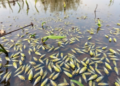
Credit: American Phytopathological Society

St. Paul, Minnesota (March 2019)–Corn is one of the most important staple crops in the world–over 1 billion metric tons of corn are harvested each year, comprising 37 percent of the global cereal production. Corn production occupies an estimated 188 million hectares–roughly the size of Mexico–and utilizes 13 percent of the world’s arable land. Because of this, there is a vested interest in keeping corn healthy.

Corn leaves are teaming with bacteria communities (the leaf “microbiome”) that influence plant health and performance, and scientists are still figuring out how. A team of scientists led by Dr. Jason Wallace recently published a study in the open access Phytobiomes Journal that advances what we know about these bacterial communities by investigating their relationships with corn genetics. According to Dr. Wallace, “the end-goal of all this research is to understand how crops interact with their microbial communities so we can harness them to make agriculture more productive and sustainable.”

In one of the largest and most diverse leaf microbe studies to date, the team monitored the active bacteria on the leaves of 300 diverse lines of corn growing in a common environment. They were especially interested to see how corn genes affected bacteria and found there was little relationship between the two–in fact, the bacteria were much more affected by the environment, although genetics still had a small role.

This is an interesting discovery that “breeding probably isn’t the best way to address this,” Dr. Wallace says. Instead, “the leaf community is probably better changed through farmer management.” That is, farmers should be able to change growing practices to enhance their current crops rather than seek out new plant varieties.

Going forward, Dr. Wallace suggests research into the functions of these bacterial communities, and then combining this knowledge to full systems-level understanding of the leaf community may enable development of beneficial management practices for farmers.

###

More details about this study can be found in “Quantitative Genetics of the Maize Leaf Microbiome,” published March 6, 2019 in Phytobiomes Journal Volume 2, Number 4.

Media Contact
Ashley Bergman Carlin
[email protected]

Related Journal Article

http://dx.doi.org/10.1094/PBIOMES-02-18-0008-R

Tags: Agricultural Production/EconomicsAgricultureBacteriologyFood/Food ScienceGeneticsMicrobiologyMolecular BiologyPlant Sciences
Share13Tweet8Share2ShareShareShare2

Related Posts

Ancient Plant Populations Reveal Fresh Insights into Climate Resilience — Biology

Ancient Plant Populations Reveal Fresh Insights into Climate Resilience

May 8, 2026
Rare Brain Disorders in Children Linked to Mutations in Lesser-Known Protein Complex — Biology

Rare Brain Disorders in Children Linked to Mutations in Lesser-Known Protein Complex

May 8, 2026

From Odd Insect to Underwater Predator: The Remarkable Evolution of a Bloodthirsty Fruit Fly

May 8, 2026

SNU Professor Sangwoo Seo’s Team Develops Next-Generation CRISPR Biocontainment Technology to Control Microbial Survival Without DNA Cleavage

May 8, 2026
Please login to join discussion

POPULAR NEWS

  • Research Indicates Potential Connection Between Prenatal Medication Exposure and Elevated Autism Risk

    840 shares
    Share 336 Tweet 210
  • New Study Reveals Plants Can Detect the Sound of Rain

    727 shares
    Share 290 Tweet 181
  • Scientists Investigate Possible Connection Between COVID-19 and Increased Lung Cancer Risk

    68 shares
    Share 27 Tweet 17
  • Salmonella Haem Blocks Macrophages, Boosts Infection

    61 shares
    Share 24 Tweet 15

About

We bring you the latest biotechnology news from best research centers and universities around the world. Check our website.

Follow us

Recent News

Evaluating Digoxin Use in Patients with Symptomatic Rheumatic Heart Disease

Evaluating the Effectiveness and Safety of Digitalis Glycosides in Treating Heart Failure

Urdu Fall Risk Questionnaire Adapted for Elderly

Subscribe to Blog via Email

Success! An email was just sent to confirm your subscription. Please find the email now and click 'Confirm' to start subscribing.

Join 82 other subscribers
  • Contact Us

Bioengineer.org © Copyright 2023 All Rights Reserved.

Welcome Back!

Login to your account below

Forgotten Password?

Retrieve your password

Please enter your username or email address to reset your password.

Log In
No Result
View All Result
  • Homepages
    • Home Page 1
    • Home Page 2
  • News
  • National
  • Business
  • Health
  • Lifestyle
  • Science

Bioengineer.org © Copyright 2023 All Rights Reserved.