Wolbachia, obligate intracellular bacteria that manipulate the reproduction of their arthropod hosts and are deployed worldwide to suppress arbovirus transmission, carry heavily reduced genomes that nonetheless harbor a rich mobilome of phages, insertion sequences and plasmids. These repeat-rich mobile elements are notoriously difficult to assemble, and conventional short-read approaches can generate artificial chimeric sequences that obscure their true diversity. A new study of Wolbachia infecting the mosquito vector Culex pipiens molestus reports the first near-complete endosymbiont genome and its mobile elements recovered directly from native long-read molecules, revealing a candidate dimeric form of the pWCP plasmid and extensive fragmentation of prophage WO regions.
To overcome the assembly problems posed by repetitive mobile DNA, the researchers established a PCR-free Oxford Nanopore long-read sequencing strategy built on single dissected female ovaries. Avoiding prior amplification allowed them to read native DNA molecules directly, and additional short reads from individuals of the same strain were used to assess and validate candidate mutations, particularly in repetitive regions. The approach yielded the first near-complete Wolbachia genome characterized from individual ovaries of this mosquito strain, together with a structural picture of its mobile elements that earlier methods could not provide.
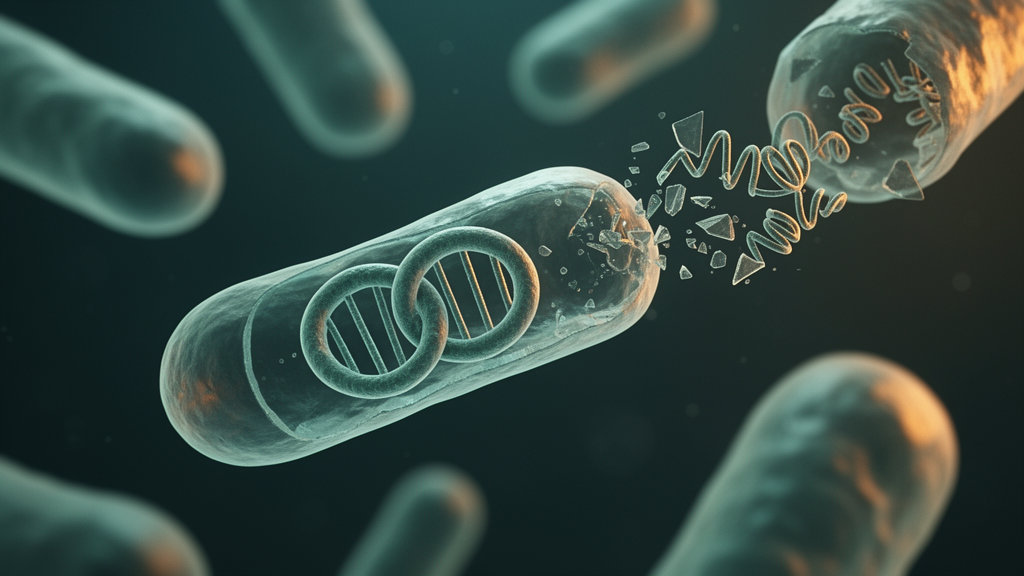
Among the key findings is a newly reported dimeric structure of the pWCP plasmid. The authors describe this as a candidate dimeric plasmid, suggesting that such multimeric plasmid forms may be associated with active replication, although this interpretation remains a hypothesis rather than a demonstrated mechanism.
The prophage WO regions told a more complex story. Even with long-read sequencing, the team observed extensive fragmentation of these integrated viral elements, underscoring their structural complexity. Analyses of the raw long reads recovered multiple alternative gene syntenies within the WO regions, indicating heterogeneous prophage architectures that the final assembly missed. This marked diversity of WO elements in Wolbachia of Culex pipiens, the wPip group strains, points to substantial mobilome heterogeneity within a single host strain.
Taken together, the results illuminate the structural heterogeneity of the endosymbiont genome as it is shaped by both integrated and episomal mobile elements. The findings are limited to a single Culex pipiens molestus strain and remain observational; the dimeric plasmid is described as a candidate structure, and the functional consequences of the alternative prophage syntenies have not been tested. Even so, the study demonstrates that PCR-free native long reads from minute tissue samples can expose mobilome diversity that conventional sequencing and assembly pipelines leave hidden.
Subject of Research: Mobilome heterogeneity in Wolbachia endosymbionts of the mosquito Culex pipiens
Article Title: Extensive mobilome heterogeneity in a widespread endosymbiont: A candidate dimeric plasmid and highly fragmented prophages in Wolbachia from Culex pipiens
Article References: Brunner, A., Mahout, M., Amoros, J., Rahmoun, M., Jarry, M., Bordenstein, S. R., Bordenstein, S. R., Trouche, B., & Reveillaud, J. (2026). Extensive mobilome heterogeneity in a widespread endosymbiont: A candidate dimeric plasmid and highly fragmented prophages in Wolbachia from Culex pipiens. PLOS Genetics, 22(10), e1012347. https://doi.org/10.1371/journal.pgen.1012347
Image Credits: AI Generated
DOI: 10.1371/journal.pgen.1012347
Keywords: Wolbachia, Culex pipiens, mobilome, plasmid, prophage WO, Oxford Nanopore, long-read sequencing, endosymbiont, mobile genetic elements, genome assembly, mosquito vector, Extensive
News Source: Juliet Wilcox. (October 26, 2026). Native long reads reveal dimeric plasmid and fragmented prophages in Wolbachia. Scienmag.