• HOME
  • NEWS
  • EXPLORE
    • CAREER
      • Companies
      • Jobs
    • EVENTS
    • iGEM
      • News
      • Team
    • PHOTOS
    • VIDEO
    • WIKI
  • BLOG
  • COMMUNITY
    • FACEBOOK
    • INSTAGRAM
    • TWITTER
Saturday, April 18, 2026
BIOENGINEER.ORG
No Result
View All Result
  • Login
  • HOME
  • NEWS
  • EXPLORE
    • CAREER
      • Companies
      • Jobs
        • Lecturer
        • PhD Studentship
        • Postdoc
        • Research Assistant
    • EVENTS
    • iGEM
      • News
      • Team
    • PHOTOS
    • VIDEO
    • WIKI
  • BLOG
  • COMMUNITY
    • FACEBOOK
    • INSTAGRAM
    • TWITTER
  • HOME
  • NEWS
  • EXPLORE
    • CAREER
      • Companies
      • Jobs
        • Lecturer
        • PhD Studentship
        • Postdoc
        • Research Assistant
    • EVENTS
    • iGEM
      • News
      • Team
    • PHOTOS
    • VIDEO
    • WIKI
  • BLOG
  • COMMUNITY
    • FACEBOOK
    • INSTAGRAM
    • TWITTER
No Result
View All Result
Bioengineer.org
No Result
View All Result
Home NEWS Science News

NASA’s Aqua Satellite captures Typhoon Yutu exiting the Northern Philippines

Bioengineer by Bioengineer
October 31, 2018
in Science News
Reading Time: 2 mins read
0
Share on FacebookShare on TwitterShare on LinkedinShare on RedditShare on Telegram
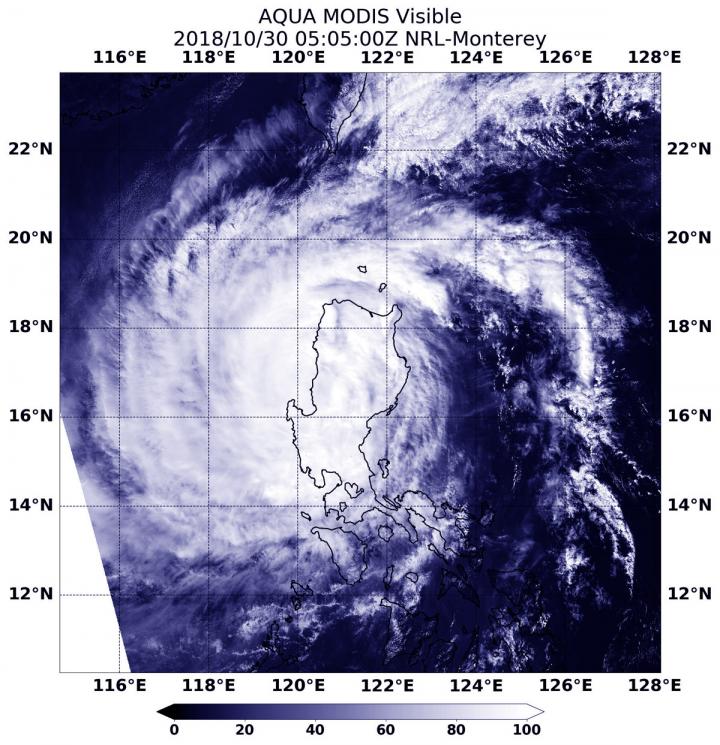
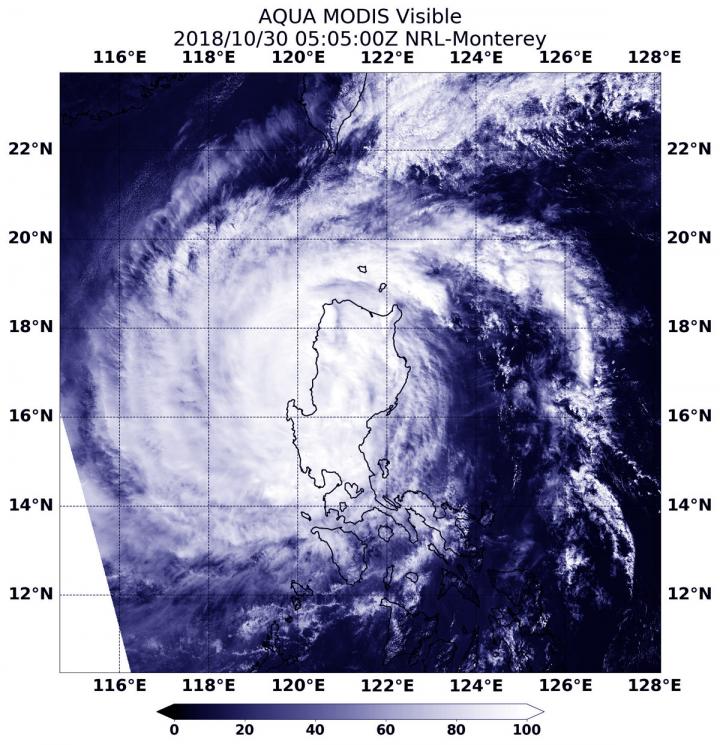
IMAGE

Credit: NASA/NRL

Visible satellite imagery from NASA's Aqua satellite showed that Typhoon Yutu maintained its structure as it exited Luzon, the northern Philippines.

Yutu is known locally as Rosita in the Philippines. On Oct. 30, Yutu moved into the South China Sea after passing through La Union. La Union is a province in the Ilocos Region in the island of Luzon.

Philippines warnings that are in effect on Oct. 30 include Warning signal 3 over the Luzon provinces of La Union and Pangasinan; Warning signal 2 over the Luzon provinces of Abra, Ilocos Sur, Mt Province, Nueva Vizcaya, Nueva Ecija, Tarlac and Zambales; and Warning signal 1 over the Luzon provinces of Ilocos Norte, Apayao, Kalinga, Cagayan, Isabela, Quirino, Aurora, Bulacan, Pampanga, Bataan, Metro Manila, Rizal, Cavite, Laguna and Batangas.

At 1:05 a.m. EDT (0505 UTC) on Oct. 30, the Moderate Resolution Imaging Spectroradiometer or MODIS instrument aboard Aqua captured a visible image of Yutu as it was exiting then northern Philippines and entering the South China Sea. Visible satellite imagery showed the storm maintained a symmetrical structure despite passing over land.

At 5 a.m. EDT (0900 UTC) on Oct. 30, the center of Yutu was located near latitude 16.8 degrees north and longitude 120.0 degrees east. That's 144 nautical miles north-northeast of Manila, Philippines. Maximum sustained winds were near 75 knots (86 mph/139 kph).

The Joint Typhoon Warning Center expects Yutu to re-strengthen in the South China Sea and then turn north. It is expected to dissipate in the Taiwan Strait, located between Taiwan and the Chinese mainland.

###

Media Contact

Rob Gutro
[email protected]
@NASAGoddard

http://www.nasa.gov/goddard

Original Source

https://blogs.nasa.gov/hurricanes/tag/yutu-2018/

Share12Tweet8Share2ShareShareShare2

Related Posts

Glycaemic Swings Drive Heart Cell Damage in Diabetes

April 18, 2026

Swedish Study: Person-Centred Communication Training for Caregivers

April 18, 2026

Membrane Protein Amuc_1098 Eases Pancreatitis via TLR2

April 18, 2026

Cadmium Exposure Boosts Metallothionein, Oxidative Damage Markers

April 18, 2026
Please login to join discussion

POPULAR NEWS

  • Scientists Investigate Possible Connection Between COVID-19 and Increased Lung Cancer Risk

    62 shares
    Share 25 Tweet 16
  • NSF funds machine-learning research at UNO and UNL to study energy requirements of walking in older adults

    101 shares
    Share 40 Tweet 25
  • Boosting Breast Cancer Risk Prediction with Genetics

    47 shares
    Share 19 Tweet 12
  • Popular Anti-Aging Compound Linked to Damage in Corpus Callosum, Study Finds

    46 shares
    Share 18 Tweet 12

About

We bring you the latest biotechnology news from best research centers and universities around the world. Check our website.

Follow us

Recent News

Glycaemic Swings Drive Heart Cell Damage in Diabetes

Swedish Study: Person-Centred Communication Training for Caregivers

Membrane Protein Amuc_1098 Eases Pancreatitis via TLR2

Subscribe to Blog via Email

Enter your email address to subscribe to this blog and receive notifications of new posts by email.

Join 79 other subscribers
  • Contact Us

Bioengineer.org © Copyright 2023 All Rights Reserved.

Welcome Back!

Login to your account below

Forgotten Password?

Retrieve your password

Please enter your username or email address to reset your password.

Log In
No Result
View All Result
  • Homepages
    • Home Page 1
    • Home Page 2
  • News
  • National
  • Business
  • Health
  • Lifestyle
  • Science

Bioengineer.org © Copyright 2023 All Rights Reserved.