In the relentless quest to innovate in the field of vaccine technology, scientists at Harvard University’s Wyss Institute, in collaboration with the Dana-Farber Cancer Institute and other partners, have propelled a groundbreaking approach that could redefine how we safeguard against infectious diseases. This pioneering vaccine platform, known as DoriVac, capitalizes on the precise molecular architecture of DNA origami to create nanostructured vaccines capable of eliciting expansive and robust immune responses. The implications of this development offer a promising alternative to existing mRNA vaccines, potentially overcoming several of their inherent limitations.
Messenger RNA (mRNA) vaccines have undoubtedly transformed public health, especially highlighted by their rapid deployment during the COVID-19 pandemic. However, their variable efficacy among individuals and the need for frequent updates to counter viral mutations have exposed critical vulnerabilities. Manufacturing complexities, stringent cold chain requirements, and unpredictable dosing within lipid nanoparticle delivery vehicles have also underscored the necessity for complementary strategies. The DNA origami-based DoriVac seeks to address these challenges by enabling unparalleled control over vaccine composition at the nanoscale, ensuring precise spatial arrangement of immune-stimulating elements and antigens.
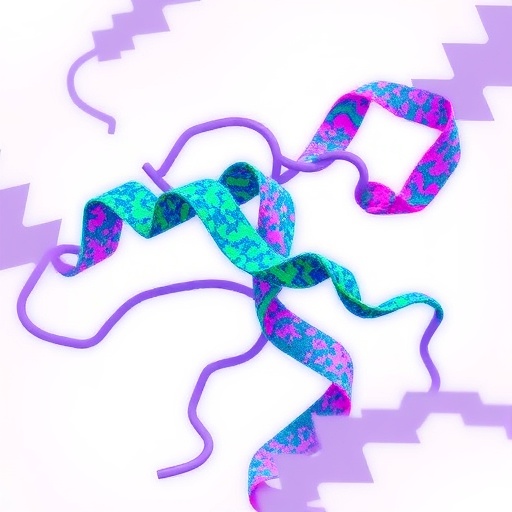
At the heart of DoriVac’s technology lies DNA origami, a technique that engineers DNA to fold into highly defined three-dimensional nanostructures. These square block-shaped constructs serve a dual purpose: one face displays immune-activating adjuvant molecules, while the opposing side presents pathogen-specific antigens. This spatially controlled display is critical; by tuning the nanometer-scale distances between adjuvant molecules, researchers optimize the activation of dendritic cells, the immune system’s sentinel antigen-presenting cells. Enhanced dendritic cell activation cascades into a more vigorous and diverse mobilization of humoral and cellular immunity, including potent B cell antibody production and activation of CD4+ and CD8+ T cell subsets essential for viral clearance and long-term protection.
The Wyss Institute team deployed the DoriVac platform to develop vaccines that incorporate the HR2 peptide, a conserved region found in the spike proteins of diverse viruses such as SARS-CoV-2, HIV, and Ebola. These vaccines elicited compelling immune responses in murine models, significantly surpassing those generated by free antigens and adjuvants administered without the nanostructured framework. Notably, the SARS-CoV-2 HR2-targeting DoriVac induced a broad spectrum of immune cells, encompassing activated dendritic cells, memory T cells proficient in cytotoxic functions, and antibody-secreting plasma cells, all key players in sustained antiviral immunity.
Transitioning from animal studies to human systems, researchers employed an advanced human lymph node-on-a-chip platform to simulate and assess how DoriVac would perform in a human immune context. This microfluidic technology provides a dynamic and controllable environment that closely mimics the physiology of human lymphoid tissue, where initial immune activation occurs. Here, the SARS-CoV-2 HR2 DoriVac vaccine profoundly stimulated dendritic cells to secrete inflammatory cytokines and expanded populations of functional CD4+ and CD8+ T cells. Such results underscore the considerable translational potential of DoriVac vaccines and support their progression toward clinical evaluation.
Perhaps most strikingly, direct comparisons between DoriVac vaccines presenting the full SARS-CoV-2 spike protein and commercially available mRNA vaccines from Moderna and Pfizer/BioNTech revealed that DoriVac could elicit comparable levels of T cell and B cell responses. This parity was observed in preclinical mouse models receiving booster doses—a gold standard in assessing vaccine efficacy. The implications extend beyond immune activation; the structural stability of DoriVac vaccines circumvents the necessity for ultracold storage that hampers mRNA vaccine distribution, particularly in resource-constrained settings. Moreover, the relatively straightforward manufacturing process promises scalability and cost-effectiveness, factors critical for global vaccine accessibility.
The molecular precision of DoriVac offers significant advantages in safety and customization. By programming immune recognition mechanisms at the nanoscale, it minimizes off-target effects commonly associated with lipid nanoparticle-based delivery systems. Additionally, the self-adjuvanted nature of the DNA origami vaccine enhances immune stimulation without requiring separate adjuvant components. Early studies indicate a favorable safety profile, further substantiating the platform’s suitability for diverse clinical applications.
DoriVac’s creation is the culmination of interdisciplinary collaboration integrating expertise from structural DNA nanotechnology, immunology, microengineering, and virology. Led by Professor William Shih and Dr. Yang (Claire) Zeng, the initiative represents a fusion of fundamental science and translational vision. Zeng’s leadership in advancing DoriVac encompassed initial cancer immunotherapy applications, which serendipitously dovetailed with infectious disease needs amidst the ongoing pandemic. The coupling of DNA origami with organ-on-chip technologies, engineered by Dr. Donald Ingber’s team, exemplifies this synergy, producing predictive human immune models conducive to accelerating vaccine development cycles.
As the scientific community anticipates the next generation of vaccines with enhanced efficacy, durability, and accessibility, platforms like DoriVac may form the cornerstone of future pandemic preparedness. Their modularity permits rapid reprogramming to address emerging pathogens, while their robust immune activation profiles enhance both the magnitude and breadth of protective responses. This novel approach not only augments our arsenal against known viral threats but also charts a sophisticated path to anticipate and mitigate future infectious disease challenges.
With promising preclinical data validating the feasibility and superiority of DoriVac, the research consortium is poised to advance toward clinical trials. Commercialization efforts led by DoriNano, co-founded by Dr. Zeng, aim to translate this innovation from laboratory benches to global healthcare systems. Their success could redefine vaccine paradigms, merging the blueprint of life, DNA, with cutting-edge immunoengineering, to deliver vaccines that are smarter, safer, and more widely available.
In sum, DoriVac represents an exciting convergence of nanotechnology and immunotherapy, encapsulating the potential to revolutionize vaccine science. By delivering a potent cocktail of vaccine and adjuvant with nanometer precision, this platform amplifies immune responses beyond current capabilities. Its stability and manufacturability hold promise for equitable distribution worldwide, breaking down barriers imposed by cold chains and supply complexities. As infectious diseases continue to challenge humanity, such innovations may well be our most formidable defense.
Subject of Research: Animals
Article Title: DNA origami vaccine nanoparticles improve humoral and cellular immune responses to infectious diseases
Web References:
Wyss Institute Technology: DoriVac Information
Wyss Institute at Harvard University: https://wyss.harvard.edu
Image Credits: Wyss Institute at Harvard University
Keywords: DNA origami, vaccine development, infectious diseases, immunology, adjuvants, dendritic cells, antigen presentation, humoral immunity, cellular immunity, SARS-CoV-2, mRNA vaccines, nanotechnology
Tags: alternatives to mRNA vaccineschallenges of mRNA vaccine technologycold chain vaccine storage solutionsDNA origami vaccine technologyDNA-based vaccine designDoriVac vaccine platformimmune response enhancementinfectious disease vaccine innovationnanostructured vaccinesprecise antigen presentationvaccine delivery nanoscale controlvaccine manufacturing advancements