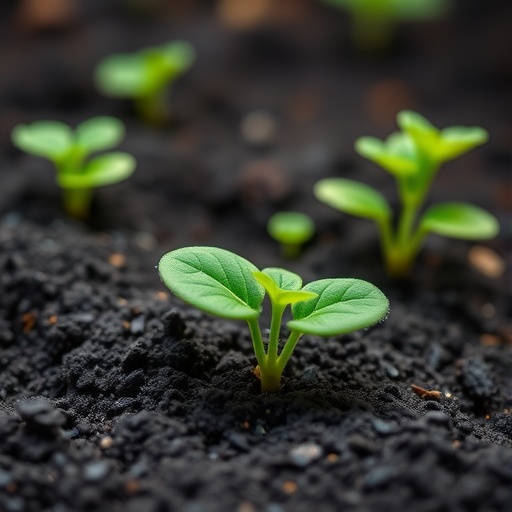
Researchers are turning to an ultrafine form of biochar as a possible all-in-one tool for agriculture’s mounting challenges. A new review in Biochar X examines nanobiochar—biochar-derived particles smaller than 100 nanometers—and finds that its unusual physical and chemical properties could help farmers conserve water, retain nutrients, reduce pollution, and strengthen crops against drought and salinity. The findings arrive as agricultural systems worldwide face increasingly severe soil degradation, erratic rainfall, nutrient losses, contamination, and pressure to produce more food with fewer resources.
Biochar is made by heating plant or other organic biomass in a low-oxygen environment, a process known as pyrolysis. The resulting carbon-rich material is traditionally added to soil, where its porous structure can improve water storage, provide surfaces for nutrient retention, and support microbial communities. When biochar is processed into nanoparticles, however, its behavior can change substantially. The smaller particles have a much larger surface area relative to their volume, greater pore accessibility, and more reactive chemical groups, allowing them to interact more closely with soil minerals, dissolved nutrients, microorganisms, and plant roots.
The review, which synthesizes research published between 2013 and 2026, reports dramatic differences between nanobiochar and conventional biochar. Across the studies examined, nanobiochar showed median increases of 650 percent in surface area, 480 percent in pore volume, and 320 percent in cation exchange capacity. Cation exchange capacity is a key measure of a soil or amendment’s ability to hold positively charged nutrients such as potassium, calcium, magnesium, and ammonium. By temporarily retaining these ions, nanobiochar may reduce their loss through drainage while keeping them available for plant uptake.
The reported agricultural effects were also notable. The compiled evidence indicated a 77 percent improvement in nitrogen-use efficiency, a 39 percent increase in water retention, and an 18 percent rise in crop yield compared with relevant conventional treatments. Other studies found that nanobiochar could reduce nutrient leaching by approximately 30 to 50 percent. Its nanoscale pores and reactive surfaces may help capture dissolved nutrients before they move beyond the root zone, while its interaction with soil particles can increase the amount of water held in forms accessible to crops.
Nanobiochar may also act as a defensive barrier against toxic contaminants. According to the review, amendments reduced plant uptake of heavy metals in contaminated soils by roughly 84 to 95 percent. In some investigations involving cadmium-contaminated soil, rice plants accumulated 86.5 to 95.1 percent less cadmium in their tissues after nanobiochar treatment. This effect may result from adsorption, the attachment of metal ions to the material’s surface, as well as changes in soil pH, chemical bonding, and the formation of less mobile metal compounds. Such mechanisms could be particularly valuable in farmland affected by industrial pollution, mining, wastewater, or long-term fertilizer use.
The material’s influence may extend beyond chemistry. Because nanoparticles can move through soil pores and reach root surfaces, nanobiochar may alter the environment surrounding roots, known as the rhizosphere. Researchers have associated its use with increased plant-available water, improved nutrient acquisition, and greater activity of beneficial soil microorganisms. These microbes can assist with nutrient cycling, organic matter decomposition, and plant growth regulation. The review also describes links between nanobiochar and improved plant performance during drought and salinity stress, conditions that can disrupt cellular water balance, restrict nutrient transport, and generate damaging oxidative molecules.
The researchers examined several techniques used to produce nanobiochar, including mechanical ball milling, sonication, centrifugation-assisted separation, and hydrothermal synthesis. Each method can produce particles with different sizes, shapes, pore structures, surface chemistries, and contaminant profiles. Those differences are important because nanobiochar is not a single uniform substance. Its performance depends on the original biomass, the temperature and duration of pyrolysis, the post-processing method, and the chemical characteristics of the receiving soil. This variability could complicate comparisons between experiments and make it difficult to establish universal application rates.
The review places nanobiochar within a broader vision of climate-resilient farming. It could be combined with conservation tillage, water-efficient cropping systems, precision agriculture, and the circular use of agricultural residues. Turning crop waste into a soil amendment could potentially reduce open-field burning, recycle carbon, and return nutrients to farmland. Yet the researchers emphasize that nanobiochar should not be treated as automatically safe simply because conventional biochar is widely studied. Its small size may make it more mobile and reactive, increasing the possibility of movement through soil, uptake by organisms, or unintended interactions with aquatic systems.
Potential risks include phytotoxicity, oxidative stress in plants, disruption of soil organisms, and ecological effects when particles accumulate at high concentrations. Nanobiochar produced from contaminated feedstocks could also carry unwanted metals or organic compounds into agricultural soils. The authors therefore call for long-term field trials, standardized characterization methods, chronic toxicity studies, monitoring of particle movement, and regulatory frameworks designed specifically for nanoscale soil amendments. Laboratory results may reveal what nanobiochar can do under controlled conditions, but only carefully designed field research can establish whether those benefits remain reliable across different climates, soil types, crops, and seasons.
Nanobiochar is not yet a ready-made solution to every agricultural problem, but the review suggests that its multifunctionality deserves serious attention. A single engineered amendment capable of improving nutrient retention, water availability, contaminant immobilization, microbial activity, and stress tolerance could become an important component of sustainable farming. The technology’s future, however, will depend on balancing its remarkable surface chemistry and biological potential with rigorous safety testing. If researchers can standardize production and demonstrate durable benefits without unacceptable ecological costs, nanobiochar could move from an intriguing laboratory material to a powerful tool for climate-resilient agriculture.
Subject of Research: Nanobiochar as a multifunctional soil amendment for soil health, plant stress tolerance, contaminant control, and climate-resilient agriculture.
Article Title: Nanobiochar functions as a multifunctional amendment for soil health, plant stress tolerance, and climate-resilient farming
News Publication Date: 2-Jul-2026
Web References: https://doi.org/10.48130/bchax-0026-0018; https://www.maxapress.com/bchax
References: Adil M, Gul I, Leghari AM, Bashir S, Shah SAA, et al. 2026. “Nanobiochar functions as a multifunctional amendment for soil health, plant stress tolerance, and climate-resilient farming.” Biochar X 2: e020. DOI: 10.48130/bchax-0026-0018.
Image Credits: Muhammad Adil, Isma Gul, Amna Munir Leghari, Safdar Bashir, Syed Ali Asghar Shah, Hasnain Farooq, Siqi Lu & Yu Tao
Keywords: Nanobiochar, biochar, sustainable agriculture, soil health, climate-resilient farming, plant stress tolerance, drought, salinity, nutrient retention, heavy metal contamination, soil microorganisms, water retention, agricultural biotechnology
Tags: biochar-derived nanomaterials for crop resiliencechallenges and opportunities of nanobenvironmental benefits of nanobiochar in agricultureimpact of nanotechnology on nutrient cyclingNanobiochar applications in sustainable agriculturenanobiochar properties for improved soil structurenanomaterials for drought and salinity resistancenanoparticle-based water conservation in farmingnanoparticle-enhanced nutrient retention in soilrole of nanobiochar in soil microbial healthsoil pollution reduction using nanobiochar