In the fifties, geneticists were faced with a mystery: when two strains of the same fruit fly species (Drosophila) crossed, they only produced female flies instead of the expected 50:50 sex ratio. At first, scientists thought that what lay behind this was a genetic mutation, but it was later discovered that the cause was a hidden bacterium, Spiroplasma poulsonii.
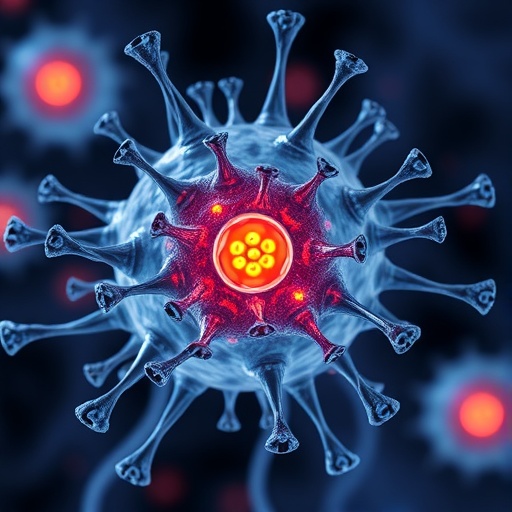
Spiroplasma is an endosymbiotic bacterium that lives in the fruit fly's blood and is passed on to it offspring through the female's oocytes. This bacterium remains largely hidden from its host but induces a fascinating reproductive manipulation: the specific killing of male embryos.
The existence of male-killer bacteria appear at first sight puzzling, but studies have shown that it promotes the long-term persistence of the symbiotic bacteria by increasing the frequency of infected females who then transmit the bacteria to their offspring.
Male-killing is not restricted to Spiroplasma but is also observed in several other endosymbiotic bacteria. The molecular mechanism underlying this process has however never been clarified. The original idea was that Spiroplasma produces an "androcidin" toxin, which kills males. But despite several attempts, the identity of this of this male killer has remained a mystery.
Now, Professor Bruno Lemaitre and Dr Toshiyuki Harumoto at EPFL have identified the elusive male-killing bacterial factor, solving the mystery. In a Nature paper, they reveal that the culprit is a protein that they name Spaid (for Spiroplasma poulsonii androcidin).
The gene for Spaid is known to encode a protein that has particular structural characteristics needed for its localization and activity inside the bacterium (ankyrin repeats and de-ubiquitinase domains).
The scientists found that just expressing Spaid in fruit flies was enough to recreate all the phenotypes associated with male killing in the insect. Consistent with a function in male killing, Spaid specifically binds to the X chromosome of male embryos. The authors speculate that Spaid interferes with a "male-specific process", such as a mechanism that increases the transcription of genes on the X chromosome (males have one X chromosome, while females have two). Finally, the scientists discovered a strain of the Spiroplasma bacterium with a mutation in the Spaid gene, which showed a reduced ability to kill males.
"To our knowledge, Spaid is the first bacterial effector protein identified to date that affects host cellular machinery in a sex-specific manner," says Harumoto. "And it is also, to our knowledge again, the first paper to identify an insect endosymbiont factor causing male killing. As such, we expect that it will have a big impact on the fields of symbiosis, sex determination and evolution."
###
Reference
Toshiyuki Harumoto, Bruno Lemaitre. Male-killing toxin in a Drosophila reproductive symbiont. Nature 02 April 2018. DOI: 10.1038/s41586-018-0086-2
Media Contact
Nik Papageorgiou
[email protected]
41-216-932-105
@EPFL_en
http://www.epfl.ch/index.en.html
https://www.nature.com/articles/s41586-018-0086-2
Related Journal Article
http://dx.doi.org/10.1038/s41586-018-0086-2