Credit: MPI f. Ornithology
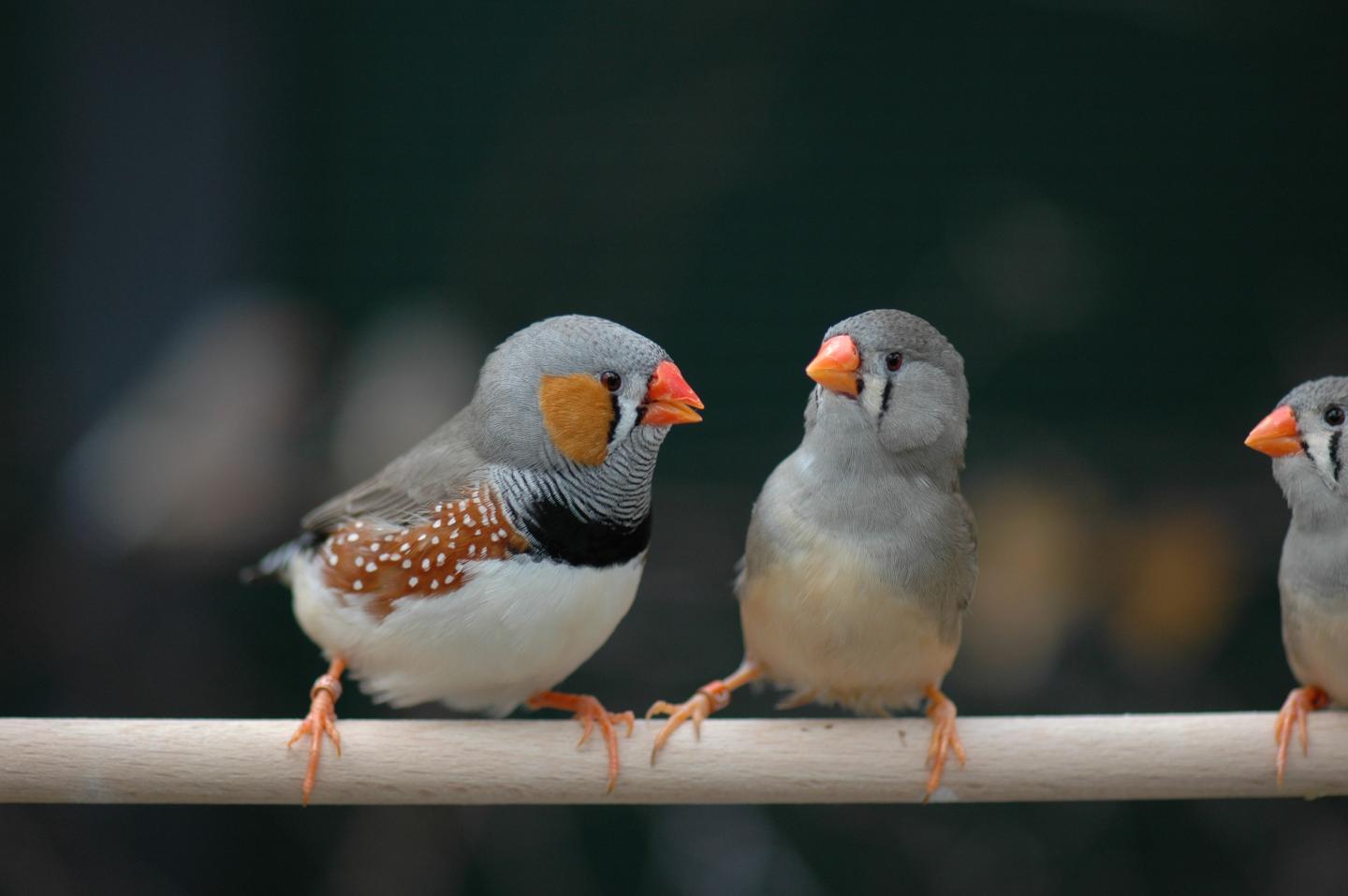
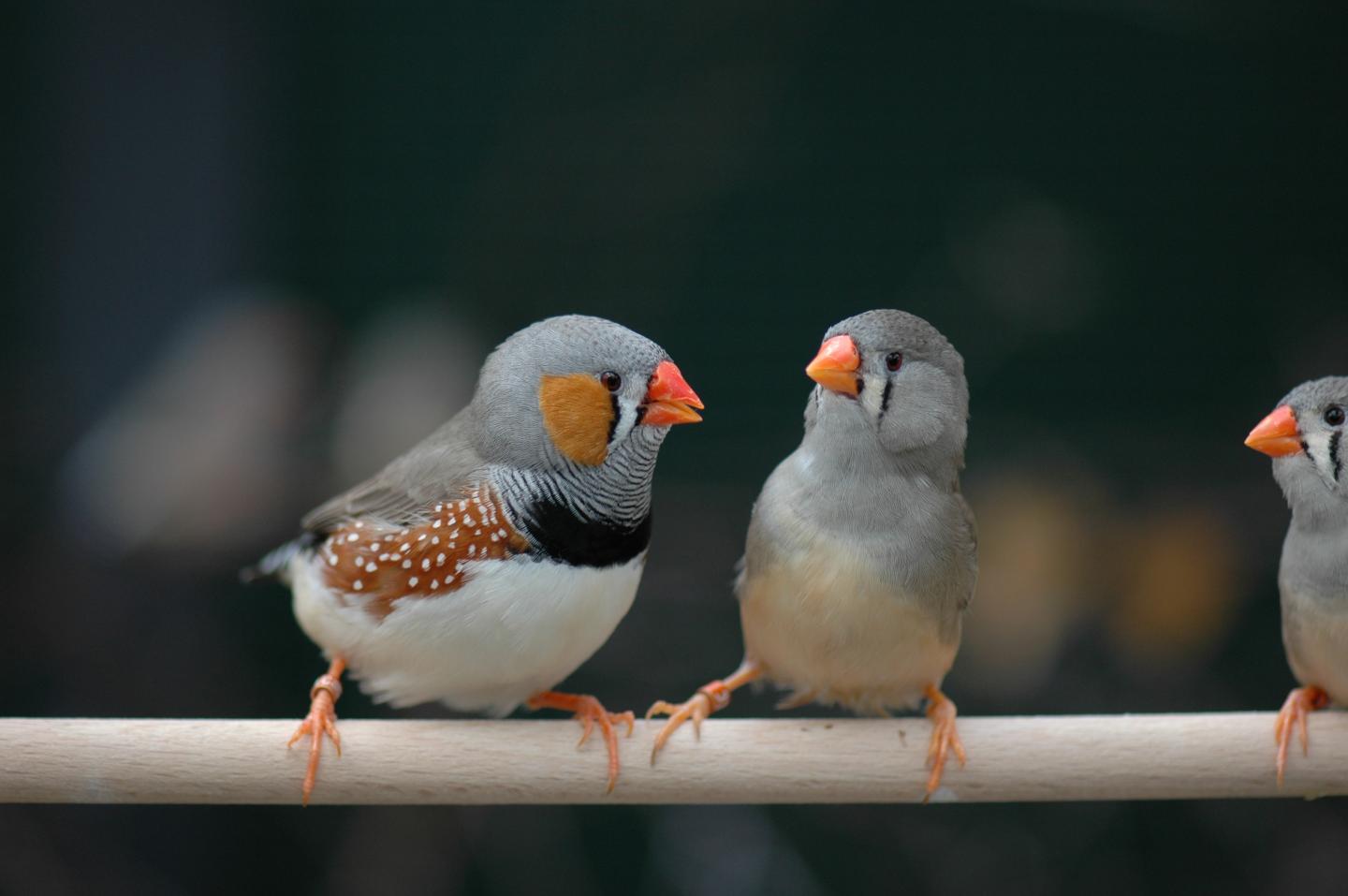
In zebra finches, sperm velocity and morphology and hence reproductive success strongly depend on a specific mutation (an inversion) on one of the sex chromosomes, called Z. This was discovered by scientists of the Max Planck Institute for Ornithology in Seewiesen. Males always carry two copies of the Z chromosome, but those that possess two different versions of it, one regular and one inverted, benefit from an optimal sperm design. Even under the strongest selection, in which only the fastest sperm will successfully fertilize the ovum, the genetically inferior types cannot go to extinction. This is because for the ideal morphology a combination of both forms is needed (heterozygotes), which is not possible without also producing the suboptimal types (homozygotes). According to the scientists, this effect can partly explain infertility in zebra finch males.
The "goal" of each sperm is fertilizing the ovum, which implies winning a fierce race through the long female reproductive tract. The competitors in this race are the "sibling" sperm from the same male, but often also sperm from other males. Given such competition and the resulting strong selection, it is inevitable that only the fittest reproduce. In the course of evolution, the best sperm design will thus have prevailed. In a small Australian songbird, the zebra finch, however, scientists have still found sperm of various morphology and velocity.
Together with colleagues from the Czech Republic, researchers from the Max Planck Institute for Ornithology in Seewiesen found that an inversion of a large fragment of the sex chromosome Z is responsible for sperm design, with immediate consequences for sperm swimming speed and hence for fertilization rate and for a male's reproductive success.
Every male possesses two Z chromosomes, one of which they inherited from the mother and one from the father. Z chromosomes exist in two versions, the regular one (A) and the inverted type (B). "Only if a male possesses both types, meaning that it is heterozygous AB instead of homozygous AA or BB, the male's sperm show a long midpiece which contains the motor for fast swimming" says Ulrich Knief, first author of the study. Animals with two identical forms of the Z chromosome (i.e. the homozygous males) cannot produce the superior sperm and hence show lower fertilization rates. The study is based on paternity analyses of 435 males in the absence of sperm competition and another 482 males under competition with other males. The study clearly shows that heterozygous males had higher fertilizing success under both conditions.
Genetic variation does not get depleted
The superior sperm of heterozygous males can reduce fertility problems, but heterozygous males will always produce 50% homozygous sons, such that the genetic variation in the population does not get depleted, because the optimal genotype cannot go to fixation. For many years, the evolutionary biologist Wolfgang Forstmeier has been puzzled by the high rates of infertility in this species, asking why evolution seems unable to fix this problem despite strong selection against infertile males. "This study is a first step into the direction of answering this question" says Forstmeier. "With an inheritance system with two sets of chromosomes, evolution is stuck when only the combination of both creates the perfect genotype."
While the researchers from Seewiesen were interested in the fitness consequences of the Z chromosome inversion, another group of scientists from the lab of Jon Slate from the University of Sheffield arrived at the same results through a wholly different approach. These scientists examined specific breeding lines of zebra finches, which had been selected for either short or long sperm. In a genome-wide search for variants affecting sperm morphology they independently discovered the Z chromosome inversion. Their study can thus show that the relevant genetic information for sperm morphology is almost exclusively found on this sex chromosome.
"Rather than being redundant, the studies nicely complement each other by the fact that two research teams arrived at the same conclusion coming from very different approaches" explains Bart Kempenaers, senior author of the study.
###
Original publication
Ulrich Knief, Wolfgang Forstmeier, Yifan Pei, Malika Ihle, Daiping Wang, Katrin Martin, Pavlína Opatová, Jana Albrechtová, Michael Wittig, Andre Franke, Tomáš Albrecht and Bart Kempenaers
A sex-chromosome inversion causes strong overdominance for sperm traits that affect siring success.
Nature Ecology & Evolution; Published online: 17 July 2017
Media Contact
Prof. Dr. Bart Kempenaers
[email protected]
49-815-793-2232
@maxplanckpress
http://www.mpg.de
Original Source
https://www.mpg.de/11400323/zebra-finches-inversion-chromosomes http://dx.doi.org/10.1038/s41559-017-0236-1