• HOME
  • NEWS
  • EXPLORE
    • CAREER
      • Companies
      • Jobs
    • EVENTS
    • iGEM
      • News
      • Team
    • PHOTOS
    • VIDEO
    • WIKI
  • BLOG
  • COMMUNITY
    • FACEBOOK
    • INSTAGRAM
    • TWITTER
Thursday, July 16, 2026
BIOENGINEER.ORG
No Result
View All Result
  • Login
  • HOME
  • NEWS
  • EXPLORE
    • CAREER
      • Companies
      • Jobs
        • Lecturer
        • PhD Studentship
        • Postdoc
        • Research Assistant
    • EVENTS
    • iGEM
      • News
      • Team
    • PHOTOS
    • VIDEO
    • WIKI
  • BLOG
  • COMMUNITY
    • FACEBOOK
    • INSTAGRAM
    • TWITTER
  • HOME
  • NEWS
  • EXPLORE
    • CAREER
      • Companies
      • Jobs
        • Lecturer
        • PhD Studentship
        • Postdoc
        • Research Assistant
    • EVENTS
    • iGEM
      • News
      • Team
    • PHOTOS
    • VIDEO
    • WIKI
  • BLOG
  • COMMUNITY
    • FACEBOOK
    • INSTAGRAM
    • TWITTER
No Result
View All Result
Bioengineer.org
No Result
View All Result
Home NEWS Science News

Mutant gene found to fuel cancer-promoting effects of inflammation

Bioengineer by Bioengineer
October 19, 2017
in Science News
Reading Time: 2 mins read
0
Share on FacebookShare on TwitterShare on LinkedinShare on RedditShare on Telegram
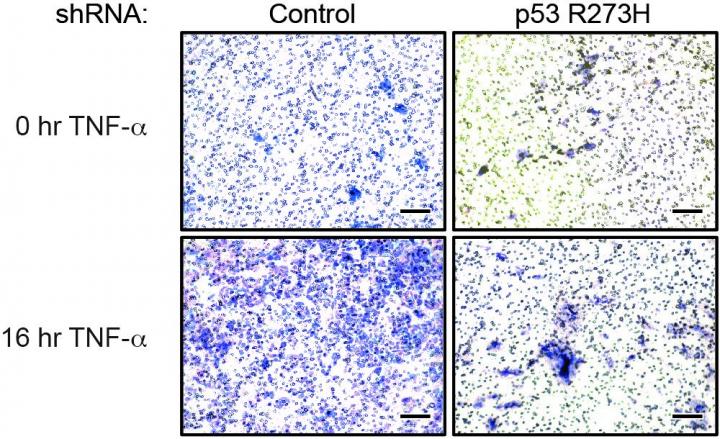
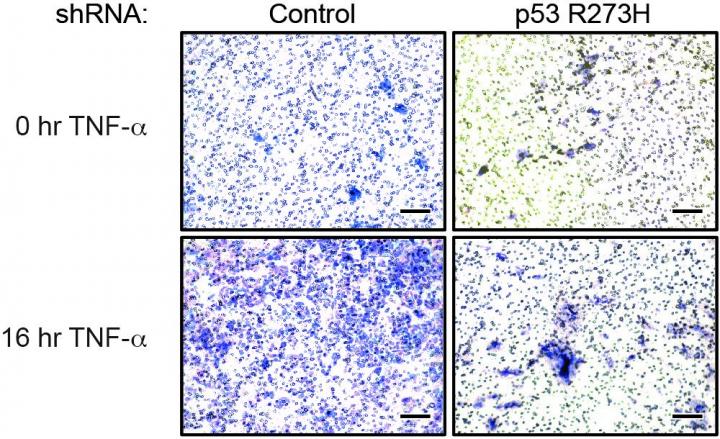
IMAGE

Credit: UC San Diego

A human gene called p53, which is commonly known as the "guardian of the genome," is widely known to combat the formation and progression of tumors. Yet, mutant forms of p53 have been linked to more cases of human cancer than any other gene.

Investigating core mechanisms of how cancer cells respond to their surroundings in the human body, biologists at the University of California San Diego have discovered new evidence about mutant p53 that may reshape our understanding of tumor growth and ultimately how we treat cancer.

A study published in the journal Nature Communications led by Homa Rahnamoun in Shannon Lauberth's laboratory at UC San Diego's Division of Biological Sciences uncovered a new mechanism linking mutant p53 function to chronic inflammation — a long-term condition typically associated with a response in the body's immune system–which can be induced in situations ranging from stress to food consumption. Lauberth said increasing evidence supports the role of chronic inflammation in the predisposition and progression of cancer, with some human tissues being more susceptible to tumor growth influenced by inflammation, including colon and breast cancers.

Through large-scale genomic analyses, the researchers discovered that mutant p53 amplifies the impact of inflammation leading to increases in the invasive behavior of cancer. Thus, rather than fighting tumor growth, mutant forms of p53 appear to be tapping into the body's immune response system to fuel pro-inflammatory responses that increase cancer growth.

"Our findings suggest the importance of considering the genetic alterations of an individual's cancer since this can influence the impact of inflammation on human cancer," said Lauberth, an assistant professor in the Section of Molecular Biology. "Immune therapy has been helpful in terms of targeting cancer and decreasing tumor size but now we found that inflammatory mediators can instead orchestrate growth in cancer cells harboring a mutation in p53. These findings make us really rethink the process of tumorigenesis and how we treat cancer."

Lauberth says this research can potentially help better define clinically relevant cellular targets and their responses in human cancer with the ultimate goal of aiding the development of target-based cancer screening and therapies.

###

Coauthors of the paper include UC San Diego colleagues Hanbin Lu, Sascha Duttke, Christopher Benner and Christopher Glass.

Media Contact

Mario Aguilera
[email protected]
858-822-5148
@UCSanDiego

http://www.ucsd.edu

Share12Tweet8Share2ShareShareShare2

Related Posts

Sweeteners Slow Growth of Key Gut Bacteria in Laboratory Studies

July 16, 2026

Rising European Dust Pollution Tied to a Changing Climate

July 16, 2026

Blood Test Model Predicts Postoperative Lung Infections in Older Hip Fracture Patients

July 16, 2026

Programming Fracture Resistance in Metamaterials through Elastic Instability Design

July 16, 2026
Please login to join discussion

POPULAR NEWS

  • New Drug Candidate Developed at McMaster Shows Potential for Treating Brain Cancer

    58 shares
    Share 23 Tweet 15
  • Scientists Overcome Antimicrobial Resistance in Bacteria Linked to Cystic Fibrosis

    42 shares
    Share 17 Tweet 11
  • Porcine Heart Transplant

    50 shares
    Share 20 Tweet 13
  • A varied menu

    51 shares
    Share 22 Tweet 12

About

We bring you the latest biotechnology news from best research centers and universities around the world. Check our website.

Follow us

Recent News

Sweeteners Slow Growth of Key Gut Bacteria in Laboratory Studies

Rising European Dust Pollution Tied to a Changing Climate

Blood Test Model Predicts Postoperative Lung Infections in Older Hip Fracture Patients

Subscribe to Blog via Email

Enter your email address to subscribe to this blog and receive notifications of new posts by email.

Join 85 other subscribers
  • Contact Us

Bioengineer.org © Copyright 2023 All Rights Reserved.

Welcome Back!

Login to your account below

Forgotten Password?

Retrieve your password

Please enter your username or email address to reset your password.

Log In
No Result
View All Result
  • Homepages
    • Home Page 1
    • Home Page 2
  • News
  • National
  • Business
  • Health
  • Lifestyle
  • Science

Bioengineer.org © Copyright 2023 All Rights Reserved.