


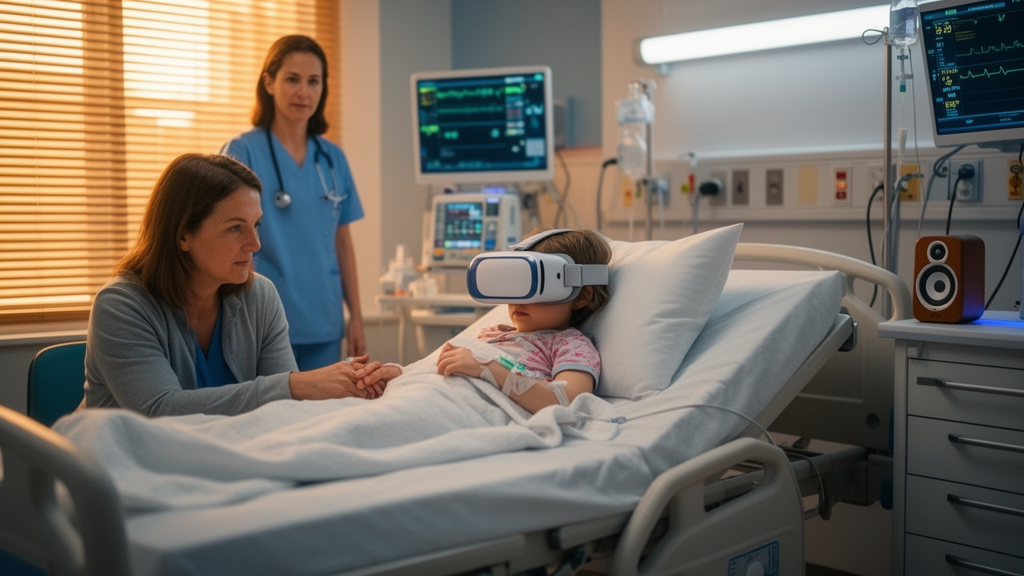
Critically ill children in the pediatric intensive care unit (PICU) frequently endure moderate to severe pain during hospitalization, with more than half of children and adolescents affected and up to half of those on mechanical ventilators requiring medications to control pain and agitation. A new narrative review published in the Egyptian Pediatric Association Gazette synthesizes the evidence on non-pharmacological interventions (NPIs) that could ease this burden, concluding that approaches such as environmental modification, cognitive strategies, family-centered care, and sensory-based therapies show promise as adjuncts to, not replacements for, opioid and benzodiazepine-based sedation and analgesia.
The case for alternatives is grounded in the well-documented harms of pharmacological overuse. Opioids and benzodiazepines, while effective, carry risks including delirium, prolonged mechanical ventilation, opioid tolerance, withdrawal syndrome, and poor neurodevelopmental outcomes. One cited study found that 63.3% of children received analgesic, sedative, and neuromuscular-blocking agents, with associated complications of tolerance and withdrawal. Another reported that children requiring mechanical ventilation received multiple sedative and analgesic agents, averaging 2.58 per patient, to maintain comfort. Sedative exposure has even been identified as an independent risk factor for hospital readmission within one year of discharge.
Delirium is a particularly strong concern. A meta-analysis found that benzodiazepine exposure was associated with a more than fourfold increase in the odds of delirium (odds ratio 4.10; 95% CI 2.48–6.80), while opiate exposure nearly tripled the odds (OR 2.88; 95% CI 1.89–4.37). Prolonged sedation lasting more than five days has been linked to opioid tolerance, withdrawal syndrome, cognitive impairment, and neurodevelopmental impairment. These findings have driven a paradigm shift toward strategies that prioritize pain control while minimizing sedative use, with non-pharmacological methods positioned as a central component.
The review’s authors outline a mechanistic rationale for why these interventions might work. Pain in critically ill children is multidimensional: beyond tissue injury and procedural stimuli, environmental stimulation, disrupted sleep-wake cycles, parental separation, and lack of coping mechanisms all contribute. Painful stimuli activate the hypothalamic–pituitary–adrenal axis, promoting secretion of adrenocorticotropic hormone and cortisol, while sympathetic activation drives tachycardia, hypertension, and peripheral vasoconstriction. Elevated catecholamines and cortisol exacerbate cerebral stress responses and delirium, and neonates and infants are especially vulnerable because of immature pain-inhibitory pathways. NPIs are proposed to work by dampening this sympathetic and hormonal hyperactivation, and by competing for attention through mechanisms described by gate control theory, in which non-painful sensory input closes the spinal gate on pain signals.
Among the interventions reviewed, distraction techniques attracted the most consistent evidence. Virtual reality significantly reduced procedural pain, fear, and anxiety in children undergoing needle-related procedures, invasive procedures, burn care, and postoperative care across multiple meta-analyses, although most studies reported low-certainty evidence and data on adverse effects are limited. Kaleidoscopes significantly reduced procedural pain during invasive procedures, distraction cards significantly reduced patient-, parent-, and observer-reported pain during needle-related procedures, and relaxation-guided imagery produced significant reductions in preoperative anxiety and postoperative pain. These interventions are thought to modify pain perception by drawing the child’s attention away from painful or stressful events, improving cooperation and reducing anxiety.
Music therapy is one of the most studied NPIs in critical care, but the PICU-specific findings are mixed. In one randomized trial of 50 mechanically ventilated children, personalized music delivered through headphones for 60 minutes three times daily improved behavioral scores and physiological parameters, reduced on-demand midazolam use (29 mg versus 33 mg; p = 0.040), and shortened mechanical ventilation duration (148.7 versus 187.6 hours; p = 0.044), though the reduction in PICU length of stay did not reach statistical significance. However, the subsequent MUSiCC trial did not find decreased sedation and analgesia use among mechanically ventilated children, although it confirmed that music therapy is feasible in the PICU; the trial was not powered to detect such differences. A systematic review of seven studies found increased comfort, reduced heart rate, and reduced procedural pain with music therapy in critically ill children.
Touch-based and family-centered interventions form another pillar of the evidence. Skin-to-skin contact is among the best-supported NPIs for neonatal procedural pain, with a meta-analysis demonstrating significantly reduced procedural pain in the skin-to-skin group. A Cochrane review of 138 studies involving 11,058 participants found reduced pain behaviors with swaddling, non-nutritive sucking, and facilitated tucking in preterm neonates, and with non-nutritive sucking in full-term neonates. In older children, parental presence during invasive procedures was associated with significantly reduced pain in one study, and another reported significantly reduced self-reported pain during painful medical procedures, although differences in self-reported fear, anxiety, and distress were not significant. Massage therapy has been studied primarily in stable infants, where it has been associated with improved weight gain and sleep, and acupressure was found safe, feasible, and effective for treating opioid withdrawal in the pediatric cardiac ICU.
Environmental and circadian interventions target the sensory overstimulation of the intensive care environment. The World Health Organization recommends that average hospital sound levels not exceed 35 dB, with a maximum of 40 dB overnight, yet noise in open PICUs often reaches 60–85 dB due to conversations, alarms, and procedures. Constant artificial lighting disrupts circadian melatonin secretion, impairs sleep architecture, and promotes delirium. A noise-reduction program in a PICU in China was associated with reduced delirium (p = 0.027) and improved sleep quality. Single-family room designs, which allow parents to remain with their child around the clock, have been associated with improved sleep patterns, shorter length of stay, and better neurodevelopmental outcomes, though most of this evidence comes from neonatal units and PICU research remains scarce.
Bundled approaches appear to outperform single interventions. Multicomponent comfort or liberation bundles combine optimized pain assessment, protocolized sedation, family engagement, sleep hygiene, environmental optimization, and early rehabilitation. A non-pharmacological delirium management bundle incorporating sleep hygiene, reorientation, family-centered care, and sensory stimulation such as hearing aids and glasses proved feasible and acceptable to staff in a pilot study. In adult ICUs, implementation of the ABCDEF bundle was associated with reduced mechanical ventilation duration, shorter ICU length of stay, reduced delirium, and reduced benzodiazepine use. A pediatric collaborative study showed the bundle can be applied in PICUs and was associated with decreased mortality, though not with ventilation duration, length of stay, or delirium incidence. The 2022 Society of Critical Care Medicine PANDEM guidelines advocate environmental optimization, family presence, sleep promotion, circadian rhythm preservation, and early mobilization as delirium prevention components.
The authors caution that the evidence base has important limitations. PICU-specific studies remain limited, with much of the data extrapolated from neonatal, perioperative, emergency, and burn settings, and direct extrapolation to critically ill children should be undertaken cautiously given developmental differences, disease heterogeneity, and variations in cognitive maturation. Study heterogeneity, small sample sizes, low certainty of evidence, and limited adverse-effect data further constrain conclusions, and no consensus exists on optimal interventions or implementation strategies. Most PICU trials are underpowered, outcome assessment tools vary widely, long-term neurodevelopmental outcomes have not been studied, and the dose, frequency, timing, and duration of NPIs remain undetermined. The reviewers call for adequately powered multicenter randomized trials with standardized outcome sets, validation of technology-assisted tools such as virtual reality and app-based distraction in the PICU, and cost-effectiveness studies. In the meantime, they position NPIs as low-cost, generally low-risk adjuncts within a multimodal comfort bundle approach, to be delivered alongside continuous assessment of pain and sedation with validated tools, never as substitutes for pharmacologic therapy.
Subject of Research: Non-pharmacological interventions for pain, anxiety and sedation management in the pediatric intensive care unit
Article Title: Non-pharmacological analgesia and sedation in the pediatric intensive care unit: a narrative review
Article References: Agrawal, A., Janjua, D., & Chanchlani, R. (2026). Non-pharmacological analgesia and sedation in the pediatric intensive care unit: a narrative review. Egyptian Pediatric Association Gazette, 74(1), Article 127. https://doi.org/10.1186/s43054-026-00629-x
Image Credits: AI Generated
DOI: 10.1186/s43054-026-00629-x
Keywords: pediatric intensive care, non-pharmacological interventions, sedation, analgesia, music therapy, virtual reality, delirium, family-centered care, procedural pain, ABCDEF bundle, mechanical ventilation, narrative review
News Source: Harold Sullivan. (October 28, 2026). Music, Virtual Reality and Family Care Emerge as PICU Sedation Adjuncts. Scienmag.



