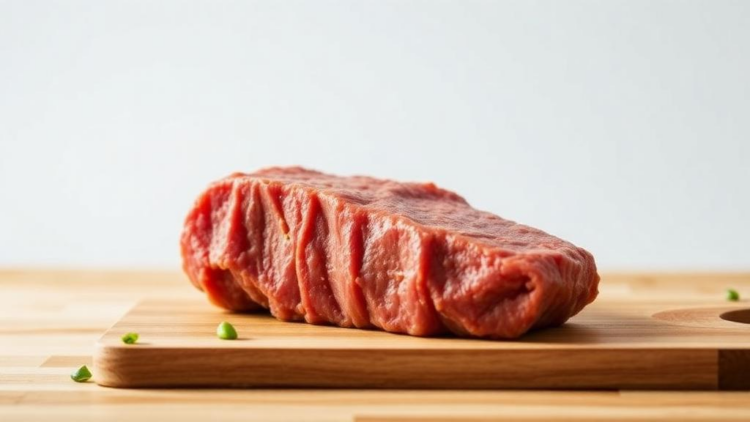
Cultured meat has long promised a future in which real animal protein is grown in bioreactors rather than raised in pastures, but the field has quietly been stuck on a deceptively simple question: which cells should we grow? A comprehensive new review published in Food Science of Animal Resources argues that the answer, for now at least, is muscle stem cells, or MuSCs, the resident adult stem cells that sit sandwiched between the sarcolemma and the basement membrane of skeletal muscle fibers. The review, led by Eun Ju Lee and Khurshid Ahmad of Yeungnam University together with colleagues in Korea, synthesizes decades of literature spanning 1968 to 2026 and lays out a strategic roadmap for turning these remarkable cells into the biological engine of a scalable food industry. Its central message is sobering and hopeful at once: no single breakthrough will deliver commercial cultured meat, but a convergence of cell biology, computational media design, and bioprocess engineering just might.
The case for MuSCs rests on their intrinsic commitment to the myogenic lineage. Unlike pluripotent stem cells, which require elaborate and tightly controlled differentiation protocols before they reliably become muscle, or mesenchymal stromal cells, which convert into muscle fibers only with variable and often disappointing efficiency, MuSCs are already wired for the job. In living animals they are responsible for growth, repair, and regeneration of skeletal muscle, and when activated by environmental cues they proliferate, differentiate, and fuse into the multinucleated myofibers that give meat its characteristic texture. That lineage fidelity translates into straightforward induction conditions in the laboratory and a direct biological relevance to the tissue being reconstructed. Because MuSCs can be harvested directly from livestock skeletal muscle, the resulting cultured product begins its life with the same cellular identity as conventional meat, which is precisely what regulators and consumers will scrutinize.
The catch is that MuSCs, like other primary cells, are mortal in culture. During extended in vitro passage they undergo phenotypic drift and eventually replicative senescence, progressively losing both proliferative capacity and myogenic potential. For a commercial process that may require many population doublings to accumulate enough biomass, this finite lifespan is a fundamental constraint. The review emphasizes that performance also varies with species, breed, donor age and sex, and even the anatomical origin of the muscle from which the cells are isolated. One cited study found that MuSCs from Hanwoo steers proliferated faster and doubled more quickly than cells from Hanwoo cows, with distinct marker expression profiles and differentiation kinetics. The authors call for standardized reporting of population doubling time, proliferation rate, differentiation kinetics, and fusion efficiency so that results from different laboratories can be meaningfully compared and robust cell lines identified.
Understanding myogenesis at the molecular level is the second pillar of the roadmap. Myogenic regulatory factors, including MYF5, MYOD, myogenin, and MRF4, orchestrate the progression from quiescent stem cell to fused myotube, and their expression serves as the standard molecular readout of myogenic status. Growth factors modulate every step of this cascade: IGF-1 drives growth and protein synthesis, FGF-2 sustains the proliferation of bovine and porcine MuSCs while delaying premature differentiation, PDGF promotes myoblast expansion, HGF wakes quiescent cells, and TGF-beta participates in repair and matrix remodeling but can suppress myogenesis depending on context. Beyond the classic factors, immune-derived cytokines exert surprisingly powerful effects. Interleukin-6 significantly enhanced bovine satellite cell proliferation in serum-free media in one study, interleukin-15 promotes myosin heavy chain accumulation, and interleukin-4 drives the secondary fusion step that builds mature myofibers. Myokines such as decorin, which sequesters the muscle-growth inhibitor myostatin in the extracellular matrix, and irisin add further layers of regulation.
Myostatin itself emerges as one of the most promising molecular levers. A member of the TGF-beta superfamily, myostatin is a potent negative regulator of muscle growth, and its genetic disruption in mice and double-muscled cattle produces dramatic increases in muscle mass. In culture, inhibiting myostatin or its downstream SMAD2/3 signaling enhances MuSC differentiation, promotes myotube formation, and upregulates key myogenic markers. Notably, computational docking screens of natural product databases have identified food-relevant plant compounds, including licochalcone A and B, quercetin, and laxogenin, as candidate myostatin inhibitors, and subsequent experimental work showed that these compounds can enhance MuSC proliferation and differentiation or protect cells from oxidative stress. The review is careful to note that such in silico hits are hypothesis generators, not proven ingredients, and that most evidence still comes from rodent or cell-line models rather than primary livestock cells.
That caveat points to the field’s most stubborn bottleneck: the culture medium. Standard formulations rely on fetal bovine serum, an animal-derived cocktail that is expensive, compositionally variable from batch to batch, ethically fraught, and incompatible with a food product meant to reduce reliance on livestock. Serum-free and chemically defined media exist, and formulations such as Beefy-9 have supported sustained expansion of bovine satellite cells across multiple passages while preserving myogenicity, but optimal compositions are highly species- and stage-specific. Media must also be modulated across the process, with expansion formulations maintaining progenitor states and differentiation formulations triggering myotube formation. Economic analyses cited in the review estimate that culture media, particularly the recombinant growth factors used in serum-free systems, can account for roughly half or more of variable operating costs, making media design the decisive battleground for affordability.
This is where artificial intelligence enters the story. The review highlights Bayesian optimization approaches that have streamlined serum-free medium development for myoblasts, multi-objective AI designs that produced low-serum media with reduced cost and environmental impact, and machine learning frameworks that predict the quality and senescence state of porcine and Hanwoo muscle satellite cells from microscopy images alone. Computational screening of vast natural product libraries such as COCONUT, LOTUS, and ZINC can prioritize candidate bioactive compounds, growth factor substitutes, and even antibiotic alternatives before a single wet-lab experiment is run. The authors stress, however, that docking scores and predictions demand rigorous experimental validation of solubility, cytotoxicity, and effective concentrations in food-relevant cells, and that AI should be treated as a complement to, not a replacement for, experimental optimization.
Even with perfect cells and perfect media, meat is a three-dimensional structure, and recreating it is an engineering problem. Skeletal muscle is organized into hierarchical bundles of aligned myofibers wrapped in endomysium, perimysium, and epimysium, and its texture depends on fiber density, alignment, and the extracellular matrix proteins, chiefly collagens, laminins, and fibronectin, that scaffold the whole assembly. Scaffold research is shifting from generic tissue-engineering materials toward edible, food-grade options: soy protein porous scaffolds, whey protein isolate composites, zein-coated alginate fibers that align muscle cells, and decellularized mushroom-derived matrices that produced steak-like constructs with authentic texture. At production scale, anchorage-dependent MuSCs are grown on microcarriers in stirred-tank bioreactors, where recent work has demonstrated bovine satellite cell expansion at microcarrier concentrations up to 80 square centimeters per milliliter and transfer to 3-liter vessels, while edible soy protein microcarriers enabled a 24-fold expansion of bovine myoblasts in eight days followed by differentiation without any cell detachment step.
Safety, regulation, and environmental accounting complete the picture. Hazards span microbial contamination, residual antibiotics and reagents, genetic and phenotypic drift during prolonged culture, and the composition of any scaffold that remains in the final product, and the review argues for risk-based frameworks built on HACCP principles and good manufacturing practice rather than blanket rules. Regulatory pathways are already diverging, with Singapore treating cultured meat as a novel food requiring pre-market safety assessment while the US FDA and USDA share oversight. Life cycle assessments, meanwhile, show that environmental performance is exquisitely sensitive to energy sources, media purification, and production scale, meaning that generalized claims about cultured meat’s footprint should be treated with caution. The authors’ bottom line is that cultured meat will succeed only through integration: stable, well-characterized MuSC sources; defined, food-grade, affordable media; scalable bioprocesses; engineered tissue architecture; and AI-guided optimization, all tracked with quantitative benchmarks of productivity, differentiation efficiency, cost, and safety. The cells are willing. The challenge now is industrial.
Subject of Research: Muscle stem cell cultivation strategies and technical barriers for scalable cultured meat production
Article Title: MuSC cultivation for cultured meat production: recent advances, current limitations, and future directions
Article References: MuSC cultivation for cultured meat production: recent advances, current limitations, and future directions. (n.d.). https://doi.org/10.1007/s44463-026-00108-2
Image Credits: AI Generated
DOI: 10.1007/s44463-026-00108-2
Keywords: cultured meat, muscle stem cells, myogenesis, serum-free media, myostatin, scaffolds, bioreactors, microcarriers, artificial intelligence, food safety, life cycle assessment, bioprocess engineering
Cite Scienmag News
APA MLA Chicago
Alan Morgan. (October 3, 2026). Muscle Stem Cells Hold the Key to Making Cultured Meat Affordable. Scienmag. https://scienmag.com/muscle-stem-cells-hold-the-key-to-making-cultured-meat-affordable/
Alan Morgan. “Muscle Stem Cells Hold the Key to Making Cultured Meat Affordable.” Scienmag, 3 October 2026, https://scienmag.com/muscle-stem-cells-hold-the-key-to-making-cultured-meat-affordable/. Accessed 3 October 2026.
Alan Morgan. “Muscle Stem Cells Hold the Key to Making Cultured Meat Affordable.” Scienmag. October 3, 2026. https://scienmag.com/muscle-stem-cells-hold-the-key-to-making-cultured-meat-affordable/
Copy citation Download RIS
Tags: adult stem cells for meat cultivationArtificial Intelligencebioprocess engineeringbioprocess engineering in food techbioreactor-grown animal proteinbioreactorscell biology in alternative protein productioncomputational media design for cell growthcultured meatcultured meat productionfood safetyLife Cycle Assessmentmicrocarriersmuscle cell differentiationmuscle stem cellsmuscle tissue engineeringMuSCsmyogenesismyostatinregenerative agriculturescaffoldsscalable cultured meatserum-free mediastem cell sources for lab-grown meat