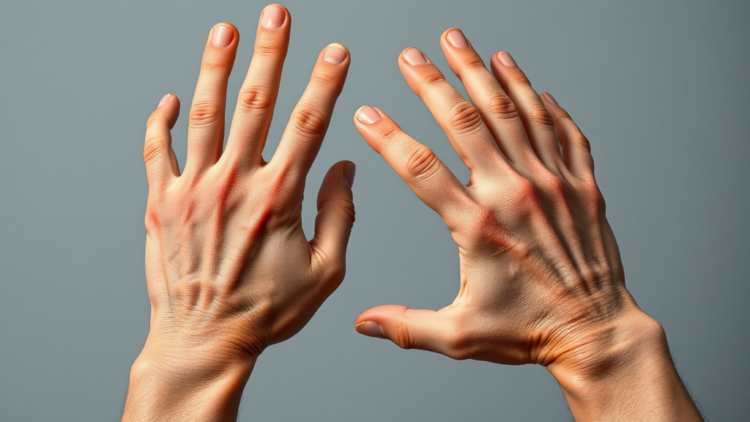
For millions of stroke survivors, regaining control of a clenched, unresponsive hand is one of the most frustrating battles in rehabilitation. Now one of the most comprehensive analyses ever conducted of muscle-signal-driven therapies has delivered a verdict that is both sobering and unexpectedly hopeful: the technology works, but only when it is deployed in the right way. A systematic review and meta-analysis published in Medical & Biological Engineering & Computing examined 38 randomized controlled trials involving 1,132 stroke patients and found that electromyography-based interfaces, which translate the electrical whispers of contracting muscle into therapeutic action, are not a one-size-fits-all solution. Their effectiveness, the researchers conclude, depends critically on the rehabilitation strategy built around them.
The research team, led by Cristian D. Guerrero-Mendez and colleagues at the University of Campinas in Brazil, searched seven scientific databases from their inception through November 2025, following PRISMA reporting guidelines and registering the review protocol in advance on PROSPERO. They sorted the eligible trials into four distinct categories of electromyography-based intervention: EMG-triggered electrical stimulation, in which a patient’s own muscle activity fires electrical pulses to the target muscle once an activation threshold is crossed; that same stimulation combined with other therapies such as mirror therapy, task-oriented training, or motor imagery; EMG-controlled robotic platforms that estimate motor intention to drive assistive devices; and EMG biofeedback, which converts muscle activity into real-time visual or auditory signals. Each category was then compared against conventional, non-EMG rehabilitation across outcomes organized by the World Health Organization’s International Classification of Functioning, Disability and Health framework.
The headline finding is a striking asymmetry. EMG-triggered electrical stimulation used in isolation showed no advantage whatsoever over conventional therapy. On the Fugl-Meyer Assessment for the upper extremity, one of the gold-standard measures of post-stroke motor recovery, control groups actually fared slightly better immediately after treatment, with a small standardized mean difference of −0.53 favoring conventional care. On the Action Research Arm Test, which measures real-world arm function, the two approaches were statistically indistinguishable at every time point examined, from the end of treatment out to follow-ups of three months or longer. For a technology that has been promoted for decades as a way to reawaken paralyzed muscles by linking voluntary effort to immediate stimulation, the message is blunt: the trigger alone is not the therapy.
But when EMG-triggered stimulation was woven into a broader rehabilitation program, the picture transformed dramatically. Combined interventions produced large improvements in upper-limb motor function, with a standardized mean difference of 1.53 on the Fugl-Meyer scale, and moderate-to-large gains in grip strength, wrist flexion strength, wrist range of motion in both flexion and extension, manual dexterity on the Box and Blocks Test, and the Manual Function Test. Crucially, the benefits extended beyond raw impairment measures into the domains that matter most to patients: combined therapy improved scores on the Barthel Index of daily living independence and on both subscales of the Motor Activity Log, a patient-reported measure of how much and how well the affected arm is actually used in everyday life. In the language of the ICF framework, the combined approach produced improvements across body functions and structures, activity, participation, and patient-reported outcomes simultaneously.
The robotic arm of the evidence told a different and equally instructive story. EMG-based robotic platforms, which read a patient’s motor intention from surface muscle signals and translate it into smooth, assisted movement of the wrist or fingers, did not outperform conventional therapy on broad functional measures such as the Fugl-Meyer Assessment or the Action Research Arm Test. Yet they excelled at one specific and clinically stubborn problem: spasticity, the pathological muscle stiffness that afflicts many stroke survivors. Robotic interventions produced large reductions in finger and wrist spasticity on the Modified Ashworth Scale immediately after treatment, and remarkably, the wrist benefits persisted at long-term follow-up of three months or more, with an effect size of −2.32. The authors suggest this is because EMG-driven robotic assistance encourages active patient engagement during movement intention and execution, reinforcing the sensorimotor coupling thought to underlie neural plasticity.
EMG biofeedback, the fourth category, remains the most uncertain. Only a handful of eligible trials existed, permitting just two meta-analyses, both conducted immediately after intervention. The available evidence pointed to large improvements in wrist extension range of motion and moderate gains in Brunnstrom staging, a measure of motor recovery stage, but the certainty of this evidence was rated as very low to low under the GRADE framework. Notably, none of the included studies exploited modern biofeedback applications such as serious games, exoskeleton control, or neurofeedback-based motor learning, relying instead on classic auditory or visual feedback. The authors argue this represents an untapped frontier rather than a dead end.
Why does combining EMG-triggered stimulation with other therapies work so much better than stimulation alone? The review offers a mechanistic explanation grounded in motor learning theory. Isolated muscle activation, the authors note, does not satisfy current stroke rehabilitation guidelines, which emphasize intensive, repetitive, task-oriented practice. EMG-triggered stimulation can amplify patient involvement by rewarding voluntary effort with immediate sensory feedback, but that activation must then be channeled into functional movement patterns. When paired with mirror therapy, motor imagery, or task-specific training, the stimulation provides the neuromuscular spark while the complementary therapy directs it toward meaningful motor goals, addressing voluntary control, coordination, sensorimotor integration, and daily-living function in a single integrated program.
The review is equally candid about the field’s weaknesses. Using the Cochrane Risk of Bias 2 tool, the team judged only eight of the 38 studies to be at low risk of bias, while 13 raised some concerns and 17, nearly half, were rated high risk. Intervention protocols varied wildly, from as few as 4 sessions to as many as 126, and from 2 to 21 sessions per week, making it difficult to isolate the effect of the EMG component itself, since in some trials only the experimental group received the additional therapy. The authors also highlight practical and technical constraints: patients with severe paresis may generate no detectable muscle signal at all, rendering EMG triggering impossible, while chronic patients may produce compensatory rather than task-specific activation. Electrode displacement, crosstalk from neighboring muscles, and low signal-to-noise ratios further degrade reliability, and the skin preparation and calibration these systems demand add to therapist workload.
The authors’ evidence gap map, a visual grid of intervention types against clinical outcomes, reveals where the field stands and where it stumbles. Evidence clusters heavily around immediate post-intervention assessments, while medium- and long-term follow-up data remain scarce, and large swaths of the map are simply blank. Looking forward, the team calls for adequately powered, multicenter randomized trials with rigorous randomization and standardized outcome measures, and points to high-density EMG, which offers far greater spatial resolution and was used in none of the included studies, as a promising next-generation interface. For now, the practical prescription is clear: EMG-based interfaces should be treated as complementary tools within comprehensive rehabilitation programs, not stand-alone replacements. The muscle signal is a messenger, the review suggests, not a medicine, and it heals best when embedded in the rich context of conventional, task-oriented therapy.
Subject of Research: Effectiveness of electromyography-based interfaces for hand and wrist motor rehabilitation after stroke
Article Title: Impact of EMG-based interfaces for hand motor rehabilitation in stroke: A systematic review with evidence gap map and meta-analysis
Article References: Guerrero-Mendez, C. D., Batista, N. P., Alves Filho, J. O., Germer, C. M., & Elias, L. A. (2026). Impact of EMG-based interfaces for hand motor rehabilitation in stroke: A systematic review with evidence gap map and meta-analysis. Medical & Biological Engineering & Computing. https://doi.org/10.1007/s11517-026-03660-7
Image Credits: AI Generated
DOI: 10.1007/s11517-026-03660-7
Keywords: stroke rehabilitation, electromyography, EMG-triggered electrical stimulation, biofeedback, rehabilitation robotics, spasticity, meta-analysis, systematic review, hand function, motor recovery, ICF framework, neurorehabilitation
Cite Scienmag News
APA
MLA
Chicago
Cassandra Pierce. (September 26, 2026). Muscle Signals Alone Don’t Heal Stroke-Damaged Hands, Massive Review Finds. Scienmag. https://scienmag.com/muscle-signals-alone-dont-heal-stroke-damaged-hands-massive-review-finds/
Cassandra Pierce. “Muscle Signals Alone Don’t Heal Stroke-Damaged Hands, Massive Review Finds.” Scienmag, 26 September 2026, https://scienmag.com/muscle-signals-alone-dont-heal-stroke-damaged-hands-massive-review-finds/. Accessed 26 September 2026.
Cassandra Pierce. “Muscle Signals Alone Don’t Heal Stroke-Damaged Hands, Massive Review Finds.” Scienmag. September 26, 2026. https://scienmag.com/muscle-signals-alone-dont-heal-stroke-damaged-hands-massive-review-finds/
Copy citation
Download RIS
Tags: biofeedbackclinical trials on electromyography-based interventionselectromyographyelectromyography-based therapy effectivenessEMG-triggered electrical stimulationhand functionICF frameworkmeta-analysismeta-analysis of neurorehabilitationmotor recoverymuscle activation in stroke recoverymuscle-signal-driven rehabilitationneurorehabilitationpersonalized stroke therapy strategiesrehabilitation roboticsrehabilitation strategies for stroke-affected handsrole of electromyography in stroke therapyspasticitystroke hand recovery techniquesstroke rehabilitationsystematic reviewsystematic review of stroke rehabilitation