• HOME
  • NEWS
  • EXPLORE
    • CAREER
      • Companies
      • Jobs
    • EVENTS
    • iGEM
      • News
      • Team
    • PHOTOS
    • VIDEO
    • WIKI
  • BLOG
  • COMMUNITY
    • FACEBOOK
    • INSTAGRAM
    • TWITTER
Friday, September 25, 2026
BIOENGINEER.ORG
No Result
View All Result
  • Login
  • HOME
  • NEWS
  • EXPLORE
    • CAREER
      • Companies
      • Jobs
        • Lecturer
        • PhD Studentship
        • Postdoc
        • Research Assistant
    • EVENTS
    • iGEM
      • News
      • Team
    • PHOTOS
    • VIDEO
    • WIKI
  • BLOG
  • COMMUNITY
    • FACEBOOK
    • INSTAGRAM
    • TWITTER
  • HOME
  • NEWS
  • EXPLORE
    • CAREER
      • Companies
      • Jobs
        • Lecturer
        • PhD Studentship
        • Postdoc
        • Research Assistant
    • EVENTS
    • iGEM
      • News
      • Team
    • PHOTOS
    • VIDEO
    • WIKI
  • BLOG
  • COMMUNITY
    • FACEBOOK
    • INSTAGRAM
    • TWITTER
No Result
View All Result
Bioengineer.org
No Result
View All Result
Home NEWS Science News Health

Muscle aging: Stronger for longer

Bioengineer by Bioengineer
September 9, 2020
in Health
Reading Time: 2 mins read
0
IMAGE
Share on FacebookShare on TwitterShare on LinkedinShare on RedditShare on Telegram

IMAGE

Credit: Image: University of Basel, Biozentrum

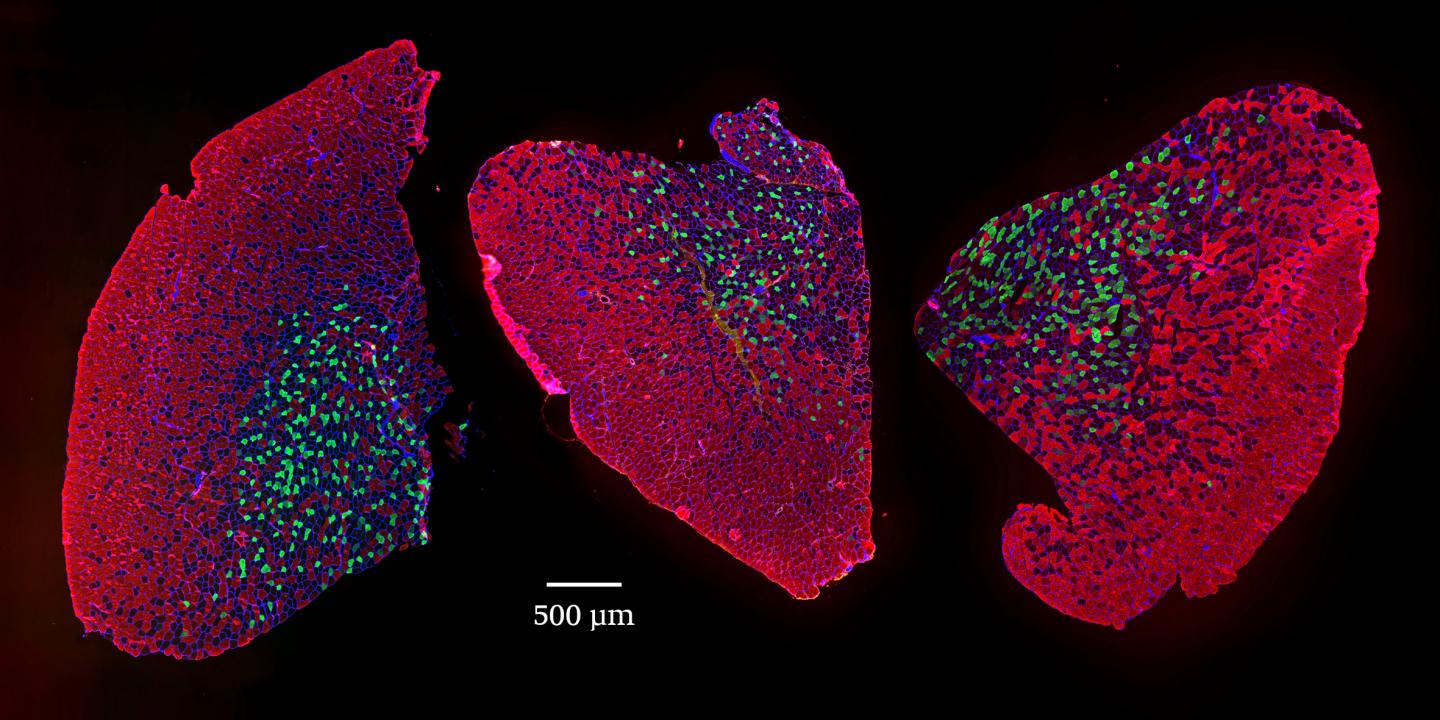
With life expectancy increasing, age-related diseases are also on the rise, including sarcopenia, the loss of muscle mass due to aging. Researchers from the University of Basel’s Biozentrum have demonstrated that a well-known drug can delay the progression of age-related muscle weakness.

Already in our best years, our muscles begin to shrink and their strength dwindles. Unfortunately, this is a natural part of aging. For some people, the decline in muscle mass and function is excessive. This condition, called sarcopenia, affects every second or third person over 80, reducing mobility, autonomy and quality of life.

The causes of sarcopenia are diverse, ranging from altered muscle metabolism to changes in the nerves supplying muscles. Researchers led by Professor Markus Rüegg have now discovered that mTORC1 also contributes to sarcopenia and its suppression with the well-known drug rapamycin slows age-related muscle wasting.

Rapamycin preserves muscle function

“Contrary to our expectations, the long-term mTORC1 suppression with rapamycin is overwhelmingly beneficial for skeletal muscle aging in mice, preserving muscle size and strength,” says Daniel Ham, first author of the study. “Neuromuscular junctions, the sites where neurons contact muscle fibers to control their contraction, deteriorate during aging. Stable neuromuscular junctions are paramount to maintaining healthy muscles during aging and rapamycin effectively stabilizes them.” The researchers also demonstrate that permanently activating mTORC1 in skeletal muscle accelerates muscle aging.

Molecular signature of sarcopenia

In collaboration with Professor Mihaela Zavolan’s team, the scientists identified a molecular ?signature? of sarcopenia, with mTORC1 as the key player. To help the scientific community further investigate how gene expression in skeletal muscle changes during aging or in response to rapamycin treatment, they developed the user-friendly web application, SarcoAtlas, which is supported by sciCORE, the Center for Scientific Computing at the University of Basel.

There is currently no effective pharmacological therapy to treat sarcopenia. This study provides hope that it may be possible to slow down age-related muscle wasting with treatments that suppress mTORC1 and thereby extend the autonomy and life quality of elderly people.

###

Media Contact
Reto Caluori
[email protected]

Related Journal Article

http://dx.doi.org/10.1038/s41467-020-18140-1

Tags: AgingBiologyMedicine/HealthMolecular BiologyMusculature
Share13Tweet8Share2ShareShareShare2

Related Posts

Weight Loss Rewires Cholesterol Metabolism, but Tiny RNAs Are Not the Driver

September 25, 2026

Sleep Experts Push to Classify Central Hypopneas, the Overlooked Breathing Events That Confuse Apnea Scores

September 25, 2026

Siblings of Autistic Adults With Aggressive Behavior Report Both Trauma and Hidden Strengths

September 25, 2026

Tiny miRNA Molecule Emerges as Potential Driver of Early Ovarian Failure Linked to Plastics Chemical

September 25, 2026
Please login to join discussion

POPULAR NEWS

  • Forest soil viruses may dampen how strongly microbes respire as temperatures rise

    29 shares
    Share 12 Tweet 7
  • Immunotherapy Plus Chemoradiotherapy Triples Survival in Esophageal Cancer Study

    29 shares
    Share 12 Tweet 7
  • Weight Loss Rewires Cholesterol Metabolism, but Tiny RNAs Are Not the Driver

    29 shares
    Share 12 Tweet 7
  • Antarctic sea bacterium yields enzyme that thrives in cold and extreme salt

    29 shares
    Share 12 Tweet 7

About

We bring you the latest biotechnology news from best research centers and universities around the world. Check our website.

Follow us

Recent News

Forest soil viruses may dampen how strongly microbes respire as temperatures rise

Immunotherapy Plus Chemoradiotherapy Triples Survival in Esophageal Cancer Study

Weight Loss Rewires Cholesterol Metabolism, but Tiny RNAs Are Not the Driver

Subscribe to Blog via Email

Enter your email address to subscribe to this blog and receive notifications of new posts by email.

Join 85 other subscribers
  • Contact Us

Bioengineer.org © Copyright 2023 All Rights Reserved.

Welcome Back!

Login to your account below

Forgotten Password?

Retrieve your password

Please enter your username or email address to reset your password.

Log In
No Result
View All Result
  • Homepages
    • Home Page 1
    • Home Page 2
  • News
  • National
  • Business
  • Health
  • Lifestyle
  • Science

Bioengineer.org © Copyright 2023 All Rights Reserved.