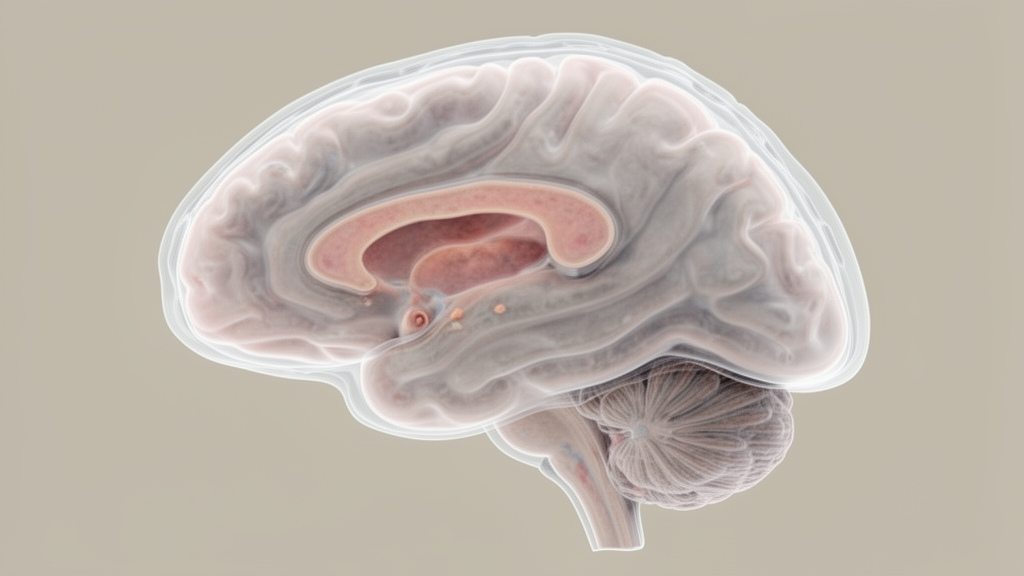
A retrospective multimodal magnetic resonance imaging study revealed complementary structural, microstructural, and functional abnormalities centered within the cingulate cortex in patients with multiple sclerosis compared to healthy individuals.
Cognitive impairment, depression, and anxiety are common non-motor manifestations of multiple sclerosis whose underlying neuroimaging substrates remain incompletely understood, while the cingulate region is known to participate in cognitive control, emotional regulation, and large-scale network integration.
To investigate these mechanisms, researchers evaluated twenty-four patients diagnosed with multiple sclerosis and twelve healthy controls, measuring cognitive function via the Montreal Cognitive Assessment, depressive symptoms through the Hamilton Depression Rating Scale, anxiety symptoms with the Hamilton Anxiety Rating Scale, and neurological disability using the Expanded Disability Status Scale.
Voxel-based morphometry demonstrated reduced gray matter volume in the left medial superior frontal gyrus, left anterior cingulate and paracingulate gyri, and bilateral orbital superior frontal gyri, with region-of-interest testing confirming lower gray matter volume across the bilateral anterior cingulate and paracingulate gyri.
Diffusion tensor imaging identified reduced fractional anisotropy across multiple white matter tracts in affected individuals, and region-of-interest analysis revealed both decreased fractional anisotropy and elevated mean diffusivity within the left cingulate gyrus.
Resting-state functional connectivity analysis showed decreased coupling between the bilateral cingulate gyrus and multiple cortical, subcortical, and cerebellar regions; although researchers observed nominal associations between imaging measures and clinical scores, none of the sixteen planned clinical-imaging correlations survived false discovery rate correction, leaving clinical associations exploratory pending confirmation in larger prospective cohorts.
The motivation for examining the cingulate cortex centers on its established participation in cognitive control, emotional regulation, and large-scale network integration. In patients diagnosed with multiple sclerosis, non-motor symptoms such as cognitive impairment, depression, and anxiety represent common and burdensome clinical manifestations. Despite their frequent presentation, the precise neuroimaging substrates underlying these cognitive and emotional challenges remain incompletely understood. By implementing a multimodal magnetic resonance imaging approach, the investigation sought to clarify how structural, microstructural, and functional abnormalities within the cingulate region relate to one another and whether these neuroimaging alterations correspond directly with patient symptoms.
The retrospective study evaluated twenty-four individuals with multiple sclerosis alongside twelve healthy controls. To rigorously characterize the clinical profile of the participants, researchers employed four distinct assessment instruments. Cognitive performance was evaluated using the Montreal Cognitive Assessment, while emotional symptoms were measured through two separate clinical inventories: the Hamilton Depression Rating Scale for depressive symptoms and the Hamilton Anxiety Rating Scale for anxiety symptoms. In addition, physical disability and overall neurological impairment were systematically rated through the Expanded Disability Status Scale. These comprehensive clinical scores provided the foundation for evaluating potential correlations between clinical impairment and the quantitative neuroimaging parameters derived from magnetic resonance scans.
The structural and microstructural imaging protocols revealed multiple localized deficits across the brain. Using whole-brain voxel-based morphometry, the investigators identified significant reductions in gray matter volume within the left medial superior frontal gyrus, the left anterior cingulate and paracingulate gyri, and the bilateral orbital superior frontal gyri. Targeted region-of-interest assessments substantiated these morphometric losses, confirming significantly lower gray matter volume across the bilateral anterior cingulate and paracingulate gyri. In parallel, diffusion tensor imaging evaluated white matter microstructural integrity, demonstrating reduced fractional anisotropy across multiple white matter tracts throughout the brain. When researchers focused specifically on the left cingulate gyrus in a targeted region-of-interest analysis, they detected both decreased fractional anisotropy and increased mean diffusivity, highlighting microstructural disruption within this key territory.
To evaluate functional communication beyond anatomical boundaries, the authors conducted resting-state functional connectivity analyses centered on the cingulate cortex. This analysis demonstrated reduced functional connectivity between the bilateral cingulate gyrus and multiple cortical, subcortical, and cerebellar regions. Rather than being confined to adjacent structures, the functional disruptions involved extensive neural circuits, reflecting widespread network changes in patients with multiple sclerosis compared to healthy controls.
The researchers also conducted sixteen planned correlation tests to determine whether cingulate neuroimaging abnormalities corresponded with scores on the cognitive, depression, anxiety, or disability assessments. Although several nominal associations were observed between imaging measures and clinical scores, none survived false discovery rate correction. Because these statistical relationships did not persist after adjustment, the authors emphasized that all clinical-imaging associations remain exploratory and require future confirmation in larger prospective cohorts.
Subject of Research: Cingulate structural and functional abnormalities in multiple sclerosis
Article Title: Multimodal MRI characterization of cingulate structural and functional abnormalities and their clinical associations in multiple sclerosis
Article References: Wang, X., Shi, Y., Zheng, Z., Wang, Z., Zhang, Y., Qu, Y., Wang, S., Xia, N., & Han, X. (2026). Multimodal MRI characterization of cingulate structural and functional abnormalities and their clinical associations in multiple sclerosis. Frontiers in Neurology, 17, Article 2024383. https://doi.org/10.3389/fneur.2026.2024383
Image Credits: AI Generated
DOI: 10.3389/fneur.2026.2024383
Keywords: Multiple Sclerosis, Cingulate Cortex, Multimodal MRI, Voxel-Based Morphometry, Diffusion Tensor Imaging, Functional Connectivity, Gray Matter Volume, Fractional Anisotropy, Mean Diffusivity, Anterior Cingulate Gyrus, Paracingulate Gyrus, Montreal Cognitive Assessment, Hamilton Depression Rating Scale, Hamilton Anxiety Rating Scale, Expanded Disability Status Scale, Resting-State fMRI, White Matter Tracts, Cognitive Impairment
News Source: Cassandra Pierce. (November 26, 2026). Multimodal MRI Reveals Cingulate Brain Abnormalities in Multiple Sclerosis Patients. Scienmag.