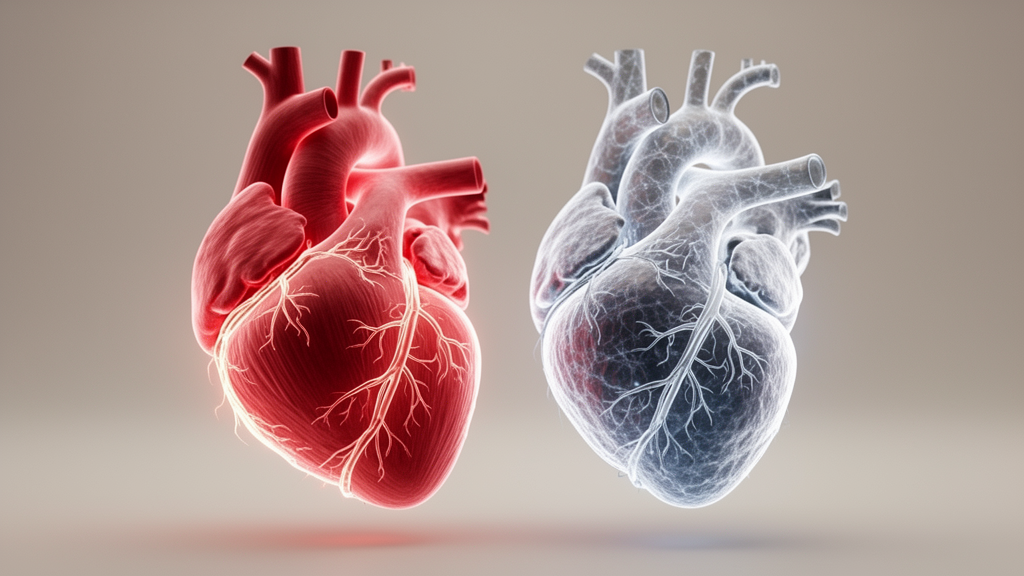
A multimodal machine learning analysis integrating high-throughput proteomics, cardiovascular imaging, and clinical evaluations has identified two biologically and prognostically divergent subtypes of heart failure with preserved ejection fraction. Heart failure with preserved ejection fraction accounts for over half of all heart failure cases, yet management has treated patients as a single entity. By applying unsupervised multiview spectral clustering to deeply characterized patients in the prospective PACIFIC-Preserved study, investigators uncovered two primary disease phenogroups designated as PEF1 and PEF2. While standard diagnostic evaluations failed to reliably separate these subsets, molecular profiling revealed extensive biological divergence, linking one subgroup to severe systemic inflammation and adverse clinical trajectories.
Heart failure presents a major public health challenge marked by high mortality and frequent hospital readmissions despite recent medical progress. While patients suffering from heart failure with reduced ejection fraction benefit from proven guideline-directed therapies targeting systolic pumping function, patients with preserved ejection fraction continue to experience poor outcomes and have fewer effective therapeutic options. Clinicians diagnose heart failure with preserved ejection fraction based on symptoms, elevated natriuretic peptides, and a left ventricular ejection fraction of at least fifty percent. Existing diagnostic scores, including HFA-PEFF and H2FPEF, aid diagnosis but cannot resolve the diverse biological processes driving disease progression. Patients often present with multiple comorbidities, including arterial hypertension, metabolic dysregulation, renal dysfunction, and vascular aging. These interrelated factors produce biologically distinct subgroups that remain undetected by routine clinical approaches, highlighting the urgent need for multidimensional patient stratification.
To address these limitations, researchers conducted the prospective PACIFIC-Preserved cohort study across six hospital centers in Paris between December 2019 and December 2023. The study enrolled one hundred and sixty-seven participants, with complete multimodal data available for one hundred and fifty-five individuals in the primary development cohort. Reflecting a predefined three-to-two-to-one inclusion ratio, the cohort comprised seventy-eight patients with preserved ejection fraction, fifty-one with reduced ejection fraction, and twenty-six age-matched and sex-matched control subjects without heart failure. Participants underwent extensive standardized assessments during a one-day hospital stay, capturing functional capacity via six-minute walking tests and Kansas City Cardiomyopathy Questionnaires, echocardiographic parameters, routine blood biochemistry, and high-throughput proteomics. Circulating proteomic profiles were characterized using the Olink Explore-HT platform, which simultaneously quantified approximately fifty-four hundred plasma proteins through proximity extension assays and next-generation sequencing.
To synthesize these diverse data types without introducing subjective bias, investigators applied multiview spectral clustering embedded within an automated consensus framework. The analytical design grouped variables into five modalities: clinical factors, numerical clinical variables, imaging metrics, routine laboratory biochemistry, and high-throughput proteomics. To ensure clustering stability and minimize distortion from individual outliers, the pipeline performed one thousand resamplings per iteration across both patient samples and feature columns at an eighty percent sampling rate. Recursive feature elimination proceeded across twenty-one cycles, monitoring the proportion of ambiguous clustering alongside symmetric and asymmetric adjusted Rand indexes across three to six clusters. While an initial three-cluster model aligned with clinical categories, the four-cluster configuration proved mathematically optimal, yielding the lowest proportion of ambiguous clustering, the highest adjusted Rand index, and robust stability across repeated iterations.
The four-cluster solution designated the resulting groups as PEF1, PEF2, REF, and Healthier. Among the seventy-eight preserved ejection fraction patients, the analysis uncovered two major subgroups displaying divergent biological features. The PEF1 cluster accounted for thirty-three point three percent of preserved ejection fraction cases, comprising twenty-six patients, and contained preserved ejection fraction individuals exclusively. The PEF2 cluster represented the majority, capturing fifty-five point one percent with forty-three patients. A smaller subset of six preserved ejection fraction individuals, representing seven point six percent, clustered within the Healthier group alongside control subjects, demonstrating phenotypic convergence toward normal cardiac parameters despite an initial clinical diagnosis. Most patients with reduced ejection fraction formed the separate REF cluster. A restricted secondary clustering analysis focusing solely on the seventy-eight preserved ejection fraction patients confirmed this two-group structure, demonstrating high statistical alignment with the primary PEF1 and PEF2 assignments.
Characterization of the phenogroups revealed striking biological differences between PEF1 and PEF2 despite comparable functional walking capacities and symptom scores. Clinically, PEF1 participants exhibited a higher prevalence of type two diabetes and modest echocardiographic increases in left ventricular mass. Plasma proteomics identified five hundred and ninety-seven proteins uniquely elevated in PEF1. Gene set enrichment analysis highlighted intense activation of inflammatory cascades, including leukocyte activation, cytokine receptor interactions, immune regulation, neutrophil degranulation, and tumor necrosis factor receptor superfamily signaling. Protein interaction analyses confirmed pronounced enrichment in markers of cardiac and skeletal muscle injury, concordant with elevated high-sensitivity troponin levels in blood tests. Furthermore, PEF1 patients demonstrated severe renal impairment, evidenced by lower estimated glomerular filtration rates, elevated proteinuria, and greater representation in high-risk KDIGO categories alongside reduced circulating albumin and hemoglobin concentrations, reflecting an extensive systemic inflammatory and cardio-renal process.
In contrast to the pronounced inflammatory disturbance in PEF1, the PEF2 phenogroup displayed a much milder molecular profile defined by endothelial stress and vascular remodeling. Functional enrichment analyses showed that proteins uniquely linked to PEF2 were associated with vascular endothelial growth factor signaling pathways, cytoskeletal organization, cell proliferation, and structural muscle development. PEF2 patients overexpressed very few proteins relative to PEF1, with uromodulin and neural EGFL like 1 exhibiting the highest fold changes, reflecting relatively preserved renal function. The circulating proteomic profile of PEF2 closely resembled that of patients with reduced ejection fraction, indicating shared vascular remodeling pathways. Clinically, PEF2 patients maintained superior kidney function metrics compared to PEF1 individuals, while demonstrating a higher trend toward atrial fibrillation at baseline evaluation. These distinct characteristics establish PEF2 as a separate biological entity within the preserved ejection fraction spectrum.
To translate the unsupervised clustering findings into practical clinical classification tools, the researchers trained supervised machine learning models utilizing the XGBoost algorithm combined with recursive feature elimination. Evaluating over six thousand baseline features, an optimized multiclass model selected thirty-six clinical, imaging, and biological variables, achieving an overall F1-score of zero point ninety across all four phenogroups. To discriminate specifically between the two major preserved ejection fraction phenogroups, the authors trained a binary classifier. Although initiated on the full multimodal dataset, recursive feature elimination converged on a minimal panel of eight circulating proteins: THBD, TNFRSF21, NECAB2, BSG, TGFBR2, SCARB2, TGOLN2, and IGFBP6. This parsimonious proteomic panel achieved an F1-score of zero point ninety-nine. Standard renal markers were eliminated during feature reduction, demonstrating that circulating proteomic signatures provide critical discriminatory power that exceeds conventional clinical and laboratory measurements.
To validate these findings in an independent population, investigators evaluated the classification strategy within the multicenter MEDIA-DHF cohort, comprising four hundred and fifty-six preserved ejection fraction patients recruited across ten centers in eight European countries. Dataset harmonization identified four hundred and ninety-nine variables shared between the cohorts. Using quantile-quantile regression to align proteomic distributions across study batches, researchers trained an optimized classifier that attained a peak F1-score of zero point eighty-seven using twelve variables, including six proteomic markers. When applied to MEDIA-DHF participants, the classifier assigned one hundred and forty-eight patients (thirty-two point four percent) to PEF1, two hundred and forty-two patients (fifty-three point one percent) to PEF2, forty-nine patients to Healthier, and seventeen to REF. These subgroup proportions closely mirrored the discovery cohort, while validating the distinct clinical profile of PEF1, including elevated diabetes prevalence and impaired kidney function.
Prognostic evaluations confirmed that biological subtype assignment strongly influenced clinical outcomes across both study populations. In the MEDIA-DHF validation cohort, Cox proportional hazards regression showed that patients in PEF1 faced significantly higher risks of death or heart failure hospitalization compared to those in PEF2. When adjusting for age and sex, PEF1 patients demonstrated an adjusted hazard ratio of three point twenty-six (ninety-five percent confidence interval, one point fifty-seven to six point seventy-seven; p equals zero point zero zero two). After additional adjustment for circulating N-terminal pro-B-type natriuretic peptide, PEF1 remained independently associated with worse outcomes, with an adjusted hazard ratio of two point twenty-seven (ninety-five percent confidence interval, one point zero four to four point ninety-four; p equals zero point zero thirty-nine). Further adjustment for estimated glomerular filtration rate attenuated the hazard ratio to two point eleven (ninety-five percent confidence interval, zero point eighty-six to five point twenty; p equals zero point ten), indicating that renal dysfunction forms an integral component of the PEF1 systemic inflammatory phenotype.
The authors noted that identifying biologically distinct subtypes offers a compelling explanation for why past immunomodulatory clinical trials produced neutral results in unselected heart failure cohorts, suggesting that anti-inflammatory interventions may specifically benefit the PEF1 phenogroup. Molecular classifiers could significantly refine patient selection in future clinical trials and clarify whether responses to established therapies differ across subgroups. Several limitations were documented, including a moderate primary development cohort of one hundred and fifty-five individuals, an enrollment restricted to stable outpatients in Western Europe, and reliance on relative protein quantifications rather than absolute concentrations. Furthermore, observational data preclude causal inferences regarding upstream triggers of tissue injury, and complementary omics data like metabolomics were unavailable.
Subject of Research: Machine learning and proteomic stratification of heart failure with preserved ejection fraction
Article Title: Multimodal data-driven clustering analysis of heart failure patients identifies two distinct patterns of heart failure with preserved ejection fraction: Results from the PACIFIC-PRESERVED study
Article References: Hulot, J.-S., Hervé, P.-Y., Girerd, N., Chézalviel-Guilbert, F., Janiak, P., Boutouyrie, P., Christophe, J.-J., Cohen, A., Damy, T., Berkani, L., Duarte, K., Fraslon, C., Firat, H., Hanon, O., Isnard, R., Jondeau, G., Mousseaux, E., Pernot, M., Ruiz-Velasco, A., … On behalf of the PACIFIC consortium (2026). Multimodal data-driven clustering analysis of heart failure patients identifies two distinct patterns of heart failure with preserved ejection fraction: Results from the PACIFIC-PRESERVED study. Nature Communications, 17(1), Article 10822. https://doi.org/10.1038/s41467-026-77642-6
Image Credits: AI Generated
DOI: 10.1038/s41467-026-77642-6
Keywords: heart failure with preserved ejection fraction, PACIFIC-Preserved study, multiview spectral clustering, Olink proteomics, PEF1 phenogroup, PEF2 phenogroup, MEDIA-DHF cohort, XGBoost classification, systemic inflammation, TNF receptor superfamily, cardio-skeletal muscle injury, renal dysfunction, endothelial stress, NT-proBNP, diastolic dysfunction, precision cardiology, biomarker stratification
News Source: Teresa Odom. (November 16, 2026). Multimodal Machine Learning Identifies Two Distinct Biological Subtypes of Heart Failure. Scienmag.