Foundation models integrating images, video, audio, and text offer new opportunities for combining heterogeneous information, while signal-aware representations remain essential to many applications.
Together, accepted studies suggest that progress depends not only on model capacity, but also on representation design, rigorous evaluation, and trustworthy deployment. A first common thread is that the input representation is treated as a design decision in its own right.
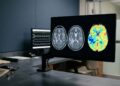
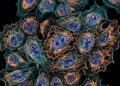
One prominent application illustrating this shift is the GRALIS-Report, which demonstrates how complex medical data can be managed through intermediate, interpretable representations. In this specific approach, breast histology images are converted into region-level attribution signals. These signals are then used to generate structured clinical reports through a deterministic, rule-based system. By decoupling the final decision-making process from raw content, the system ensures that the transition from visual evidence to clinical language remains explicit and auditable.
The value of this approach lies in its ability to prioritize task-relevant representations over the unrestricted access to raw signals.
The field’s recent progress is further reflected in a collection of six original research articles recently accepted for publication. These studies span a diverse range of disciplines, including multimedia forensics, explainable medical imaging, privacy-aware video understanding, and audio-visual affective computing.
Alongside the focus on representation, a second major thread in recent research is a demanding attitude toward evaluation.
Subject of Research: Multimodal Artificial Intelligence in Signal Processing
Article Title: Editorial: Multimodal AI innovations for signal processing
Article References: Piva, A., Caldelli, R., Baracchi, D., & Shullani, D. (2026). Editorial: Multimodal AI innovations for signal processing. Frontiers in Imaging, 5, Article 2045384. https://doi.org/10.3389/fimag.2026.2045384
Image Credits: AI Generated
DOI: 10.3389/fimag.2026.2045384
Keywords: Multimodal AI, Signal Processing, Foundation Models, Multimedia Forensics, Medical Imaging, Explainable AI, Privacy-Aware Video Understanding, Audio-Visual Affective Computing, Representation Design, Task-Relevant Representations, GRALIS-Report, Histology Analysis, Algorithmic Trustworthiness, Evaluation Methodology, Data Interpretation, Signal Acquisition, Heterogeneous Information Integration
News Source: Ophelia Keating. (November 17, 2026). Multimodal AI Advances Signal Processing Through Task-Relevant Representation Design. Scienmag.