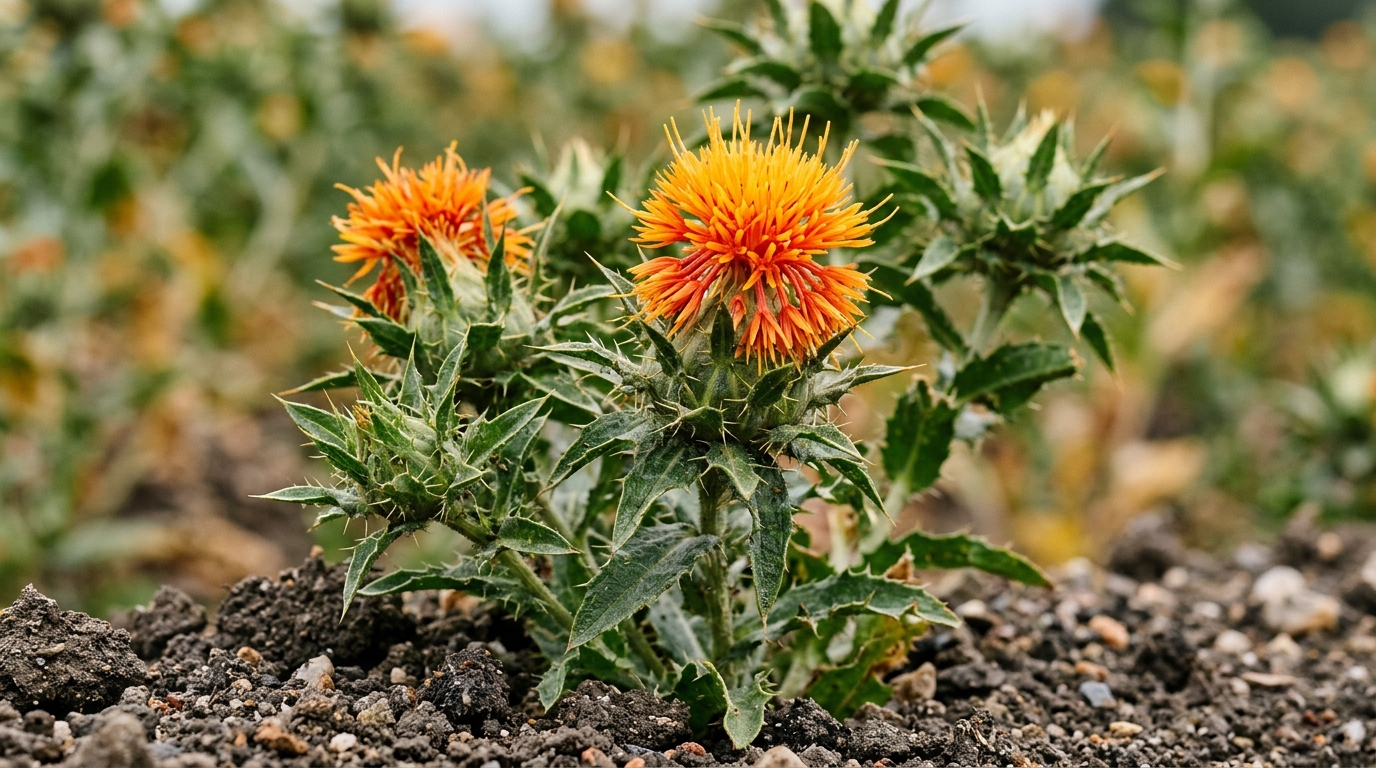
In a newly reported investigation, researchers employing integrated phenotyping and multi-omics strategies have identified copper-tolerant safflower genotypes alongside key candidate genes that govern resilience against heavy metal toxicity. Agricultural productivity faces mounting threats from copper contamination, an environmental hazard that is becoming increasingly severe as global warming accelerates through elevated night-time warming and accompanying soil acidification. Despite these intensifying ecological challenges, the specific genetic architecture underpinning copper tolerance within safflower had previously remained completely unexplored. The study authors emphasized that understanding these protective mechanisms has become vital as warming and soil acidification exacerbate heavy metal risks, prompting this multi-omics approach to support climate-adaptive crop breeding programs.
The empirical evaluation centered on a controlled pot experiment evaluating a diverse panel of 94 safflower genotypes subjected to four distinct concentrations of copper chloride. The experimental treatments revealed substantial physiological and morphological variation across both the examined genotypes and the applied chemical concentrations. Exposure to elevated copper chloride induced measurable declines across plant growth metrics, with observed trait reductions spanning a wide spectrum from 1.75 percent in root-shoot ratio to a substantial 57.14 percent reduction in dry root weight.
Statistical evaluation of the phenotypic data demonstrated positive relationships among the measured traits across the stress regimes through correlation analysis. In parallel, principal component analysis categorized the 94 evaluated safflower genotypes into three distinct analytical clusters based on their overall growth and phenotypic responses under heavy metal exposure. Within this broad population structure, the researchers identified ten specific genotypes that consistently maintained superior performance across the copper stress treatments. The sustained resilience displayed by these ten top-performing lines demonstrates notable physiological tolerance potential, marking them as primary candidates for utilization in future climate-resilient breeding efforts aimed at mitigating soil contamination.
To decipher the genetic factors driving these phenotypic differences, the investigators carried out a genome-wide association study examining variation across eight distinct agronomic and physiological traits. This association mapping successfully identified 180 statistically significant marker-trait associations distributed across the plant genome. Functional annotation of the genomic regions harboring these markers directly linked the candidate genes to several critical biological systems, including brassinosteroid signaling cascades, cellular ion homeostasis, general metal response pathways, and dedicated transmembrane transport mechanisms.
Further investigation into regulatory networks through co-expression analysis revealed a tightly connected tolerance module operating during metal exposure. Within this module, two candidate genes—AT5G01610 and AT5G14640—were found to share an identical set of top co-expressed genetic partners exhibiting strong correlation values exceeding 0.8. Among these shared partners were known transport and regulatory factors, specifically HMA4, CAX1, and SOS1, indicating coordinated functional roles in driving cellular copper stress tolerance. Convergent protein–protein interaction validation further confirmed that these candidate proteins serve as distinct network hubs that physically interact with one another while undergoing simultaneous transcriptional co-regulation, providing strong molecular evidence for their shared activity within cooperative tolerance modules.
Comparative expression profiling using in silico heatmap analysis in Arabidopsis roots revealed distinct, stress-specific transcriptional responses across different heavy metals, where copper treatments induced target gene expression, cadmium elicited mixed transcriptional patterns, and aluminum exposure repressed expression levels. Building upon these in silico insights, RNA sequencing analysis specifically pinpointed seven copper stress tolerance genes whose differential expression patterns were subsequently validated through quantitative real-time polymerase chain reaction experiments. Together, these convergent phenotypic and genomic findings highlight viable genotypes and molecular targets for developing resilient cultivars, although the authors note that further experimental investigation of the highly expressed genes is necessary to fully clarify their specific functional mechanisms under copper stress.
Subject of Research: Genetic foundations of copper stress tolerance in safflower
Article Title: Genetic foundations of copper stress tolerance in safflower: bridging heavy metal contamination and global warming challenges
Article References: Ali, F., Ali, A., Shah, O. U., Arif, M. A. R., Nadeem, M. A., Baloch, F. S., Jan, S. M., Thi Ha, M. K. T., & Chung, Y. S. (2026). Genetic foundations of copper stress tolerance in safflower: bridging heavy metal contamination and global warming challenges. Plant Cell Reports, 45(12), Article 356. https://doi.org/10.1007/s00299-026-04026-x
Image Credits: AI Generated
DOI: 10.1007/s00299-026-04026-x
Keywords: safflower, copper stress, heavy metal tolerance, plant genetics, genome-wide association study, multi-omics, crop breeding, abiotic stress, Genetic, foundations, copper, stress
News Source: Juliet Wilcox. (November 7, 2026). Multi-Omics Study Identifies Copper Tolerance Genes and Resilient Safflower Genotypes. Scienmag.