Credit: Kurt Stepnitz, Michigan State University
EAST LANSING, Mich. — A new Michigan State University study has found that a malfunctioning gene associated with a common arthritic disease that often starts in teenagers is now directly linked to the loss of vital immune cells that may prevent it.
Endoplasmic Reticulum Aminopeptidase 1, or ERAP1, is a gene widely known to be associated with the debilitating disease ankylosing spondylitis. Also known as AS, the autoimmune disorder affects millions worldwide, mostly developing in the hips and spines of those as young as 17 years old and lasting throughout life.
But how changes in the gene result in the condition has remained somewhat of a mystery.
The federally funded study, now published in the journal Scientific Reports, puts scientists a step closer to uncovering just what role the gene plays in affecting the immune system.
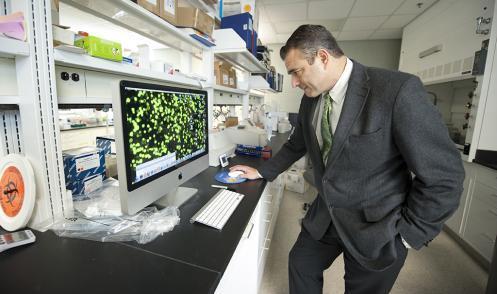
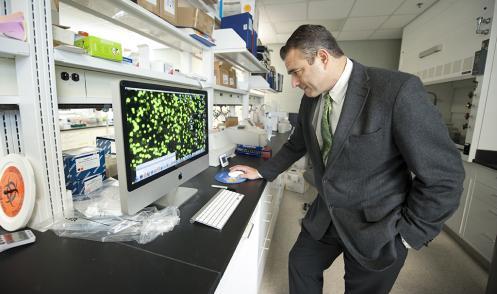
"We've demonstrated in mice that loss of proper ERAP1 activity correlates with loss of certain immune cells called Tr1s, which we know are directly responsible for controlling excessive immune responses that can attack healthy tissue and cells," said Andrea Amalfitano, an Osteopathic Heritage Foundation professor who led the study with Yuliya Pepelyayeva, a doctoral student in MSU's microbiology and molecular genetics program. "Our finding allows us to zero in on the role the gene and Tr1 cells have in AS."
In the case of autoimmune disorders, the immune system can no longer tell the difference between good, healthy cells and bad, diseased cells. This often results in an extreme immune reaction where the body starts to overcompensate and attack itself.
Because of this response, patients with AS experience bony fusions between the joints of the pelvis and spine, which cause chronic pain and disability. They also can suffer from other health issues including problems with the gut and intestine.
"We know that Tr1 cells are implicated in digestive issues such as inflammatory bowel disease, and it's possible that the reduction of these cells is responsible for the increased inflammatory responses we saw in mice and is associated with ankylosing spondylitis as well," Pepelyayeva said.
With this new insight, both researchers are now testing cells in human blood samples and will move to human trials in the coming years to see if their findings are consistent.
"There's more work to be done, but a new immunotherapy treatment where more Tr1 cells are infused back into the patient, ultimately correcting the deficiency, could be a possibility," Pepelyayeva said.
This new treatment, she added, would potentially help regulate the way the immune system responds and might correct any inflammation in the spine and spinal fusions.
Amalfitano also indicated that scientists can now focus on this potential relationship between gene and immune cell and look at it as a possible cause of not just AS, but several other autoimmune diseases, too.
The study was funded in part by the National Institutes of Health.
###
Michigan State University has been working to advance the common good in uncommon ways for 160 years. One of the top research universities in the world, MSU focuses its vast resources on creating solutions to some of the world's most pressing challenges, while providing life-changing opportunities to a diverse and inclusive academic community through more than 200 programs of study in 17 degree-granting colleges.
Media Contact
Sarina Gleason
[email protected]
517-355-9742
@MSUnews
http://msutoday.msu.edu/journalists/
Original Source
https://msutoday.msu.edu/news/2018/msu-scientists-closer-to-solving-arthritic-condition-in-teens/