Credit: Aleksander Semenov
Scientists from Moscow State University have proved that lophophorates – the invertebrates with special tentacular apparatus – are relatives. Scientists have examined some representatives of one of the phylum of this group. The results were published in BMC Evolutionary Biology. The study was carried out within the framework of the "Animals" branch of the Noah's Ark project supported by a grant from the Russian Science Foundation (RNF).
Brachiopoda is a phylum of marine invertebrates that originated in the Precambrian period, about 300 million years before the advent of dinosaurs, and exist nowadays. Recent brachiopods are small organisms: the shell of the largest one is 8.4 cm long. They usually live in cold shallow waters and lead a sedentary lifestyle. The body of a brachiopod is covered by bivalve shell. Brachiopods are bilateral animals; this means that their body can be divided into two halves that mirror each other.
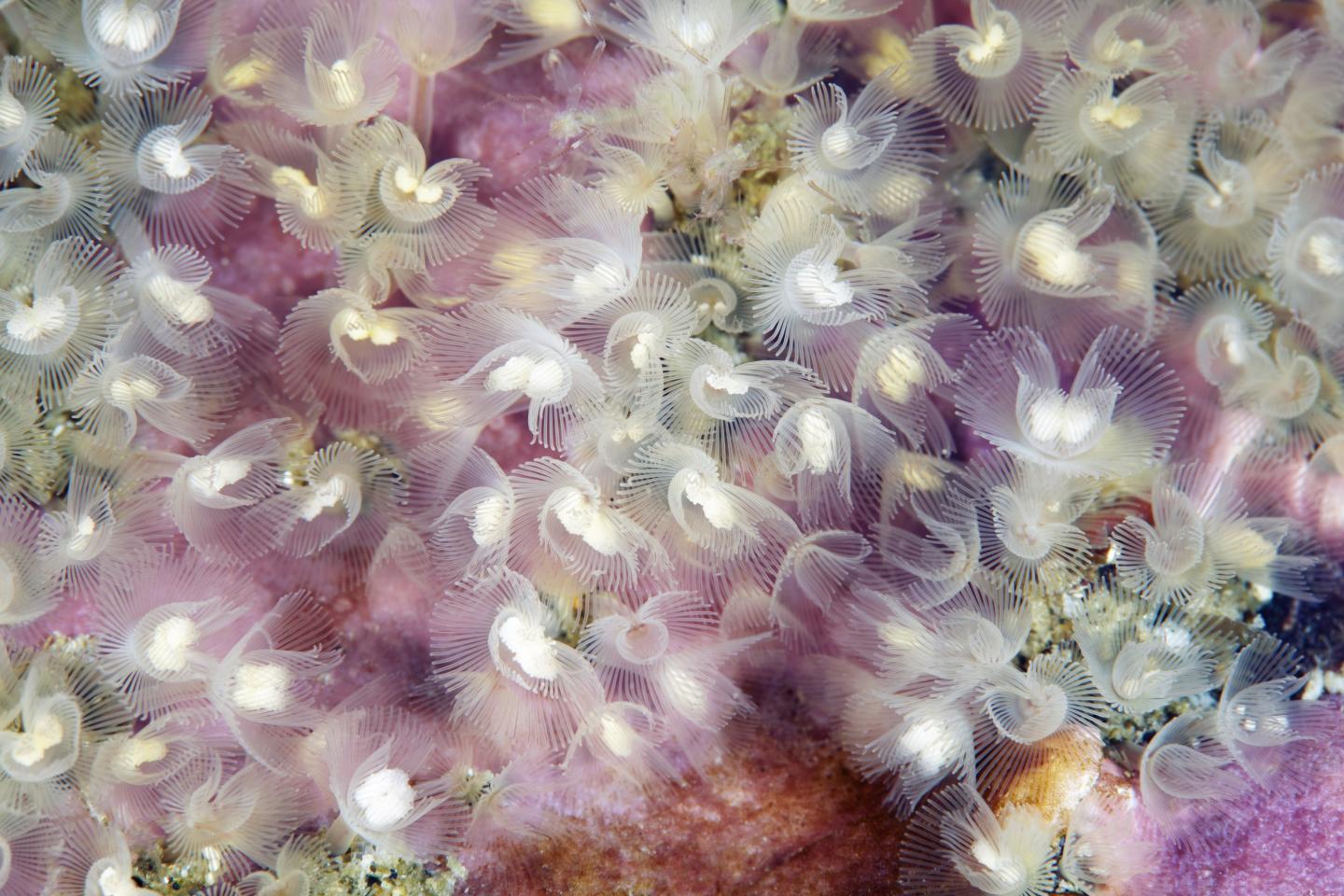
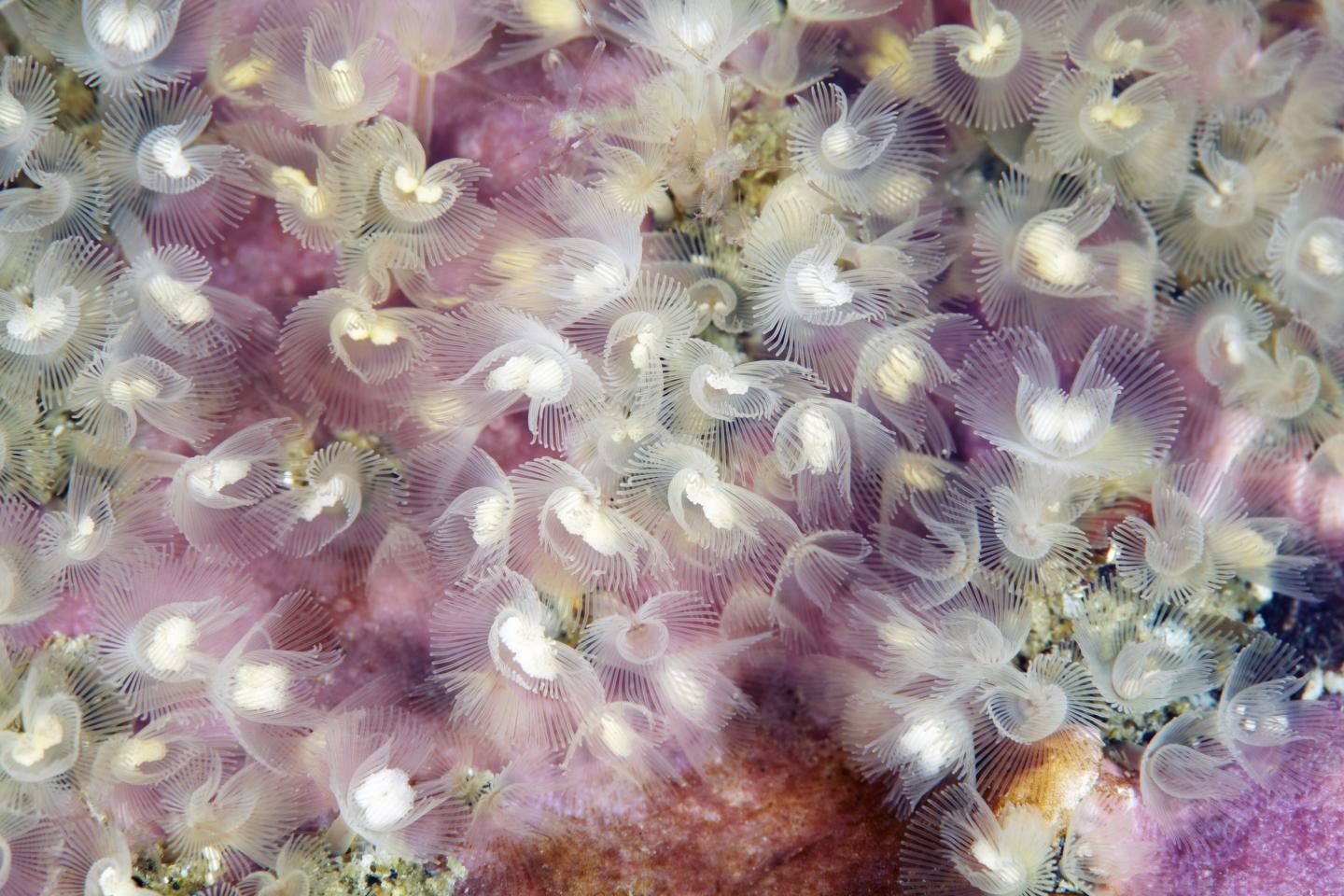
The brachiopods have a lophophore – a special apparatus carrying tentacles with cilia. Cilia create current of water, which brings oxygen and particles of food to the animal. The lophophore shape differs widely among brachiopods: from round and horseshoe shaped to a complex spiral. The presence of the lophophore is a peculiarity of all lophophorates, which are traditionally regarded as united group Lophophorata and includes three phyla of invertebrate animals: brachiopods, bryozoans and phoronids. However, modern molecular phylogeny does not confirm the monophyly of the lophophorates.
"In this study, we have proved for the first time that lophophorates are the closest relatives and we have also assumed the ancestral morphology of specific tentacular apparatus – lophophore. Some unique features of the lophophore nervous system were revealed for the first time", said Elena Temereva, Doctor of Biological Sciences, Professor of the Russian Academy of Sciences, leading researcher of the Department of Zoology of Invertebrates of the Faculty of Biology, Moscow State University.
Studied brachiopods have four nerves of the lophophore: the main brachial nerve, the accessory brachial nerve, the lower brachial nerve, and the second accessory brachial nerve, which has never been described before in brachiopods. The presence of the second accessory nerve can be considered both as an advanced and as plesiomorphic feature. In the last case, this nerve was apparently inherited from the last common brachiopod ancestor.
A comparative analysis of morphological data showed that in all lophophorates lophophoral nervous systems includes homologous (having one ancestor) nerves. Thus, the lophophore is a homologous structure, which was inherited by all lophophorates from the last common ancestor. Despite the significant morphological similarity, the lophophorates monophyly is not supported by the latest molecular phylogenetic data.
The scientists collected live brachiopods in the Kandalakshskii Bay of the White Sea, near the White Sea biological station of Moscow State University. The study involved such methods as transmission electron microscopy, immunocytochemistry, and confocal laser microscopy.
"The results obtained are undoubtedly important for our understanding of the brachiopod biology. Taking the peculiarities of brachiopod phylogeny into account, new data on their morphology is an important contribution to the fundamental questions of modern zoology about the large taxa relationships and the early evolution of all bilateral animals. The results of this research will be used in a comparative analysis in order to reconstruct a natural system of the animal kingdom", Elena Temereva concluded.
###
Media Contact
Yana Khlyustova
[email protected]
http://www.msu.ru
Related Journal Article
http://dx.doi.org/10.1186/s12862-017-1029-5