Behavioral sensors attached to wild boars have been used to detect when animals are sick with African Swine Fever, a fatal viral disease that affects both boar and domestic pigs. Accelerometer sensors, which measure tiny changes in movement, showed that wild boars reduced their daily activity by up to 20 percent when infected with the virus. The findings, published by scientists from the Max Planck Institute of Animal Behavior, show that lightweight sensors can detect sickness behavior in wild boar – raising the possibility of a minimally invasive tool to assist in the control and prevention of African Swine Fever.
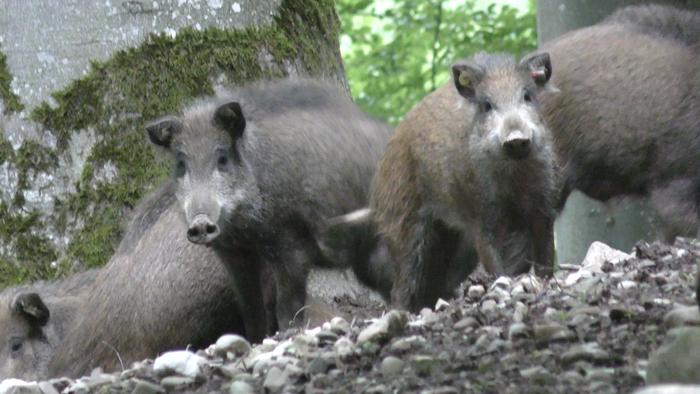
Credit: Kevin Morelle
Behavioral sensors attached to wild boars have been used to detect when animals are sick with African Swine Fever, a fatal viral disease that affects both boar and domestic pigs. Accelerometer sensors, which measure tiny changes in movement, showed that wild boars reduced their daily activity by up to 20 percent when infected with the virus. The findings, published by scientists from the Max Planck Institute of Animal Behavior, show that lightweight sensors can detect sickness behavior in wild boar – raising the possibility of a minimally invasive tool to assist in the control and prevention of African Swine Fever.
Although the virus cannot be transmitted to humans, African Swine Fever is a major threat to the global pig industry and has significant economic and social impact. The highly contagious virus spreads easily between wild boar and domestic pigs, and so knowing when a disease outbreak occurs in the wild and on farms is important for curbing the spread of African Swine Fever. But detecting disease in wild animals is not straight forward. Currently, testing for African Swine Fever in wild boar is done by sampling animals that are either hunted or found dead, which creates a long lag between when the disease emerges in a population to when it is actually detected.
Seeking to reduce this lag, scientists from Germany, Spain and Austria teamed up to investigate if technology that ‘reads’ an animal’s behavior could be harnessed for early detection of disease in wild boar. Their findings point to the potential of accelerometer sensors as an accessible tool that can support the existing disease management approaches for African Swine Fever surveillance and control. “This is a game-changer for wildlife disease monitoring,” says Kevin Morelle, first author of the study and a scientist with the Max Planck Institute of Animal Behavior. “We show that a lightweight behavioral sensor deployed on a wild animal can be a sentinel for potential health threats.”
Accelometers measure animals’ movements
The scientists attached accelerometer tags, weighting 30 grams, on twelve wild boars that were studied in controlled conditions. The boars were infected with African Swine Fever as part of a separate study aimed at developing a vaccine against the disease. The accelerometers, which are the equivalent of ‘Fitbits’ or pedometers, took ultra-high resolution measurements of the animals’ movements. The measurements, called ‘Overall Dynamic Body Acceleration’, showed how much the boars were active. The scientists found that when boars became sick with African Swine Fever, they were ten to twenty percent less active daily than when they were healthy. To validate the findings, the study authors attached accelerometers to a group of healthy boars living in natural conditions. They then compared the activity patterns of infected and healthy wild boar.
This study is the first to demonstrate that African Swine Fever can be detected at onset in wild boar by sensing and analyzing the movement behavior of animals. The findings could benefit a wide range of stakeholders involved in the control and prevention of African Swine Fever. However, the authors say that more needs to be done before the benefits of the movement technology are realized. This includes testing sensors in populations of wild boar living in natural conditions where the disease is known to occur. Further, the authors plan to design an algorithm for accelerometers that could analyze movement data to deliver real-time health assessments, such as when animals are infected with a virus. Says Morelle: “We still need to test the tool in real case situations to figure out if behavioral analysis can detect disease in wild animals that are living in different population sizes. We hope these first results pave the way for a behavioral system that provides vital insights into the spread of disease in wild animals, and facilitates timely control measures to save wildlife and domestic animals.”
Journal
Proceedings of the Royal Society B Biological Sciences
DOI
10.1098/rspb.2023.1396
Method of Research
Observational study
Article Title
Accelerometer-based detection of African swine fever infection in wild boar
Article Publication Date
31-Aug-2023