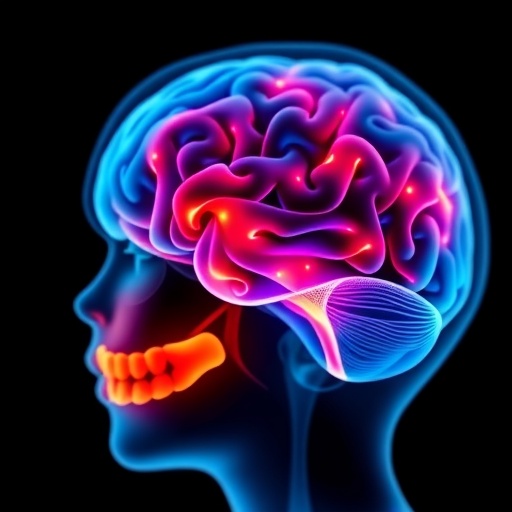
New York, NY (April 24, 2026) — A groundbreaking study emerging from the Icahn School of Medicine at Mount Sinai has unveiled compelling evidence that exposure to common environmental metals during the earliest stages of life may imprint lasting effects on brain development and behavioral health well into adolescence. Published in the esteemed journal Science Advances, this pioneering research leverages a novel combination of naturally shed deciduous teeth and sophisticated brain imaging techniques, enabling scientists to pinpoint critical periods during prenatal and early postnatal life when the brain exhibits heightened vulnerability to metal exposures.
The innovative strategy employed by the research team involves analyzing baby teeth as biological archives, capturing detailed weekly snapshots of metal exposure from the second trimester of pregnancy through the first year after birth. This temporal resolution far surpasses existing methods, offering unprecedented insight into how fluctuating environmental conditions during narrow developmental windows can leave discernible “fingerprints” on brain structure and function years later.
Participants in this multinational investigation were drawn from the PROGRESS birth cohort based in Mexico City, an extensive longitudinal study initiated in 2007 to explore how social and chemical environmental factors influence health trajectories from pregnancy through adolescence. The study encompassed meticulous exposure reconstructions from 489 children, of whom 395 underwent behavioral assessments and 191 received high-resolution magnetic resonance imaging (MRI) of the brain.
Using laser ablation-inductively coupled plasma mass spectrometry (LA-ICP-MS), the research team traced the uptake of nine distinct metals—ranging from essential elements like zinc and magnesium to neurotoxicants such as lead—embedded layer-by-layer in the tooth enamel and dentin. These teeth develop incrementally in utero and continue forming through infancy, analogous to dendrochronology in trees, thereby encoding a chronological record of systemic metal exposure with weekly accuracy.
Crucially, the study identified two temporal windows of heightened sensitivity: between the 4th and 8th weeks, and again between the 32nd and 42nd weeks after birth. Beyond mere correlations, elevated exposure to complex mixtures of these metals during these discrete periods was robustly linked to increased scores on the Behavioral Symptoms Index (BSI), a validated composite measure encompassing anxiety, attention deficits, and mood dysregulation. Remarkably, the most pronounced behavioral associations were observed in late infancy (weeks 32–42), wherein each incremental increase in metal mixture exposure corresponded to a significant rise in symptom severity.
The neuroimaging data complemented these behavioral findings by revealing altered connectivity and functional disparities in crucial brain networks responsible for emotional regulation and cognitive processes. These observations suggest that early-life metal exposure may modulate neurodevelopmental trajectories by influencing synaptogenesis, network integration, or neurochemical signaling long before clinical symptoms manifest.
These findings carry profound implications for public health and environmental policy, as many of the implicated metals are ubiquitous in diet, water supplies, and built environments. Essential metals such as manganese and zinc are vital for normal physiological processes, yet their dysregulated levels—coupled with toxic metals like lead—can perturb delicate neurodevelopmental mechanisms. The study emphasizes that it is not only the presence of these metals but critically the timing of exposure that determines their neurodevelopmental impact.
Senior researcher Dr. Megan K. Horton highlighted the paradigm shift brought about by these results, stressing the necessity of targeted intervention during specific postnatal windows to mitigate lifelong risks. “Our research refines the lens through which we view environmental neurotoxicity, underscoring time-sensitive windows where intervention could be maximally protective,” she explained.
Lead author Dr. Elza Rechtman stressed the precision with which these vulnerable periods could be delineated, an insight unattainable with previous epidemiological methods. The ability to track weekly exposure patterns opens avenues for tailored environmental policies that could drastically reduce metal burdens during critical stages of brain growth, thereby enhancing developmental and mental health outcomes over a lifetime.
From a practical standpoint, these findings empower families and healthcare providers alike to adopt preventive measures such as ensuring access to safe drinking water, mindful selection and preparation of food, and minimizing contact with environmental sources of hazardous metals. Clinicians are urged to consider detailed environmental exposure histories when evaluating neurobehavioral conditions in children, potentially enabling earlier intervention strategies.
This research heralds a new era in environmental neuroscience, where the fusion of biomonitoring through baby teeth and advanced neuroimaging delineates the intricate interplay between prenatal and infant exposures, neurodevelopment, and behavioral phenotypes. The Mount Sinai team plans to expand this innovative methodology to include a broader array of environmental chemicals and validate results in diverse populations across the United States, ultimately informing precision public health interventions.
Supported by the National Institute of Environmental Health Sciences and the National Center for Advancing Translational Sciences, this multidisciplinary work sets the stage for a future where environmental regulations can be finely tuned to protect the most vulnerable stages of human brain development. The integration of chemical exposure timelines with developmental neuroscience offers unprecedented opportunities to unravel the etiology of neurodevelopmental disorders and devise evidence-based prevention strategies.
As the emerging data illuminate the complexities of fetal and infant neurotoxicology, they advocate for a proactive, science-driven approach to environmental health policy—one that prioritizes early-life protections to foster stronger, healthier brains. This study not only expands the scientific understanding of metal metabolism in neurodevelopment but also provides actionable knowledge that could redefine clinical practice and public health initiatives worldwide.
Subject of Research: The influence of fetal and postnatal metal exposure on brain function and behavioral development in childhood, assessed through baby tooth biomonitoring and neuroimaging.
Article Title: Fetal and postnatal metal metabolism-related changes in brain function are associated with childhood behavioral deficits
News Publication Date: April 24, 2026
Web References: Science Advances press package (exact URL not provided)
References: Supported by National Institute of Environmental Health Sciences and National Center for Advancing Translational Sciences
Keywords: Brain development, Teeth, Behaviorism, Imaging, Environmental health
Tags: baby teeth metal analysisbrain imaging early developmentdevelopmental neurotoxicology biomarkersearly childhood neurodevelopment researchearly-life metal exposure effectsenvironmental health and adolescent behaviorenvironmental metals behavioral healthlongitudinal birth cohort study Mexico Citynovel metal exposure biomarkerspostnatal environmental toxins brain developmentprenatal metal exposure brain impactprenatal to early infancy exposure windows