


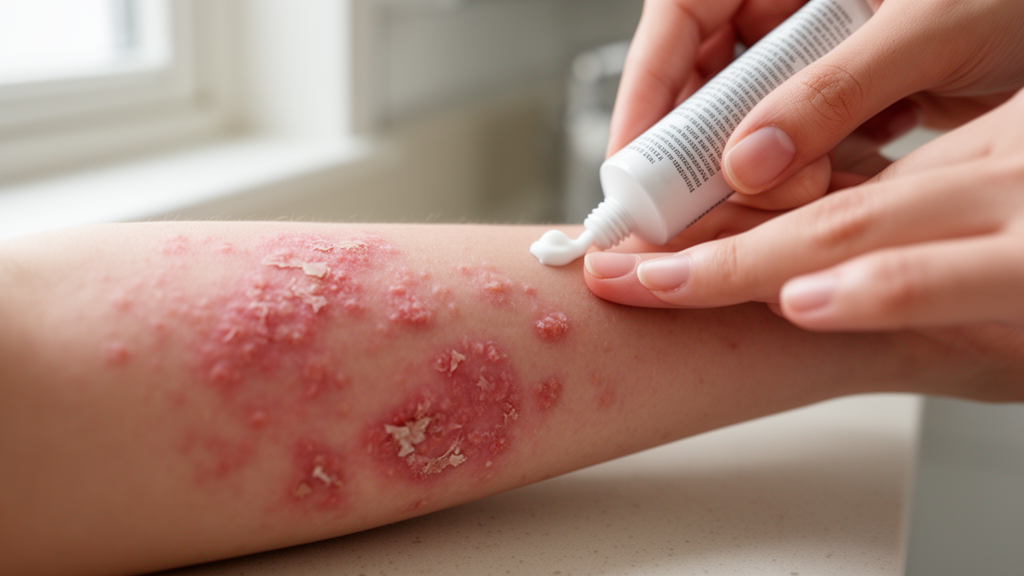
Most people living with moderate-to-severe atopic dermatitis in the United States are unhappy with how their topical treatments feel on their skin, according to a real-world survey published in Dermatology and Therapy. Among 267 adolescents and adults who were prescribed topical therapy, 68% agreed or strongly agreed that they disliked how their topical medication made their skin feel, a finding the researchers describe as evidence of a persistent daily treatment burden. The analysis, based on the Adelphi Real World Atopic Dermatitis Topical Plus Wave I Disease Specific Programme conducted between May and October 2025, also revealed that patients and their healthcare providers frequently disagree about how well the treatment is working, particularly when disease is severe or when advanced systemic drugs are added to the regimen.
Atopic dermatitis is a chronic inflammatory skin condition affecting an estimated 2 to 7% of adults worldwide, with significant impacts on quality of life, sleep, mental health, and productivity. Topical therapies such as corticosteroids and calcineurin inhibitors are the current first-line treatment, but because of limited efficacy and side effects, many patients eventually need systemic therapy. Adherence to topical treatments is often poor, largely owing to complex regimens, fear of side effects, and dosing frequency. Despite the central role of topical therapies in managing the disease, real-world data on treatment satisfaction and on how well healthcare providers and patients align in their views have remained limited, which is the gap this study set out to address.
The survey included 267 patients with physician-confirmed current moderate-to-severe atopic dermatitis who were prescribed topical therapy. Of these, 193 were receiving topical medication only, while 74 were using topical medication plus an advanced systemic therapy, either a biologic or an oral Janus kinase inhibitor. Two patients on advanced systemic therapy were also prescribed oral steroids, and no patients were receiving conventional immunosuppressants. Data came from physician-completed patient record forms and patient or caregiver self-completion questionnaires, capturing demographic, clinical, and treatment-related information as well as patient-reported outcomes such as daily treatment burden and satisfaction. Thirty-four healthcare providers participated, comprising 14 dermatologists, 10 allergists or immunologists, 5 nurse practitioners affiliated with dermatologists, and 5 physician assistants affiliated with dermatologists.
Most participants had moderate disease as assessed by their healthcare provider, with 233 of 267 patients, or 87%, in that category and 34 patients, or 13%, classified as severe. The mean age was 33 years in the topical-only group and 34 years in the group also receiving advanced systemic therapy, and female participants accounted for 54% of the overall population. At the time of treatment initiation, the mean body surface area affected by atopic dermatitis was 24.4% overall, at 20.8% in the topical-only group and 33.9% in the combined-therapy group. By the time of data collection, that figure had decreased by 3.9% in the topical-only group and 16.0% in the combined group. Current flares were reported in 33% of patients overall, and among those experiencing flares, severity was most commonly moderate at 61%, with 30% classified as severe.
Topical corticosteroids were the most prescribed therapy across both groups, used by 91% of the topical-only group and 92% of the combined group, followed by topical calcineurin inhibitors at 31% and 28% respectively. Newer nonsteroidal agents also featured in the data: phosphodiesterase-4 inhibitors were used by 21% of patients overall, aryl hydrocarbon receptor agonists by 11%, and topical Janus kinase inhibitors by 17% of the topical-only group and 12% of the combined group. Among those on advanced systemic therapy, biologics were the most used at 84%, with oral Janus kinase inhibitors prescribed to 16%. The researchers note that newer nonsteroidal topicals were more commonly prescribed in the topical-only group, suggesting clinicians may be using them as an intermediate step before initiating systemic therapy.
The daily burden of applying these medications was substantial. Approximately half of all respondents, 52%, applied their medication twice daily, while 29% applied it according to eczema symptoms or flares, and 14% applied it four or more times per day. Twice-daily application was reported by 56% of topical-only users compared with 40% of those also on systemic therapy. Most respondents, 37%, reported spending between 2 and 5 minutes per application, a range reported by 41% of topical-only users and 27% of combined-therapy users. Beyond the mechanics of application, patients in both groups reported day-to-day impacts on clothing choices, bedtime routines and sleep, and daily activities such as washing up, dressing, or cooking.
Age shaped the experience of topical therapy in striking ways. Among adolescent patients, 77% agreed or strongly agreed that they disliked how their topical medication felt on their skin, and 81% agreed or strongly agreed that they did not like how it made their skin look. Among adults, the corresponding figures were 63% for skin feel and 64% for skin appearance. In the topical-only group, 68% disliked the feel of the medication and 59% of the combined-therapy group did so, leading the authors to suggest that skin-related discomfort and appearance concerns might be attenuated when topical therapies are used alongside systemic treatments, though they caution that confounding by indication is a key limitation, since patients in the combined group had substantially more severe baseline disease.
Agreement between healthcare providers and patients or caregivers on treatment satisfaction was measured using weighted kappa statistics, which quantify agreement beyond chance. Patients in the topical-only group showed moderate agreement with their providers, with a kappa of 0.57, while those in the combined group showed only fair agreement, with a kappa of 0.27. Stratifying by disease severity produced a similar pattern: moderate agreement among those with moderate disease at a kappa of 0.46, but only fair agreement among those with severe disease at a kappa of 0.25. Satisfaction itself also diverged by severity. Most providers, 87%, and patients or caregivers, 82%, reported satisfaction in the moderate group, whereas most providers, 59%, and patients or caregivers, 68%, reported dissatisfaction in the severe group.
Communication about how much topical medication to apply showed moderate rather than substantial concordance. Patients or caregivers were asked whether physicians told them how much to apply, and providers were asked whether they gave such instructions, with both items using a binary yes or no response. Moderate agreement was observed in both the topical-only group, at a kappa of 0.54, and the combined group, at a kappa of 0.42. The authors argue that the persistence of only moderate concordance points to a meaningful and addressable gap, and that optimizing atopic dermatitis management requires more than simply increasing the number of available therapies; it depends on stronger alignment between providers and patients around treatment goals and clearer, more consistent communication about topical use.
The study has limitations inherent to its cross-sectional, observational design, including the inability to establish causality or assess longitudinal treatment trajectories. The sample is not a true random sample of providers or patients, and patients who visit their providers more frequently are more likely to be included, a subgroup likely to represent those with poorer disease control and greater treatment burden, so the findings may overestimate disease burden in the broader population. Pooling adult patients with adolescent caregivers as a single rater group is also a limitation, and the daily impact outcomes measured may reflect the burden of the disease itself rather than that of the topical therapies. The authors conclude that meaningful improvement in outcomes will depend on individualized consideration of the full range of available treatment options for patients with inadequate disease control, alongside better communication and alignment on treatment goals.
Subject of Research: Patient experience, treatment satisfaction, and healthcare provider communication regarding topical therapy in moderate-to-severe atopic dermatitis
Article Title: How Patients with Atopic Dermatitis Experience Topical Therapy: A Real-World Analysis of Impact, Treatment Satisfaction, and HCP Communication
Article References: Lio, P., Burnette, A., Hetzel, A., Pierce, E. J., Dawson, Z., Fielding, R., Haughton, J., Weatherby, S., & Stein Gold, L. (2026). How Patients with Atopic Dermatitis Experience Topical Therapy: A Real-World Analysis of Impact, Treatment Satisfaction, and HCP Communication. Dermatology and Therapy. https://doi.org/10.1007/s13555-026-01967-9
Image Credits: AI Generated
DOI: 10.1007/s13555-026-01967-9
Keywords: atopic dermatitis, topical therapy, treatment satisfaction, healthcare provider communication, kappa analysis, Adelphi Real World survey, moderate-to-severe disease, advanced systemic therapy, topical corticosteroids, patient-reported outcomes, eczema burden, dermatology
News Source: Ophelia Keating. (October 30, 2026). Most Atopic Dermatitis Patients Dislike How Their Topical Treatments Feel on Skin, Survey Finds. Scienmag.



