• HOME
  • NEWS
  • EXPLORE
    • CAREER
      • Companies
      • Jobs
    • EVENTS
    • iGEM
      • News
      • Team
    • PHOTOS
    • VIDEO
    • WIKI
  • BLOG
  • COMMUNITY
    • FACEBOOK
    • INSTAGRAM
    • TWITTER
Sunday, May 10, 2026
BIOENGINEER.ORG
No Result
View All Result
  • Login
  • HOME
  • NEWS
  • EXPLORE
    • CAREER
      • Companies
      • Jobs
        • Lecturer
        • PhD Studentship
        • Postdoc
        • Research Assistant
    • EVENTS
    • iGEM
      • News
      • Team
    • PHOTOS
    • VIDEO
    • WIKI
  • BLOG
  • COMMUNITY
    • FACEBOOK
    • INSTAGRAM
    • TWITTER
  • HOME
  • NEWS
  • EXPLORE
    • CAREER
      • Companies
      • Jobs
        • Lecturer
        • PhD Studentship
        • Postdoc
        • Research Assistant
    • EVENTS
    • iGEM
      • News
      • Team
    • PHOTOS
    • VIDEO
    • WIKI
  • BLOG
  • COMMUNITY
    • FACEBOOK
    • INSTAGRAM
    • TWITTER
No Result
View All Result
Bioengineer.org
No Result
View All Result
Home NEWS Science News Chemistry

More than 5,000 tons of extraterrestrial dust fall to Earth each year

Bioengineer by Bioengineer
April 8, 2021
in Chemistry
Reading Time: 2 mins read
0
IMAGE
Share on FacebookShare on TwitterShare on LinkedinShare on RedditShare on Telegram

IMAGE

Credit: © Cécile Engrand/Jean Duprat

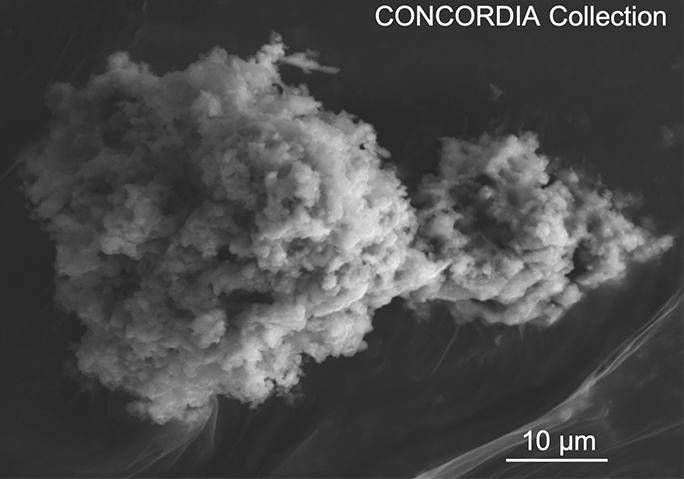
Every year, our planet encounters dust from comets and asteroids. These interplanetary dust particles pass through our atmosphere and give rise to shooting stars. Some of them reach the ground in the form of micrometeorites. An international program conducted for nearly 20 years by scientists from the CNRS, the Université Paris-Saclay and the National museum of natural history with the support of the French polar institute, has determined that 5,200 tons per year of these micrometeorites reach the ground. The study will be available in the journal Earth & Planetary Science Letters from April 15.

Micrometeorites have always fallen on our planet. These interplanetary dust particles from comets or asteroids are particles of a few tenths to hundredths of a millimetre that have passed through the atmosphere and reached the Earth’s surface.

To collect and analyse these micrometeorites, six expeditions led by CNRS researcher Jean Duprat have taken place over the last two decades near the Franco-Italian Concordia station (Dome C), which is located 1,100 kilometres off the coast of Adélie Land, in the heart of Antarctica. Dome C is an ideal collection spot due to the low accumulation rate of snow and the near absence of terrestrial dust.

These expeditions have collected enough extraterrestrial particles (ranging from 30 to 200 micrometres in size), to measure their annual flux, which corresponds to the mass accreted on Earth per square metre per year.

If these results are applied to the whole planet, the total annual flux of micrometeorites represents 5,200 tons per year. This is the main source of extraterrestrial matter on our planet, far ahead of larger objects such as meteorites, for which the flux is less than ten tons per year.

A comparison of the flux of micrometeorites with theoretical predictions confirms that most micrometeorites probably come from comets (80%) and the rest from asteroids.

This is valuable information to better understand the role played by these interplanetary dust particles in supplying water and carbonaceous molecules on the young Earth.

###

Media Contact
Elie Stecyna
[email protected]

Original Source

http://www.cnrs.fr/en/more-5000-tons-extraterrestrial-dust-fall-earth-each-year

Related Journal Article

http://dx.doi.org/10.1016/j.epsl.2021.116794

Tags: AstrophysicsComets/AsteroidsEarth ScienceGeology/SoilGeophysics/GravityParticle PhysicsSpace/Planetary Science
Share12Tweet8Share2ShareShareShare2

Related Posts

Miniature Sensor Uses Light to Detect Touch — Chemistry

Miniature Sensor Uses Light to Detect Touch

May 8, 2026
Iron Minerals Determine Whether Dissolved Organic Matter Fuels Microbes or Becomes Long-Term Carbon Storage — Chemistry

Iron Minerals Determine Whether Dissolved Organic Matter Fuels Microbes or Becomes Long-Term Carbon Storage

May 8, 2026

Kate Evans Appointed Associate Lab Director for Biological and Environmental Systems Science at ORNL

May 8, 2026

Advancing Multiscale Modeling and Overcoming Operational Challenges in Autothermal CO₂-to-Methanol Reactors

May 8, 2026
Please login to join discussion

POPULAR NEWS

  • Research Indicates Potential Connection Between Prenatal Medication Exposure and Elevated Autism Risk

    840 shares
    Share 336 Tweet 210
  • New Study Reveals Plants Can Detect the Sound of Rain

    727 shares
    Share 290 Tweet 181
  • Scientists Investigate Possible Connection Between COVID-19 and Increased Lung Cancer Risk

    68 shares
    Share 27 Tweet 17
  • Salmonella Haem Blocks Macrophages, Boosts Infection

    61 shares
    Share 24 Tweet 15

About

We bring you the latest biotechnology news from best research centers and universities around the world. Check our website.

Follow us

Recent News

Urdu Fall Risk Questionnaire Adapted for Elderly

Key Pharmacological Markers for HIV Prevention in MSM

Taking 8,500 Steps Daily May Aid Long-Term Weight Management, Study Finds

Subscribe to Blog via Email

Success! An email was just sent to confirm your subscription. Please find the email now and click 'Confirm' to start subscribing.

Join 82 other subscribers
  • Contact Us

Bioengineer.org © Copyright 2023 All Rights Reserved.

Welcome Back!

Login to your account below

Forgotten Password?

Retrieve your password

Please enter your username or email address to reset your password.

Log In
No Result
View All Result
  • Homepages
    • Home Page 1
    • Home Page 2
  • News
  • National
  • Business
  • Health
  • Lifestyle
  • Science

Bioengineer.org © Copyright 2023 All Rights Reserved.