In a breakthrough that promises to redefine the landscape of targeted protein degradation, researchers have unveiled a novel class of monovalent pseudo-natural products capable of dramatically enhancing the degradation of the immunosuppressive enzyme IDO1 through its native E3 ligase, KLHDC3. This pioneering work, recently published in Nature Chemistry, offers a fresh molecular strategy that exploits endogenous degradation pathways more efficiently than previously known methods, heralding a new era in drug development aimed at immune modulation and cancer therapy.
The indoleamine 2,3-dioxygenase 1 enzyme, commonly abbreviated as IDO1, has been a focal point in immunotherapy research due to its vital role in catabolizing tryptophan and subsequently dampening immune responses. Overexpression of IDO1 is a hallmark of various cancers, enabling tumors to evade immune surveillance by creating an immunosuppressive microenvironment. Traditional approaches to inhibit IDO1, such as direct enzyme inhibitors, have faced significant challenges, primarily revolving around limited efficacy and the development of resistance. Hence, redirecting the cellular degradation machinery to eliminate IDO1 presents a compelling alternative.
The study capitalizes on the concept of harnessing the ubiquitin-proteasome system (UPS), a critical cellular machinery responsible for selective protein turnover. Central to this system are E3 ubiquitin ligases that confer substrate specificity, tagging target proteins with ubiquitin chains, thereby marking them for proteasomal degradation. KLHDC3 has emerged as an intriguing E3 ligase due to its unique substrate recognition pattern and physiological relevance. However, exploiting this ligase in targeted protein degradation has remained underexplored until now.
What sets this work apart is the design and synthesis of monovalent pseudo-natural products that act as molecular glues, facilitating an otherwise weak or non-existent interaction between IDO1 and KLHDC3. Unlike the more common bifunctional degraders, these monovalent agents are structurally simpler, mimicking natural product frameworks yet optimized for enhanced interaction stability and specificity. Their monovalent nature means they bind to a single site yet initiate a protein-protein interaction that orchestrates targeted degradation, an elegant utilization of cellular machinery.
Extensive biochemical and cellular assays were deployed to validate the efficiency of these pseudo-natural products. Notably, degradation kinetics of IDO1 in human cancer cell lines revealed a degradation half-life dramatically shortened compared to controls, demonstrating a supercharged effect on IDO1 clearance. Proteomic analyses further confirmed the selectivity of degradation, with minimal off-target effects observed, underscoring the therapeutic potential and safety profile of these molecules.
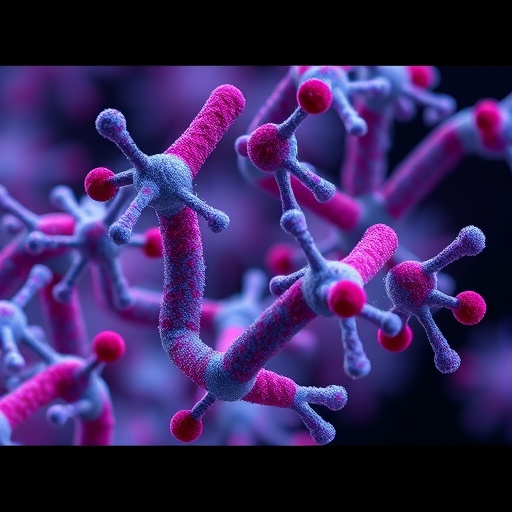
From a structural biology perspective, cryo-electron microscopy and X-ray crystallography studies provided insights into the ternary complex formation between IDO1, the pseudo-natural product, and KLHDC3. These high-resolution structures highlighted a new binding interface created by the compound, promoting stable ubiquitination of IDO1. The spatial conformation induced by the pseudo-natural product brings enzymatic and ligase domains into proximity previously unachievable by natural or synthetic ligands alone.
The implications of these findings stretch beyond IDO1. This approach opens the door to designing monovalent degraders targeting proteins that have historically been “undruggable” due to a lack of suitable binding pockets or complex structural features. The success in co-opting KLHDC3 also suggests possibility for other E3 ligases’ untapped potential, broadening the arsenal available for precision medicine interventions.
Moreover, the discovery addresses critical limitations associated with bifunctional degraders such as PROTACs, including molecular weight, bioavailability issues, and off-target degradation. Monovalent pseudo-natural products could offer improved pharmacokinetics and reduced toxicity, facilitating easier translation into clinical applications. The streamlined synthetic pathways for such molecules potentially lower development costs and accelerate optimization cycles.
In terms of immuno-oncology, these degraders may synergize with existing checkpoint inhibitors and immune modulators. By effectively removing IDO1, the tumor microenvironment can be reshaped to favor immune attack, overcoming a major resistance mechanism. Preclinical models demonstrated enhanced infiltration and activation of cytotoxic T cells upon treatment, suggesting tangible benefits for patient outcomes.
Challenges remain, however, in fully understanding the long-term effects of sustained IDO1 degradation and potential compensatory pathways activated in tumor cells. Future work will likely involve comprehensive in vivo studies, exploring dosage regimens, combinatorial therapies, and patient stratification based on KLHDC3 expression profiles.
This paradigm-shifting research epitomizes the fruitful intersection of synthetic chemistry, structural biology, and molecular pharmacology. By reviving and reengineering nature-inspired scaffolds, scientists have crafted molecules that not only function with remarkable efficiency but also respect cellular intricacies, reducing unintended disruptions in homeostasis.
Scientists and drug developers alike are now poised to explore the vast landscape of pseudo-natural product-inspired degraders. The principles elucidated by the current work lay a robust foundation for the rational design of ligands tailored to specific E3 ligases and target proteins, potentially revolutionizing treatment approaches not only in cancer but a broad spectrum of diseases where aberrant protein function is implicated.
The publication also serves as a clarion call for interdisciplinary collaboration, emphasizing how leveraging computational design, high-throughput screening, and advanced analytical techniques can yield unforeseen innovations. The integration of machine learning to predict suitable pseudo-natural scaffolds for different E3-target pairs could significantly expedite this process.
In conclusion, the supercharging of IDO1 degradation by monovalent pseudo-natural products engaging KLHDC3 exemplifies a monumental advance in targeted protein degradation technology. The elegant chemical design married with biological finesse showcases a promising strategy that could transcend current therapeutic limitations. As the field evolves, such innovation is expected to ignite new modalities in drug discovery, offering hope for more effective treatments against cancers and beyond.
Subject of Research: Targeted protein degradation of IDO1 via interaction with native E3 ligase KLHDC3 using monovalent pseudo-natural products.
Article Title: Monovalent pseudo-natural products supercharge degradation of IDO1 by its native E3 KLHDC3.
Article References:
Hennes, E., Lucas, B., Scholes, N.S. et al. Monovalent pseudo-natural products supercharge degradation of IDO1 by its native E3 KLHDC3. Nat. Chem. (2026). https://doi.org/10.1038/s41557-025-02021-5
Image Credits: AI Generated
DOI: https://doi.org/10.1038/s41557-025-02021-5
Tags: cancer therapy advancementsendogenous degradation pathwaysIDO1 enzyme degradationimmune modulation strategiesimmunotherapy breakthroughsKLHDC3 E3 ligasemonovalent pseudo-natural productsnovel drug development approachesovercoming IDO1 resistanceselective protein turnovertargeted protein degradationubiquitin-proteasome system