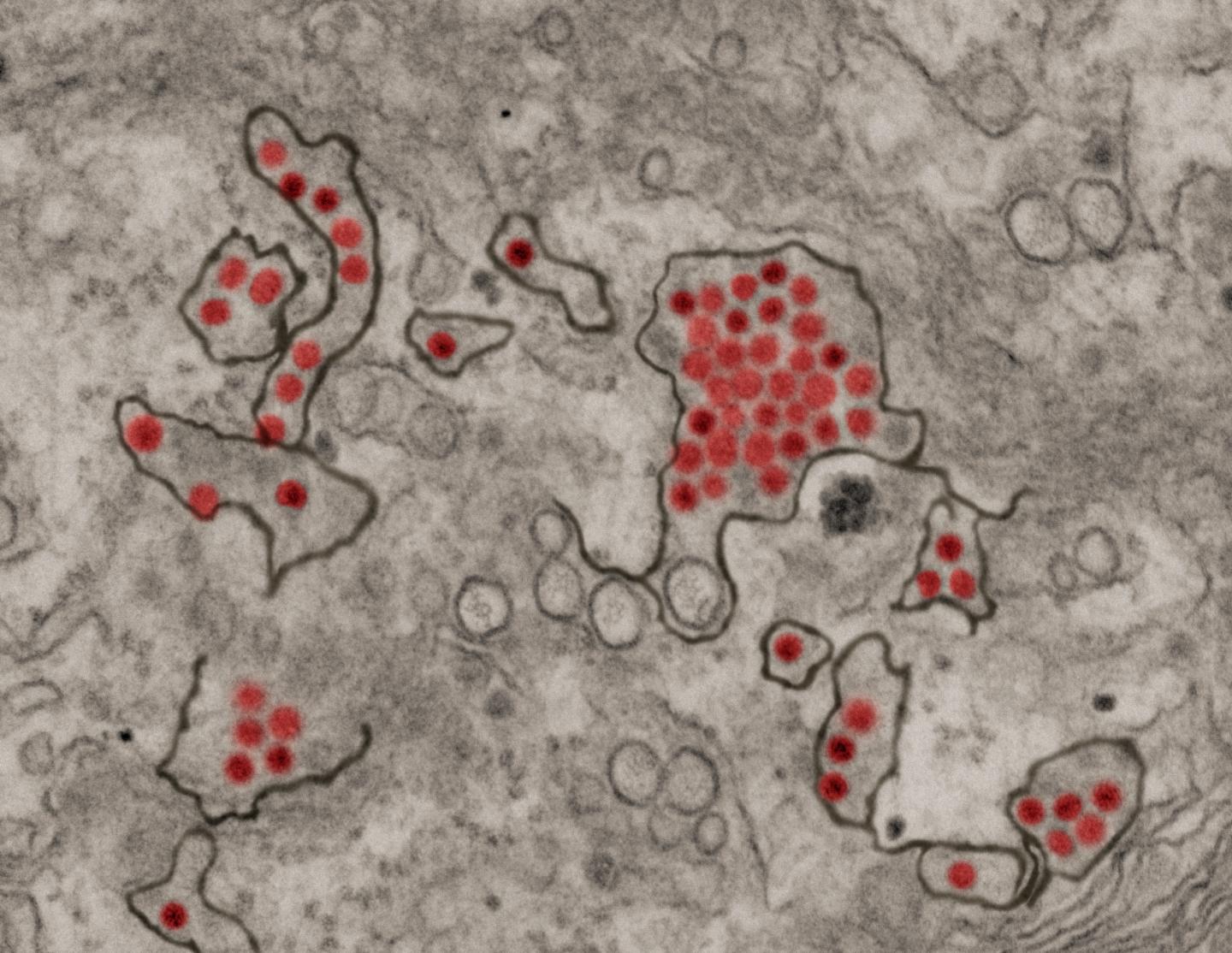
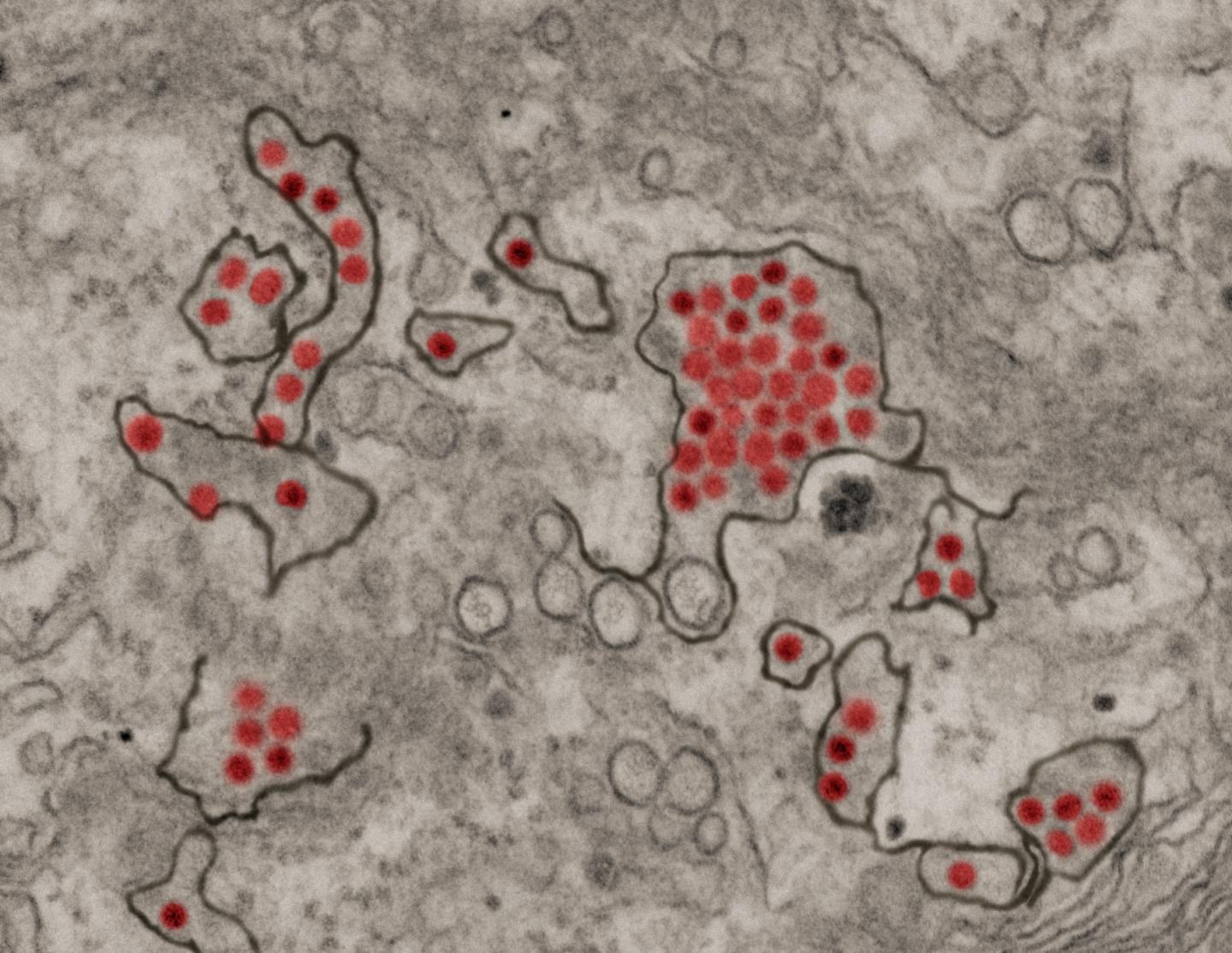
Credit: NIAID
WHAT:
Using blood samples from an individual previously infected with Zika virus, scientists funded by the National Institute of Allergy and Infectious Diseases (NIAID), part of the National Institutes of Health, have developed an antibody-based Zika virus therapeutic that protected monkeys from infection. Because monoclonal antibodies are generally safe, they believe that this antibody cocktail might be appropriate for uninfected pregnant women; because the antibodies will likely cross the placenta, the researchers hope that administration during pregnancy may protect both the pregnant woman and the fetus from Zika virus. The investigators are hoping to test this concept by pursuing studies in people.
The scientists isolated immune cells from the patient's blood and used them to make 91 monoclonal antibodies — immune system fighters designed to bind to a specific part of an invading virus or bacterium to stop the infection. They identified three antibodies that bound to Zika virus surface proteins, and each neutralized the virus. The researchers then administered a combination of these antibodies to rhesus macaques and exposed the animals to Zika virus one day later. During the 21-day study, all four monkeys who received the antibody cocktail showed no virus replication.
Researchers at the University of Miami and The Scripps Research Institute led the project with collaborators in Brazil and the U.S.
This research was supported by NIH grants 4P01AI094420-05, P30AI073961 and P51 OD011132.
ARTICLE:
D Magnani, et al. Neutralizing human monoclonal antibodies prevent Zika virus infection in macaques. Science Translational Medicine DOI: 10.1126/scitranslmed.aan8184 (2017).
WHO:
NIAID Director Anthony S. Fauci, M.D., and Mark Challberg, Ph.D., program officer in the Virology Branch of NIAID's Division of Microbiology and Infectious Diseases, are available for comment.
CONTACT:
To schedule interviews, please contact Ken Pekoc, 301-402-1663, [email protected]
###
NIAID conducts and supports research — at NIH, throughout the United States, and worldwide–to study the causes of infectious and immune-mediated diseases, and to develop better means of preventing, diagnosing and treating these illnesses. News releases, fact sheets and other NIAID-related materials are available on the NIAID website.
About the National Institutes of Health (NIH): NIH, the nation's medical research agency, includes 27 Institutes and Centers and is a component of the U.S. Department of Health and Human Services. NIH is the primary federal agency conducting and supporting basic, clinical, and translational medical research, and is investigating the causes, treatments, and cures for both common and rare diseases. For more information about NIH and its programs, visit http://www.nih.gov/.
NIH…Turning Discovery Into Health®
Media Contact
Ken Pekoc
[email protected]
301-402-1663
@NIAIDNews
http://www.niaid.nih.gov
Original Source
https://www.niaid.nih.gov/news-events/monoclonal-antibodies-against-zika-show-promise-monkey-study http://dx.doi.org/10.1126/scitranslmed.aan8184