Monash University researchers have provided a fundamental advance regarding how T cells become activated when encountering pathogens such as viruses.
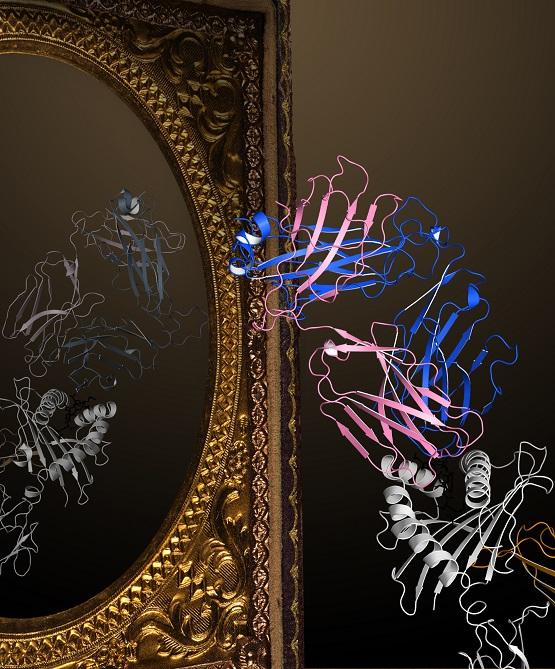
The recent study published in Science, co-led by Professor Nicole La Gruta, Professor Jamie Rossjohn and Professor Stephanie Gras with first author Dr Pirooz Zareie from the Monash Biomedicine Discovery Institute, have found that T Cells need to recognise pathogens in a particular orientation in order to receive a strong activating signal.
T cells play a key role in the immune system by eliminating invading pathogens, such as viruses, and it is crucial to understand the factors that determine how and why T cells become activated after recognizing these pathogens.
T cells express on their surface a T cell receptor (TCR) that recognizes and binds to virus fragments (antigens) presented by infected cells. This recognition event can lead to T cell activation and killing of infected cells.
“The central issue is that there are millions of different T cell receptors (TCRs) in the human body, and a vast array of viruses, making it difficult to understand the rules around how T cell receptor recognition of a virus drives T cell activation. Indeed, it is a problem that has remained contentious for over 25 years” says Professor La Gruta.
“Our study has shown that the orientation in which the T cell receptor binds is a primary factor determining whether the T cell receives an activating signal,” Professor La Gruta said.
“This is an advance in our fundamental understanding of how a T cell needs to ‘see’ pathogenic antigens in order to be activated,” she said. “It has clarified a critical mechanism essential for effective T cell immunity. It is also relevant to the ongoing development of immunotherapies that aim to boost the activation of T cells.”
Dr Pirooz Zareie stated: “a combination of technologies, including super-resolution microscopy, X-ray crystallography at the Australian Synchrotron, biochemical assays and using in vitro and in vivo experimental models from a variety of labs led to the findings.”
The study represented a cross-disciplinary collaboration between researchers from the University of Utah, National University of Singapore, University of New South Wales and Monash University.
###
Read the full paper in Science titled: Canonical T cell Receptor Docking on peptide-MHC is essential for T cell signaling.
DOI: 10.1126/science.abe9124
About the Monash Biomedicine Discovery Institute at Monash University
Committed to making the discoveries that will relieve the future burden of disease, the newly established Monash Biomedicine Discovery Institute at Monash University brings together more than 120 internationally-renowned research teams. Spanning six discovery programs across Cancer, Cardiovascular Disease, Development and Stem Cells, Infection and Immunity, Metabolism, Diabetes and Obesity, and Neuroscience, Monash BDI is one of the largest biomedical research institutes in Australia. Our researchers are supported by world-class technology and infrastructure, and partner with industry, clinicians and researchers internationally to enhance lives through discovery.
For Media Enquiries please contact:
Wendy Smith – Monash Communications Manager
E: [email protected]
T: +61 (0) 425 725 836
For more Monash media stories, visit our news and events site
Media Contact
Wendy Smith
[email protected]
Related Journal Article
http://dx.