In a development that could reshape how clinicians manage one of the most stubborn problems in wound care, a team of researchers in China has engineered a “smart” wound dressing modeled on the hexagonal architecture of a honeycomb. The dressing, described in a new open-access paper in Advanced Composites and Hybrid Materials, does something conventional bandages cannot: it simultaneously detects the severity of a bacterial infection, clears away excess biological fluid in one direction, and delivers on-demand antibacterial therapy that adapts to the wound’s own chemistry — all while steering the healing process toward scar-free regeneration.
The work, led by Qin Lu and corresponding author Hui He at Guangxi University’s Guangxi Key Laboratory of Clean Pulp & Papermaking and Pollution Control, tackles a challenge that has long frustrated the field of advanced wound management. Infected scald wounds are notoriously difficult to treat because they present clinicians with two coupled problems: an unpredictable microbial burden that can flare without warning, and a moist, acidic microenvironment that conventional dressings neither monitor nor exploit. The new dressing merges sensing and therapy into a single flexible platform, built from three functionally distinct “hives” arranged in a honeycomb-topological pattern.
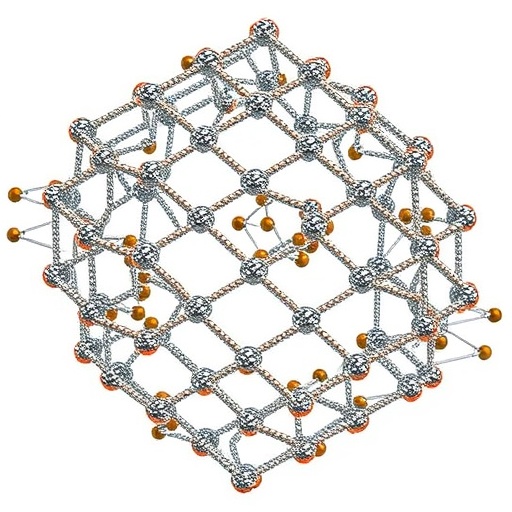
The first of these functional modules is what the researchers call the “beeway,” a monitoring channel inlaid with atomically precise gold nanoclusters. Gold nanoclusters — aggregates consisting of only tens to hundreds of gold atoms, small enough that their electronic properties become dominated by quantum effects — are prized in biosensing for their strong fluorescence and chemical specificity. The team used two elegant physical mechanisms to embed them: the nanoconfinement effect, in which the restricted geometry of nanoscale pores forces molecules into precise arrangements, and molecular stacking, in which the ordered layering of molecules produces enhanced optical behavior. Confined within the beeway’s structure, the gold nanoclusters act as a fluorescence-based reporter system. When reactive oxygen species associated with bacterial infection accumulate in the wound bed, the fluorescence signal changes in a quantifiable way. In practical terms, this means the dressing itself becomes a diagnostic instrument: the intensity of the light it emits correlates with the severity of infection, allowing caregivers to track microbial load without repeatedly disturbing or removing the bandage.
The second module addresses fluid management through what the team describes as Janus hives — structures named for the two-faced Roman god because they possess asymmetric wettability, meaning one face attracts water while the other repels it. This asymmetry produces unidirectional liquid transport: wound exudate, blood, and other biological fluids are drawn away from the wound surface and through the dressing in a single direction, but cannot flow backward. The importance of this design principle in wound care is difficult to overstate. Excess exudate pools around infected wounds, macerating surrounding skin and providing a nutrient-rich breeding ground for bacteria. Dressings that simply absorb fluid eventually saturate; dressings that allow backflow can recontaminate the wound. By engineering one-directional clearance into the honeycomb’s hexagonal cells, the researchers created a self-draining architecture that also serves a second purpose — the directional flow facilitates the delivery of therapeutic molecules from the dressing’s reservoirs into the wound itself.
The third module is where the therapy happens. The therapeutic hives consist of an entangled network of photothermal and photosensitive cellulose nanofibers — ultrathin fibers derived from cellulose, one of the most abundant biopolymers on Earth. Within this nanofiber network, the researchers confined intelligent photosensitive molecules using the same nanoconfinement strategy that underpins the sensing module. Under illumination with an 808-nanometer near-infrared laser, the photothermal components convert light energy into localized heat, a well-established antibacterial mechanism that damages bacterial membranes and proteins. At the same time, the photosensitive components generate singlet oxygen, denoted ¹O₂, a highly reactive molecular species that chemically oxidizes and destroys bacterial cells. This dual photothermal-photodynamic attack, triggered only by external light, offers a controllable alternative to systemic antibiotics — an increasingly urgent consideration as antibiotic resistance spreads worldwide.
What elevates the design from a static antimicrobial patch to an intelligent therapeutic system is its responsiveness to the wound’s own microenvironment. Infected wounds tend to be acidic, and the therapeutic hives exploit this. The acidic microenvironment stimulates the release of the confined photosensitive molecules from the nanofiber network into the deeper tissues of the wound. Once released, these molecules can be re-activated by a 660-nanometer laser to produce additional singlet oxygen, effectively eradicating bacteria continuously across successive treatment cycles. The mechanism is a form of chemical feedback: the very acidity produced by infection and inflammation triggers a stronger therapeutic response precisely where it is needed most. Bacterial persistence deep within wound tissue — a major cause of treatment failure and chronic wound formation — is thus targeted by molecules that migrate under acidic stimulation rather than remaining locked at the surface.
The honeycomb topology itself is more than aesthetic inspiration. Hexagonal tiling is nature’s most efficient packing geometry, combining maximal area coverage with minimal material use and exceptional mechanical resilience. In a flexible dressing, this geometry provides a continuous, interconnected network of functional compartments, each performing its role — sensing, drainage, or therapy — while the overall structure remains soft, conformable, and breathable. That flexibility matters clinically: rigid or stiff smart dressings have struggled to transition from the laboratory to real wounds, which bend, stretch, and flex with the body. By constructing the honeycomb architecture from cellulose nanofibers, the Guangxi team anchored their platform in a material class that is inherently flexible, biocompatible, and sustainable.
In experiments on complex infected scald wounds, the integrated system achieved what the authors describe as intelligent monitoring and therapy working in concert — the fluorescent beeway quantifying infection severity, the Janus hives maintaining a clean wound surface, and the therapeutic hives eradicating bacteria under light activation while releasing deep-penetrating photosensitizers in response to acidity. Crucially, the researchers report that the dressing achieved scarless healing, an outcome that carries enormous significance for burn patients, for whom scarring can mean lifelong mobility impairment and disfigurement. Scar formation results from disordered collagen deposition during healing; steering wounds toward regenerative repair without fibrotic scarring remains one of the central aspirations of regenerative medicine, and few antimicrobial platforms have claimed that capability.
The broader significance of the work lies in its demonstration of a general design principle. The authors frame their study as providing “a path for the coupling of intelligent molecules and nanoclusters in nanoconfined dressing spaces” — a recipe, in other words, that others in the field could adapt. The nanoconfinement effect and molecular stacking, the two physical mechanisms that organize the gold nanoclusters and photosensitive molecules within the dressing’s nanoscale architecture, are not limited to wound care. They represent a strategy for placing functional molecules exactly where their properties — fluorescence, reactivity, stimulus-responsiveness — can be harnessed in a controlled, addressable way. That could extend to smart bandages for diabetic ulcers, implantable infection sensors, or light-triggered drug delivery platforms.
The timing is notable. With antimicrobial resistance contributing to hundreds of thousands of deaths annually and chronic, infected wounds consuming a growing share of healthcare resources, the demand for materials that can diagnose and treat at the point of care has never been higher. A dressing that reports its own assessment of infection severity and then mounts a light-triggered, microenvironment-responsive antibacterial campaign — without antibiotics — suggests a future in which the humble bandage becomes one of the most sophisticated medical devices a patient encounters. The research, which received support from the National Natural Science Foundation of China and the Guangxi Natural Science Foundation, among other funders, has been published as a citable open-access article, with the authors declaring no competing interests.
As the field of intelligent wound dressings accelerates, the honeycomb-topological platform stands out for its integration: one flexible material, three coordinated functions, and a feedback loop that lets the wound itself direct the therapy. Whether such systems can be manufactured at scale and validated across the full diversity of clinical wounds will determine their trajectory, but as a proof of principle, the Guangxi team’s work offers a compelling glimpse of wound care’s next generation.
Subject of Research: A flexible honeycomb-topological smart wound dressing that integrates infection monitoring, unidirectional fluid clearance, and light-activated, microenvironment-responsive antibacterial therapy for infected scald wounds
Subject of Research: Technology and Engineering
Article Title: Flexible honeycomb-topological dressing by molecular stacking in nanoconfinement effects
Article References: Lu, Q., Chen, R., Tian, L., Chen, Z., Meng, Y., Wang, L., Zhu, J., Wang, L., Zhu, H., & He, H. (2026). Flexible honeycomb-topological dressing by molecular stacking in nanoconfinement effects. Advanced Composites and Hybrid Materials. https://doi.org/10.1007/s42114-026-02036-7
Image Credits: AI Generated
DOI: 10.1007/s42114-026-02036-7
Keywords: Honeycomb topology, Nanoconfinement effect, Molecular stacking, Gold nanoclusters, Scald wound healing, Photothermal therapy, Singlet oxygen, Janus wettability, Cellulose nanofibers, Smart wound dressing, Scarless healing, Antibacterial therapy
Cite Scienmag News
APA MLA Chicago
Denise Maddox. (September 4, 2026). Molecular stacking under nanoconfinement creates flexible honeycomb topological structures. Scienmag. https://scienmag.com/molecular-stacking-under-nanoconfinement-creates-flexible-honeycomb-topological-structures/
Denise Maddox. “Molecular stacking under nanoconfinement creates flexible honeycomb topological structures.” Scienmag, 4 September 2026, https://scienmag.com/molecular-stacking-under-nanoconfinement-creates-flexible-honeycomb-topological-structures/. Accessed 4 September 2026.
Denise Maddox. “Molecular stacking under nanoconfinement creates flexible honeycomb topological structures.” Scienmag. September 4, 2026. https://scienmag.com/molecular-stacking-under-nanoconfinement-creates-flexible-honeycomb-topological-structures/
Copy citation Download RIS
Tags: advanced composite materials for wound managementadvanced wound managementbacterial infection monitoringbioinspired wound healing technologyflexible biomedical sensor platformsflexible topological structuresfluid management in dressingshoneycomb architecture in biomedical materialshoneycomb architecture in wound careinfection detection and antibacterial therapyinfection detection in wound caremicrobial burden monitoringmicroenvironment-responsive wound dressingsmultifunctional biomedical materialsmultifunctional wound healing materialsnanoconfined molecular stackingnanoconfinement in molecular stackingnanostructured composite materialsresponsive antibacterial therapyscar-free regenerative healingscar-free tissue regenerationSmart wound dressingstimuli-responsive wound dressings