• HOME
  • NEWS
  • EXPLORE
    • CAREER
      • Companies
      • Jobs
    • EVENTS
    • iGEM
      • News
      • Team
    • PHOTOS
    • VIDEO
    • WIKI
  • BLOG
  • COMMUNITY
    • FACEBOOK
    • INSTAGRAM
    • TWITTER
Wednesday, September 2, 2026
BIOENGINEER.ORG
No Result
View All Result
  • Login
  • HOME
  • NEWS
  • EXPLORE
    • CAREER
      • Companies
      • Jobs
        • Lecturer
        • PhD Studentship
        • Postdoc
        • Research Assistant
    • EVENTS
    • iGEM
      • News
      • Team
    • PHOTOS
    • VIDEO
    • WIKI
  • BLOG
  • COMMUNITY
    • FACEBOOK
    • INSTAGRAM
    • TWITTER
  • HOME
  • NEWS
  • EXPLORE
    • CAREER
      • Companies
      • Jobs
        • Lecturer
        • PhD Studentship
        • Postdoc
        • Research Assistant
    • EVENTS
    • iGEM
      • News
      • Team
    • PHOTOS
    • VIDEO
    • WIKI
  • BLOG
  • COMMUNITY
    • FACEBOOK
    • INSTAGRAM
    • TWITTER
No Result
View All Result
Bioengineer.org
No Result
View All Result
Home NEWS Science News Health

Molecular autopsy sheds light on cause of sudden death of a child with COVID-19

Bioengineer by Bioengineer
April 27, 2023
in Health
Reading Time: 3 mins read
0
The First Molecular Autopsy Diagnosed Noonan Syndrome Case (IMAGE 1); (IMAGE 2)
Share on FacebookShare on TwitterShare on LinkedinShare on RedditShare on Telegram

Researchers from Tokyo Medical and Dental University (TMDU) utilize an advanced DNA sequencing technique to reveal the factors that contributed to the death of a 5-year-old child with COVID-19
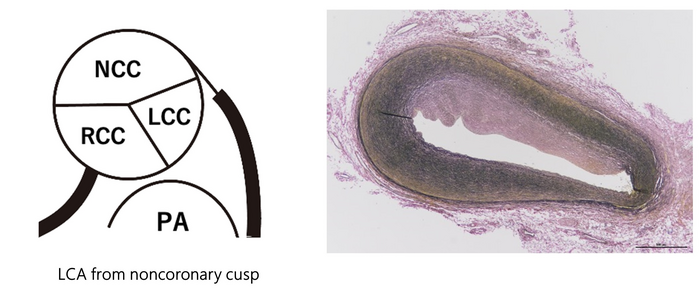
The First Molecular Autopsy Diagnosed Noonan Syndrome Case (IMAGE 1); (IMAGE 2)

Credit: Department of Forensic Medicine, TMDU

Researchers from Tokyo Medical and Dental University (TMDU) utilize an advanced DNA sequencing technique to reveal the factors that contributed to the death of a 5-year-old child with COVID-19

Tokyo, Japan – Sudden, unexplained child mortality is a tragedy; determining the cause of death is important for improving healthcare and providing loved ones with closure. Now, researchers from Japan have reported the use of an advanced DNA sequencing technique, whole-exome sequencing (WES), to determine why a young child died after a relatively mild infection.

In a study published this month in Frontiers in Immunology, researchers from Tokyo Medical and Dental University (TMDU) have revealed that a rare genetic disease may have made a young boy more susceptible to the effects of COVID-19, ultimately leading to death by cardiac arrest.

“We recently lost a 5-year-old patient who had been feverish for six days before being brought to the hospital by ambulance,” says Associate Professor Kana Unuma, lead author of the study. “He went into cardiac arrest in the ambulance and, despite undergoing cardiopulmonary resuscitation, died in the hospital. It was not immediately clear what led to this sudden mortality.”

To determine the cause of death, the researchers performed an autopsy and found that the child had severe anemia, abnormal levels of various types of blood cells, an unusually large liver and spleen, and an atypically located coronary artery. In addition, the patient tested positive for SARS-CoV-2.

“The complex abnormalities related to the heart and blood suggested the presence of an underlying disease, so we performed WES,” explains Professor Hirokazu Kanegane, senior author. “This test, which comprises a broad screen for variants that could account for disease, revealed a variant in LZTR1, a gene that was recently identified as being associated with Noonan syndrome (NS).”

Noonan syndrome is a rare genetic disorder; patients with NS typically have distinctive facial features and physical characteristics, intellectual disability, heart problems, and an increased risk of blood cancer. Once the genetic variant had been identified in the patient, the researchers were able to confirm the diagnosis of NS based on the child’s facial features. However, no other physical signs of NS were noted.

“The severity of NS in the patient was relatively mild and, thus, NS was not suspected. The cardiac arrest that led to his death could have been caused by fever and dehydration related to COVID-19 combined with the coronary artery anomaly, which may have caused fatal problems with heartbeat and blood flow,” says Associate Professor Unuma.

The atypical location of the coronary artery seen in this patient is one of the rarest known forms of heart defect and has been associated with several cases of sudden death in children. While this type of defect can go undetected, comprehensive molecular autopsy, like that performed on this patient, can detect genetic anomalies and identify causes of unexpected sudden death.

###

The article, “Case Report: Molecular autopsy underlie COVID-19-associated sudden, unexplained child mortality,” was published in Frontiers in Immunology at DOI: 10.3389/fimmu.2023.1121059.


Journal

Frontiers in Immunology

DOI

10.3389/fimmu.2023.1121059

Article Title

Molecular autopsy underlie COVID-19-associated sudden, unexplained child mortality
Share12Tweet8Share2ShareShareShare2

Related Posts

Wearable monitor improves diagnosis of heart rhythm disorders after fainting

August 31, 2026

Visualisation of magnetic field-induced nanoparticle clusters and mechanical property changes in a breast phantom for inductive moderate hyperthermia

August 31, 2026

Multidisciplinary intervention in frail elderly patients with cardiovascular diseases: a multicentre, single-blinded, randomised controlled trial

August 31, 2026

Machine Learning Model Development and Evaluation for Non-contact Lower Limb Injury Risk Prediction in Elite Male Rugby Union: A Multi-team, Multi-season Analysis

August 31, 2026

POPULAR NEWS

  • β-Sitosterol from Ipomoea carnea Jacq. As a promising anti-inflammatory agent: Evidence from in silico modeling and in vitro validation

    29 shares
    Share 12 Tweet 7
  • Design, fabrication and characterization of a wearable Fiber Bragg grating sensor for cardiorespiratory monitoring using finger plethysmography

    29 shares
    Share 12 Tweet 7
  • KAIST opens the era of industrial-scale microbial foods, proposing growth strategies for the next-generation protein market

    29 shares
    Share 12 Tweet 7
  • Virologist awarded $2 million NIH grant to investigate how virus-infected cells live and die

    29 shares
    Share 12 Tweet 7

About

We bring you the latest biotechnology news from best research centers and universities around the world. Check our website.

Follow us

Recent News

β-Sitosterol from Ipomoea carnea Jacq. As a promising anti-inflammatory agent: Evidence from in silico modeling and in vitro validation

Design, fabrication and characterization of a wearable Fiber Bragg grating sensor for cardiorespiratory monitoring using finger plethysmography

KAIST opens the era of industrial-scale microbial foods, proposing growth strategies for the next-generation protein market

Subscribe to Blog via Email

Success! An email was just sent to confirm your subscription. Please find the email now and click 'Confirm' to start subscribing.

Join 85 other subscribers
  • Contact Us

Bioengineer.org © Copyright 2023 All Rights Reserved.

Welcome Back!

Login to your account below

Forgotten Password?

Retrieve your password

Please enter your username or email address to reset your password.

Log In
No Result
View All Result
  • Homepages
    • Home Page 1
    • Home Page 2
  • News
  • National
  • Business
  • Health
  • Lifestyle
  • Science

Bioengineer.org © Copyright 2023 All Rights Reserved.